

Give Garden Tomatoes A Boost With A Nourishing Fertilizer You Can DIY On The Cheap
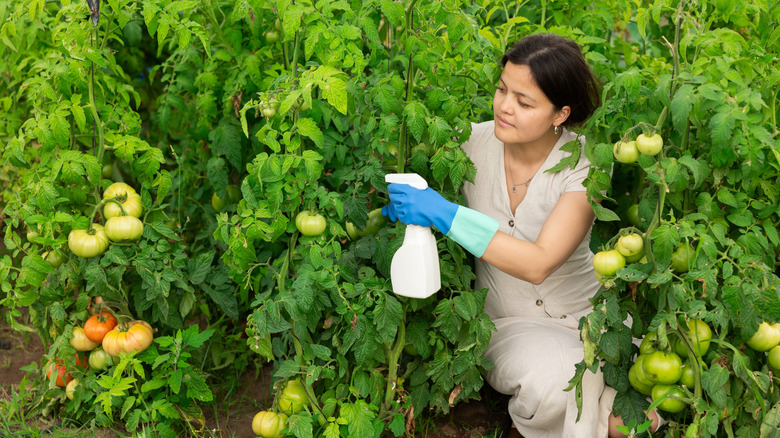
You've heard of turning lemons into lemonade, but what about turning stinging nettle (Urtica dioica) into nettle tea for plants? This often-hated weed, which does indeed irritate the skin of unlucky gardeners for hours or even days after contact, can be turned into a completely free, DIY fertilizer tea that nourishes your garden. It's especially useful for tomatoes, which crave many of the nutrients stinging nettle tea provides. You simply ferment the nettle leaves and stems in water, dilute the resulting brew with more water, and spray it on your plants. This organic liquid tomato fertilizer costs you nothing more than the effort it took to prepare.
While researchers have yet to fully explore the benefits of stinging nettle tea for tomatoes and other vegetables, there are plenty of anecdotal accounts promoting this no-cost DIY fertilizer. In addition, recent research suggests that using compost teas — of which nettle tea is one — on tomato plants can boost the flavor of the fruit. A water extract of stinging nettle has also been shown to stimulate tomato plant growth.
Why is this weed that you can use to water your garden — and grow, by the way — so beneficial? Stinging nettle is rich in nitrogen, especially in the stems and leaves. While too much nitrogen will promote foliage production over flowering and fruiting in tomatoes, having too little leads to yellowing leaves. Nettles are also high in other nutrients. Calcium helps tomatoes fight blossom-end rot. Potassium reduces the chance of fruit yellowing and improper ripening. Magnesium ensures leaves stay green and healthy. Some gardeners also use stinging nettles to repel common garden pests, such as mites and aphids.
Spraying your tomatoes with nettle tea provides immediate nutrients
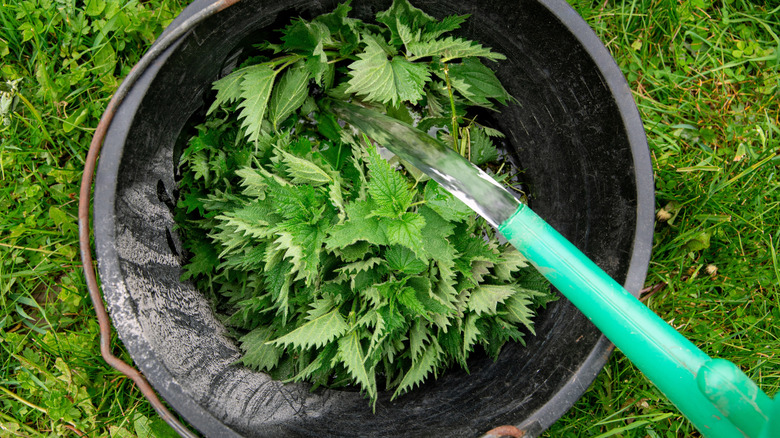
While you can forage for stinging nettle from early to late spring, cultivating a patch in your own backyard ensures a safe, steady supply. Foraging laws vary by location, so check with your local municipal authority before harvesting nettles in the wild. No matter where you pluck these temperamental plants, wear gloves, a sturdy, long-sleeved shirt, long pants, and closed shoes.
To start your fertilizer tea, loosely fill a 5-gallon bucket with stinging nettle stems and leaves. Add enough water to completely submerge the nettles. Cover the container with mesh to keep out pests, and leave the tea to steep for at least two weeks. Strain the tea through a large sieve into a new bucket or container, and toss the spent nettles onto your compost pile. This is your base fertilizer; you need to dilute it with water to use it. You can either water the soil under your tomatoes with the nettle tea or foliar feed your plants.
To foliar-feed tomato plants, fill a sprayer bottle ⁹⁄₁₀ full with regular water, and then add the stinging nettle tea to fill the remaining ⅒ or so. Set your bottle to a fine mist for targeted application that helps nutrients reach the foliage more effectively. Spray the tops and undersides of the tomato leaves until they're dripping with tea. To boost the benefits of the nettle tea, you'll want to mulch around your tomato plants with a layer of organic matter, including any leftover nettle leaves and stems. The fresh stinging nettle provides nitrogen while brown materials, like straw or dry leaves, add carbon.