

Why Does My Yard Smell? 12 Reasons And Some Easy Fixes

If the goal with our yards is to curate a microcosm of the natural world, then funny smells come with the territory. After all, the outdoors is not a sterile place. And nor would we want it to be. If you've ever seen your dog's nose light up in the woods or stood downwind as your neighbor mows their lawn, you'll know that some smells are made to be treasured. But that's not to say that they all are.
Sometimes, the sensory landscape of your yard can shift from the heavenly smell of flowers to something a little less pleasant. But what exactly do these menacing odors mean? Well, it depends. A smell of sewage is often easily diagnosed, especially if it's emanating from your waste pipes. Equally, if your gas line is giving off a sulfurous smell, then there's a good chance you have a leak. But what if you're getting whiffs of ammonia or vinegar or something sour that you can't quite put your finger on?
Here are 12 common smells that you're likely to notice around your yard. We'll explain how to get to the root of the problem, from identifying the chemical signatures of poor soil to unearthing the secrets of your compost pile. Once you know the source, we'll offer some tips on how to fix it. If you're worried about a smell wafting from your yard, then this guide is most certainly for you.
A sour smell could be due to poor soil drainage
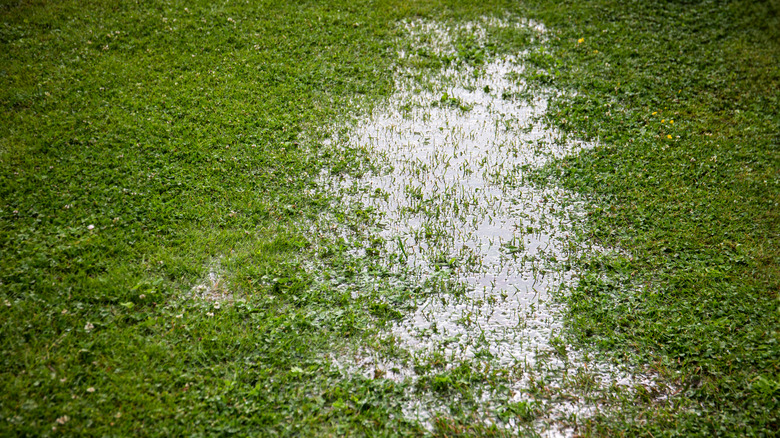
If you notice a sharp, sour odor, then the culprit could well be hidden beneath your feet. Healthy soil needs to breathe in order to thrive, but when poor drainage allows water to pool, it can start to drown your substrate. It starves the soil of oxygen, creating an environment in which anaerobic, smelly bacteria can grow. When you dig down into it, you may also notice gray soil instead of the rich brown color that's the hallmark of healthy earth. If so, then the smell is almost certainly a drainage issue.
The only real fix is to improve the way the ground in your yard drains. If the soil is seriously compacted and causing water to pool, then aerating it could help to alleviate the problem. However, the problem could also be due to the gradient of your yard. If so, you'll need to level your lawn to ensure water flows away from the problem area. You may also need to add soil amendments to lighten up heavier clay soils and improve drainage. And in severe cases, you might want to consider installing a drainage system, like a French drain, to ensure water flows away from your garden.
A vinegary smell could be a sign that you mulched too thickly
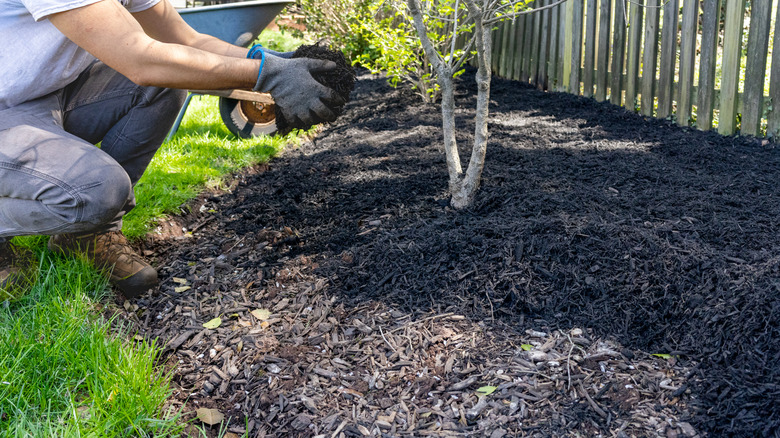
One of the most common mulching mistakes you can make in the garden is to pile the mulch on too thickly. It's an easy mistake to make. It could be that you're trying to insulate your plant babies against the worst of the winter frost. Or perhaps you've had it with weeds and want to quell their uprising once and for all. The problem with mounding too much mulch on your flower beds is that it can, eventually, start to sour. As the bottom layer becomes wet, which it inevitably will in the cooler months, that layer stops being able to breathe. It undergoes a process called anaerobic fermentation. As this fermentation happens, the mulch can start to give off vinegar-like or sulphurous odors, similar to rotten eggs.
To prevent this from happening, it's always best to adopt a less-is-more approach with mulch. If you've already laid your mulch and you suspect that you've overdone it, then try turning it over or spreading it out more and allowing the bottom layers to breathe. If those layers are already slimy and black, then it's best to replace them altogether — this time with a lighter, more breathable layer.
An accumulation of pet waste is sure to sting the nostrils

Dog waste is unpleasant at the best of times. Pet owners generally accept it as a small price to pay for the company of man's best friend. The problem is that dog doo-doo decomposes more quickly in the heat of the summer, causing the smells that make it unpleasant to begin with to become unbearable. Dog urine, too, comes with the territory, and not only can it cause unsightly brown patches in your yard, but it can also yield a strong smell of ammonia.
To keep these unpleasant smells at bay, especially in the summer, try to clean up your dog's mess regularly. Watering the grass can help to wash away any residue and mitigate damage from urine. Training your pooch to poop in a specific, designated area can also help by containing the damage to certain parts of your yard.
Not balancing your compost bin's greens and browns can create smelly situations
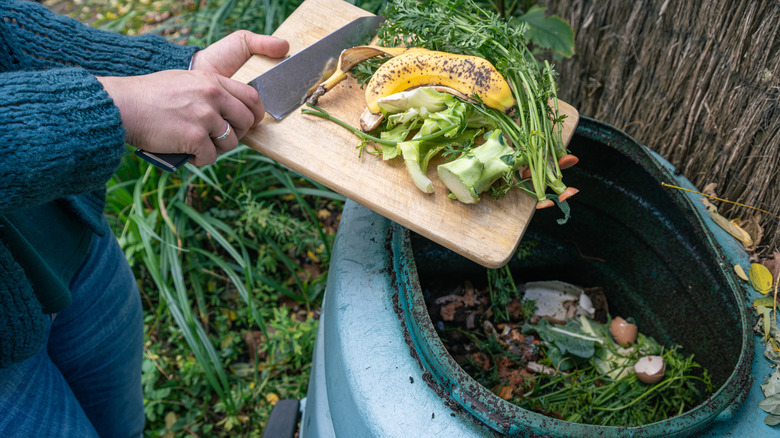
If you're looking to start composting, then it's important to know what you should and shouldn't throw on the compost pile. It's also important to know how to balance green waste (such as grass clippings and food scraps) with brown waste (such as leaves, twigs, and pine needles). Combining the right amounts of green and brown waste facilitates (non-smelly) decomposition by creating an ideal carbon-to-nitrogen ratio. If your compost pile becomes overloaded with green waste, it can start to give off an ammonia smell.
To avoid this, aim for a 3:1 ratio of browns to greens, and try to layer them into the compost pile kind of like a lasagna. If it's too late and you're already smelling ammonia from your compost, then fold in some brown waste and aerate the pile. This should help to neutralize the odors while also ensuring the resultant compost (when it's finally ready) is nice and balanced. Just note that, even if you have the optimum amount of both green and brown waste, you can still end up with an ammonia smell. This is often a result of heavily concentrated pockets of green waste and can be solved by splitting and re-layering the pile.
Thick mats of freshly cut grass can become wet and start to smell if not raked away
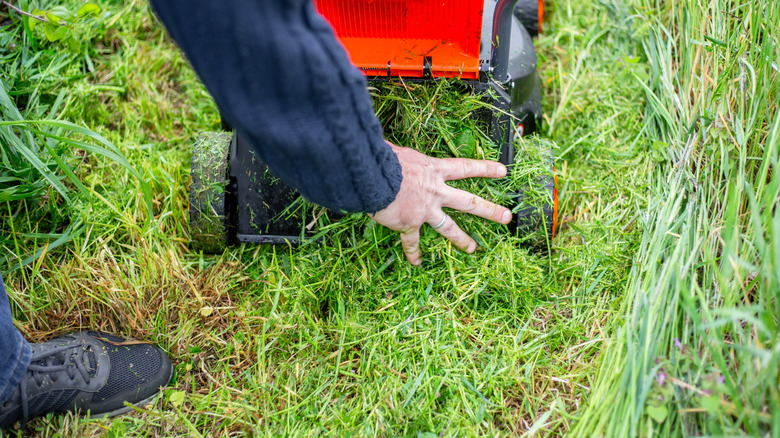
There's often a case to be made for leaving some of your grass clippings on your lawn to act as a natural fertilizer. However, if too much is allowed to gather in any one spot and it gets wet, it can start to form a mat. This effectively suffocates the grass beneath, preventing water and oxygen from reaching the roots. When that happens, various bacterial and fungal conditions can start to take hold. The area will eventually become black and slimy, giving off a decaying smell if you don't act.
You'll want to rake up and dispose of any decaying clumps you find. To prevent this from happening in the first place, aim for regular mowing sessions (weekly mowing during the growing season is usually ideal), and don't take off more than a third of the grass length at a time. Finer, shorter clippings mean less chance of big clumps or thick layers that start to rot. You can also avoid matting by mowing the lawn when it's dry, which will help the grass to disperse more evenly rather than in clumps. Finally, investing in a mulching mower, or a mulching blade attachment, can also ensure that the clippings are nice and fine, as well as evenly distributed over your lawn.
Sewer gas smells could be a sign of septic tank problems
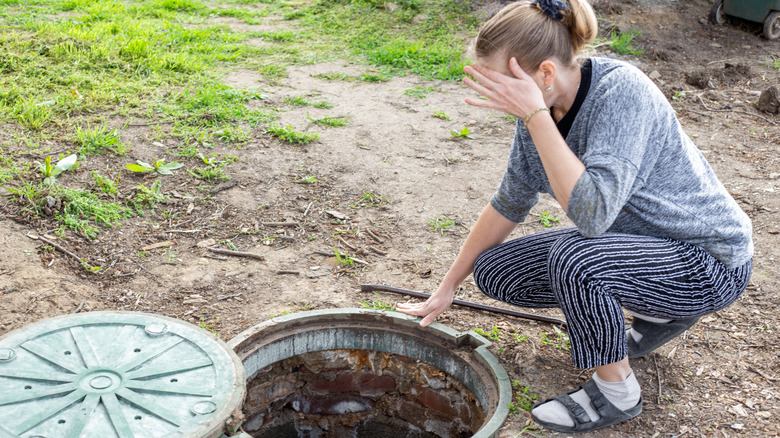
Of all the signs that your septic tank needs to be pumped, the smell of sewage is one of the most obvious. However, the odor could also indicate a wider issue in your septic system. For example, if there's a blockage in your pipes causing a backup, perhaps from fatty or oily buildups, then that could also lead to a nasty smell. Septic tanks are complex systems that rely on the presence of bacteria to break down the waste. Using too much water or pouring antibacterial chemicals down the drain can upset this balance and actually lead to system failure, which in turn creates odors.
Whatever's going on, the first thing to know is that septic systems are designed to contain the smell of waste within the tank. In other words, if what you're smelling is really from the septic tank, then it indicates an issue. If the tank is merely overfull, then having a company come out to empty it is an easy fix. If you've recently used chemicals that you suspect have destroyed the bacteria that your tank needs to work properly, discontinue their use, and the system should restore itself. Finally, if neither approach works, or you're unsure what's causing the tank system to smell, then it might be best to call a professional and have them address the issue.
The sickly-sweet smell of decaying wildlife is hard to mistake

If you've ever caught a whiff of a decomposing animal, it's hard to mistake it for anything else. It could be a rodent, maybe a mouse or a rat, that's crawled beneath your decking and perished. Or it could be a bird that your cat caught and left in a bush somewhere to rot. It doesn't really matter. If you can smell that foul odor, you'll want to eliminate it. The steps are similar to what you need to do if you find roadkill in your yard.
If you're unsure where the smell is coming from, firstly follow your nose. It sounds a little Gandalfian, but by tracking the scent to its strongest point, you should be able to quickly locate the source. Next, with a decent pair of gloves and (ideally) a grabber tool, pick up the dead animal and dispose of it in a plastic bag. Double bag the carcass to ensure the smell (and any maggots) are suitably contained, and put it in your trash can. When you're done, depending on where it was, you may want to clean and disinfect the area.
Stagnant birdbath water is unlikely to smell like roses
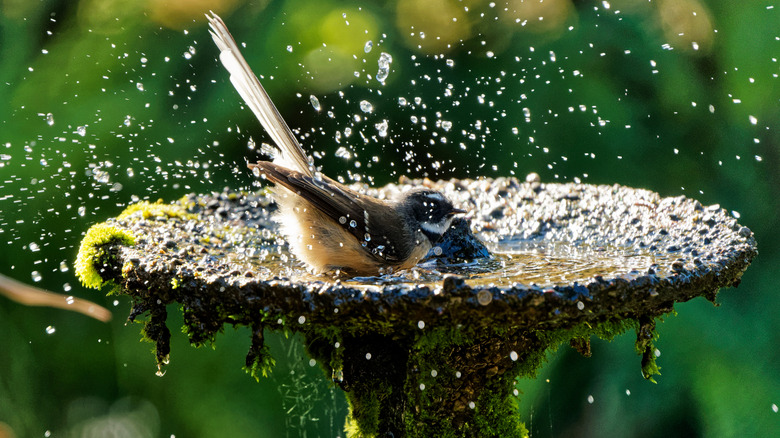
While birdbaths are among the ways to attract more birds into your yard, these water pools have the tendency to get quite smelly. That's because they're subjected to serious bacterial abuse. In bird-busy gardens, bird poop and other natural outdoor detritus can quickly build up, and if uncleaned, can cause the water to fester. Not only can this cause a bit of a smell, but if the water is allowed to stand for too long, it can become a breeding ground for diseases and parasites. It's also a magnet for marauding mosquitoes, which won't hesitate to lay their eggs in the standing water.
The only real way around this is to clean your birdbath. More importantly, you should clean it regularly — at least once every couple of days when the weather's hot or if your birdbath is especially busy. Even recirculating bird-bath systems can harbor all kinds of bacteria, making regular cleaning of the entire apparatus key to avoiding nasty smells. To clean it, empty the bath, then spray it with a 9-to-1 mixture of water and white vinegar. If it's particularly dirty, give the interior a good scrub with a brush, rinse it off, then allow it to dry before topping up with fresh water.
Sun-starved and well-mulched spaces are a natural breeding ground for stinky fungi
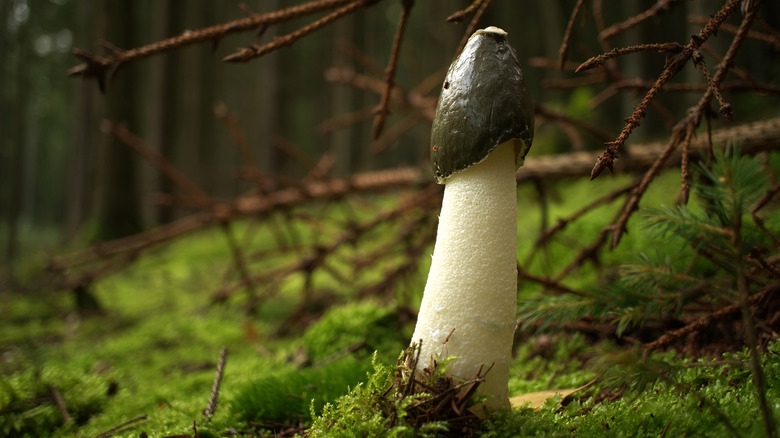
Most gardens have areas where the sun struggles to reach. And many of us are used to stumbling across an array of fascinating fungi, most of which are nice to look at and relatively innocuous on the nostrils. However, not all of the things that favor the shade match that description. Mold and mildew, for example, are both common in sun-starved areas and can smell musty and earthy — often compared to wet socks or rotten wood. Another, much more potent problem is the aptly named stinkhorn fungus (Phallus impudicus).
This much-maligned mushroom gives off the odor of rotting meat. Fortunately, while it is noxious on the nose, it's not toxic to humans. Stinkhorns incubate in mulch, especially in moist, shady spots. If you have them in your yard, you can try minimizing the amount of natural mulch, such as fallen leaves, in the area where they're growing. Other than that, there isn't much you can do to stop them from growing. Even if you pick them, they will likely grow back. Some suggest that the best thing to do is leave them be and enjoy their striking appearance, albeit from a distance and preferably upwind.
Unwashed trash cans are sure to start ripening come summertime

Trash cans are an inevitable source of foul smells. Over time, they naturally collect a concoction of "juices" from the organic waste in your garbage that has leaked from your trash bag. And as this liquid builds up in your bin, it starts to rot, especially in trash cans that haven't been cleaned in a while. This can create a breeding ground for bacteria. In the summer, the smell can start to ripen fast, hitting you square in the face whenever you bank your latest deposit of trash.
If this sounds familiar, then the best bet is to give your cans a good clean. There are several effective ways to clean and deodorize trash cans to combat funky smells. Wait for the trash to be emptied, then turn each of your bins upside down and allow any liquid to drain out. Start by hosing down the inside and removing as much residue as you can. Next, don your sturdiest pair of gloves, fill up a bucket with hot and soapy water, and give the bin a thorough scrub. If that fails, try using a spot of bleach. Make sure that you mix it according to the manufacturer's instructions and wear gloves. When you've finished, pour that liquid carefully down the drain to avoid contaminating your yard with harsh chemicals.
A sulfurous smell near your gas lines could indicate a dangerous leak
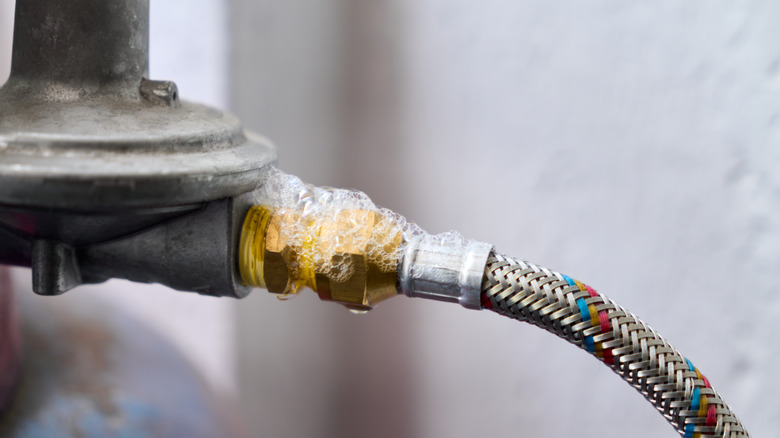
If you start getting wafts of a rotten egg smell near your gas meter — or where you know a meter or line is buried — then take it as a warning sign of a gas leak. Utility companies add odorants to the natural gas that we use to power our homes for precisely that reason — so you can smell it. It's a warning you should heed with urgency. If you're uncertain whether it's a gas leak, then there are some other signs to look for. One is a "hissing" sound around your gas lines. You may also notice dead or dying plants in the vicinity of your meter or lines. A higher-than-usual gas bill is also a good indicator of a leak, especially if you're using "winter amounts" of gas despite it being the summer.
To confirm your suspicions, you can conduct a soapy water test. Simply apply some soapy water to the pipe, valve, or joint you think is leaking and watch to see if it bubbles. If it does, there's a leak, meaning you should leave the area immediately. Ensure your family stays clear and advise any neighbors that you suspect a leak, too. Contact your utility provider right away and have them send out a professional. They should be able to confirm your suspicion, and if there is a leak, fix it.
A scared or squashed stink bug may smell like skunk or burnt rubber
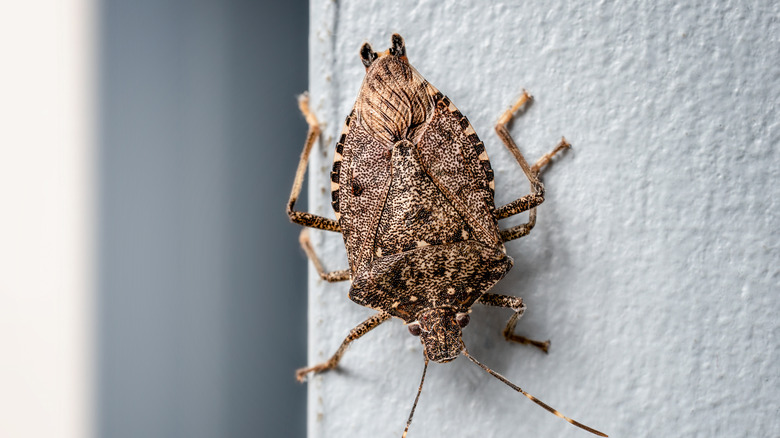
Stink bugs get their name from the chemicals they release whenever they perceive a threat. This, it's believed, is a mechanism they use to warn predators against attacking them and to alert fellow stinkbugs of a nearby threat. The smell created by stink bugs has been described in different ways. Some say it's reminiscent of garden herbs, such as cilantro, which might, at the very least, be bearable. Others say they smell like skunks, burnt rubber, rancid meat, ammonia, or rotting vegetables.
If you're smelling stink bugs around your yard, then consider your yard's biodiversity. What is your garden doing to attract these insects' natural predators? Are you encouraging enough birds to come and feast on the insects — stink bugs included — that are living in your garden? Since stink bugs prefer moist environments, is there a chance that you could water your garden less? By making your environment less favorable for them — and by attracting more insect-eaters into it — you should eventually find that your stink bug problem resolves itself.