

Glass Cloches Aren't Just For The Kitchen: 12 Ways To Use Them In The Garden
When you think of glass cloches, you probably think of those little glass domes that sit on your kitchen counter that you use to cover the cheese board, or make a slightly theatrical presentation out of a cured meat platter when you're feeling fancy. Not a garden tool. But actually, glass cloches have been used in the garden for centuries. Market gardeners in early 17th-century France used bell-shaped glass domes as individual plant shelters, and the technique spread quickly across much of the world. In fact, Thomas Jefferson eventually adopted the use of glass cloches in his vegetable gardens at Monticello.
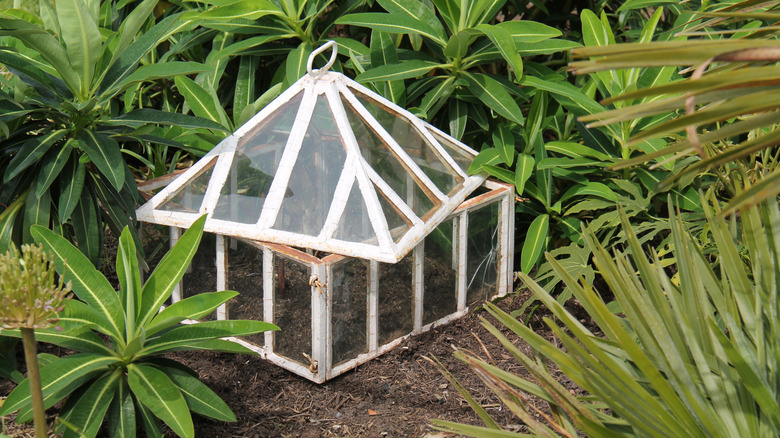
The word "cloche" means "bell" in French, and that's essentially what traditional cloches look like. They are clear glass bell-shaped domes. The form hasn't changed much in 400 years because it doesn't need to. It works. They weren't always tiny, either. Many were and still are much larger, roughly like a small- to medium-sized cold frame, and they don't always have to be bell-shaped either. Many are decorative and have fancy metalwork, like cast-iron lantern-style ones. Others have removable or adjustable lids or vents to allow you to release moisture and heat, and some are large enough to house fairly substantial plants. As a permaculture enthusiast and organic gardener, I enjoy finding ways to reuse often discarded or unwanted items. Glass cloches are easily found at thrift stores and yard sales for just a few dollars. If they are complete and in good condition, they are usually worth buying for use in the garden, even if it is just a magical fairy garden to entertain the kids.
Ward off a late frost
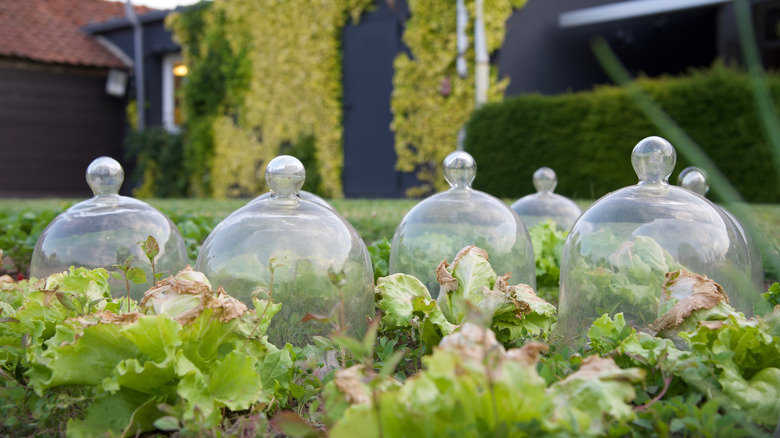
There are many ways to protect plants from frost. Glass cloches make brilliant frost protection for individual plants. If you've got a larger lantern-style cloche that's more like a cold frame, you can protect many plants. But if you only have a couple of smallish cloches, you're going to have to choose which plants deserve protection. A glass cloche essentially acts like a teeny-tiny greenhouse. Sunlight passes through the glass and gets trapped inside, which warms the air and the soil. That warmth takes a while to dissipate, even when outdoor temperatures drop. A glass cloche can raise soil temperature by up to about 10 degrees, which is plenty of protection for a light spring frost.
I use glass cloches to get my zucchini and squash plants off to a slightly earlier start out in the garden so they can develop good, healthy roots. These plants are notoriously intolerant of frost, so a late frost can quickly kill them or set them back by many weeks. I also do the same with my outdoor tomato and pepper plants. If there's any chance of a frost, even a super-light freeze overnight, I will put a cloche over the most tender individual plants. Using a cloche to protect against a light freeze is a great plan, but a glass cloche isn't a good solution for a prolonged hard freeze because the space is small and it won't hold heat overnight to the same degree as a greenhouse. Also, because it's such a small space, the interior gets very hot very quickly, which can damage or kill your plants. On a sunny day, even if there's a frost forecast, don't add the cloche until a few hours before nightfall. You will also need to be fairly prompt in removing the cloche the next day, once things start to warm up a little bit, or at the very least prop one edge up again if there is a second frost predicted for that following night.
Keep waterlogging at bay
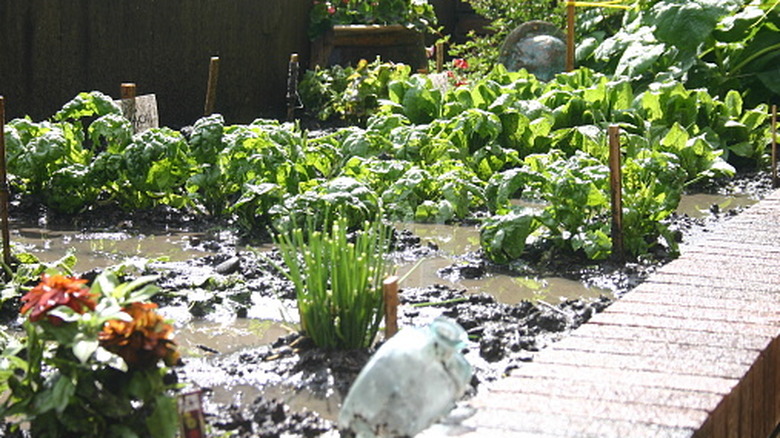
Heavy or persistent rain can saturate the soil around vulnerable plants, especially if the soil is compacted, heavy clay, or not mulched. This is particularly problematic for plants that struggle in very wet conditions and for those that haven't yet established healthy root systems. When the soil around their roots is constantly saturated, plants can end up with root rot or crown rot, become sickly, or just die off completely. If you place a glass cloche over the most vulnerable of these plants during downpours, the rain doesn't land on the plant or directly on its root zone. While the surrounding soil will still get very wet, the soil directly around the plant will stay workable for a bit longer, and the plant's roots won't be sitting in a swamp. This is especially important for new transplants that haven't got deep, strong root systems yet.
I tend to use this technique in spring in a particular area of my property with heavy soil that I am still slowly working on improving with organic matter. I also mulch that area, but the glass cloche is just very helpful for new plants that would otherwise struggle in the heavy downpours. Remember that the cloche doesn't have to stay in place all the time, and really, it shouldn't. If it's not too hot, then letting it stay on for a few overcast days while it rains is perfectly okay. Just remember to lift it off as soon as conditions improve so that the plants don't overheat.
Speed up germination of direct-sown seeds
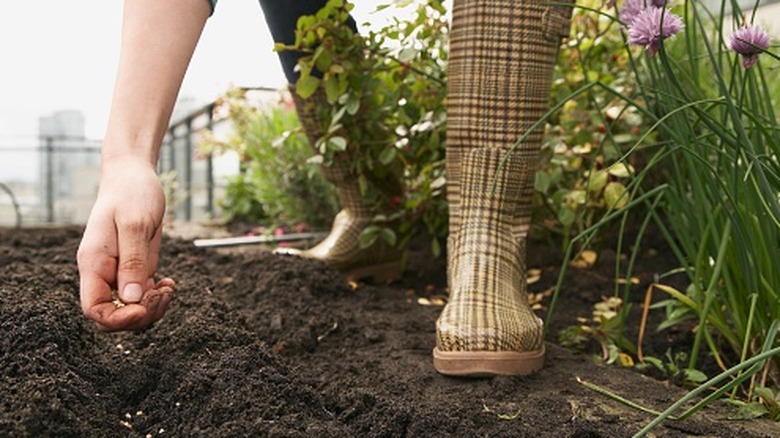
When you direct sow seeds into the garden, they are at risk from birds and mice and are at risk of rotting or germinating slowly if the soil is too cold. If you place a cloche over the seeds that you've sown, you help to warm the soil and hold moisture and you protect the seeds from wildlife, although some persistent mice or voles may still dig under the cloche. Most seeds germinate in response to soil temperature rather than air temperature, so if you use a glass cloche, you can plant a couple of weeks earlier because you bring the soil up to the temperature threshold that seeds need to break dormancy. For plants like squash, cucumbers, melons, tomatoes, and peppers that are long-season crops, the earlier you can get them started, the better.
If you don't have enough small, singular cloches, you can use a large cloche or a small cold frame to serve the same purpose. Once the seeds have germinated and the seedlings have their second set of true leaves, you need to take the cloche off or keep it propped open for ventilation, depending on how hot daytime temperatures are. You also want to keep a close eye on the seedlings because you don't want them to get leggy or to outgrow the shelter and end up pressed against the glass, which can cause problems with fungal pathogens and can end up burning the leaves.
Keep slugs and other pests out
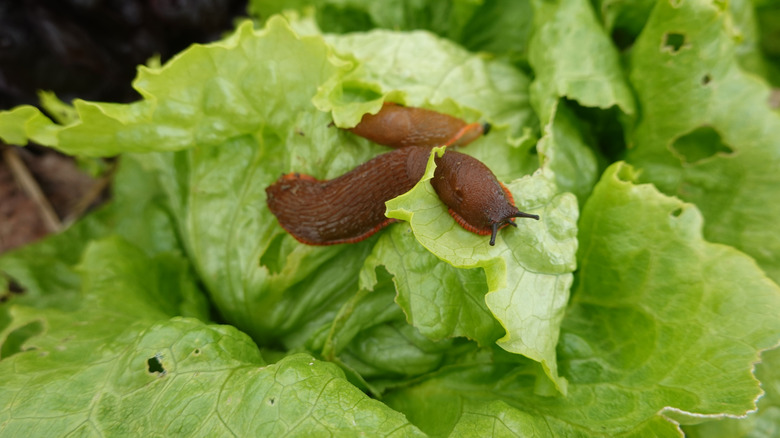
I was talking above about mice enjoying freshly planted seeds like beans, peas, corn, and squashes, but there are plenty of other pests, including slugs, that will attack your seeds once they've germinated. A glass cloche creates an actual physical barrier that birds, mammals, slugs, and snails can't easily cross. Remember that some slugs live in the soil, so they may pop up inside the cloche. Seedlings are particularly vulnerable during their first couple of weeks of life because they are still incredibly fragile and tender, and it's during this period that slugs can cause the most catastrophic damage overnight. A slug is a gastropod, which literally means "stomach foot," and they can destroy a whole crop of delicate seedlings in just one night.
If you want to protect the seedlings with a cloche, press the rim of the cloche firmly into the soil around the base to make sure you minimize any gaps. This will help with heat retention as well as keeping pests out. I like cloches for plants like my brassica seedlings while they're still very young because everything loves them. Whitefly, flea beetles, pigeons, slugs, and snails. You name it, they're at risk from it, particularly when they're tiny. Adding a glass cloche over individual plants before I get my larger row covers in place keeps the worst of the pests out and gives me time to get my more robust protection set up.
Harden off seedlings gently
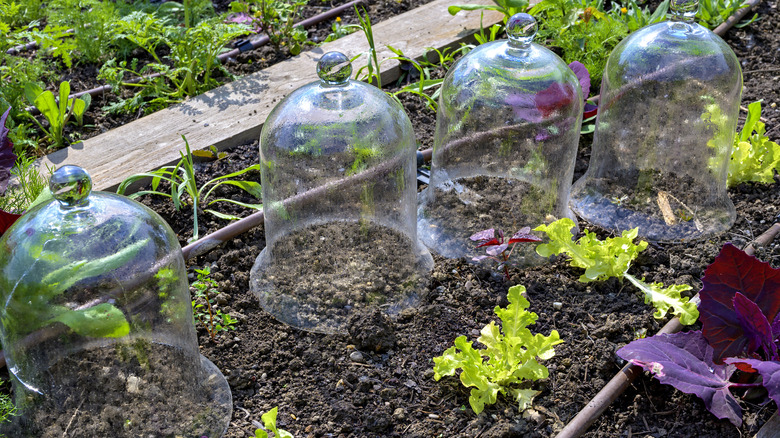
Hardening off is essential for any seedlings that you've grown in a greenhouse or a cold frame because they've been so sheltered that they are not strong enough to tolerate outdoor conditions without slowly acclimating to them. The traditional method involves moving your juvenile plants outside for an hour or two on day one, and then bringing them back indoors, then moving them back outside the following day for a little bit longer, and so on for about two weeks. I use this method for the majority of my seedlings because it's effective and I can do them all at once. However, for a smaller number of seedlings or just for one or two pots, you can use cloches instead.
Place the plant outdoors in a reasonably sheltered area with the cloche over the top, but leave one edge propped up on a thin piece of wood. The glass moderates the temperature swings and cuts the wind, while still providing full light, so the seedling is exposed to outdoor conditions in a more gentle fashion. It still takes around ten days to two weeks. Each day, you gradually prop the cloche open a little more at both sides until it's raised on a brick or two and is letting the majority of the ambient air in. Don't sit seedlings outside in very hot weather in direct sun under a cloche because they will burn. Only do this in dappled shade that doesn't get too much heat, and if you do have a very hot day, lift the cloche further or bring the plant back indoors for safety.
Boost growth in cold spells
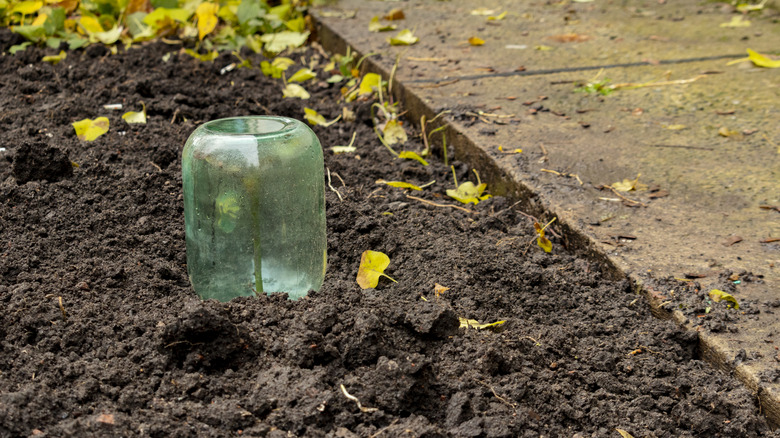
Temperatures don't have to dip as low as freezing to cause problems for some tender plants like tomatoes and squashes. A sudden cold snap where temperatures drop to around 55°F overnight can stall a plant's growth. If this goes on for more than a night or two, it can set the plant back for several weeks or leave it permanently stunted.
If you know you've got some cold weather coming but not a full-on frost, it's still worth putting a cloche over your most at-risk plants overnight to give them a few extra degrees so that they can keep growing without injury or stalling. Keeping the temperature high enough to keep them moving also ensures that you maximize growing days, which is important for warm-season and long-season crops when you are trying to get them to fruit and ripen before the weather turns. Frost blankets reduce or filter light, whereas the glass of the cloche lets the full light through so that the plants can continue photosynthesizing normally. Plus, a few glass cloches are more attractive than great big, unruly rows of horticultural fleece.
Increase humidity for fussy plants
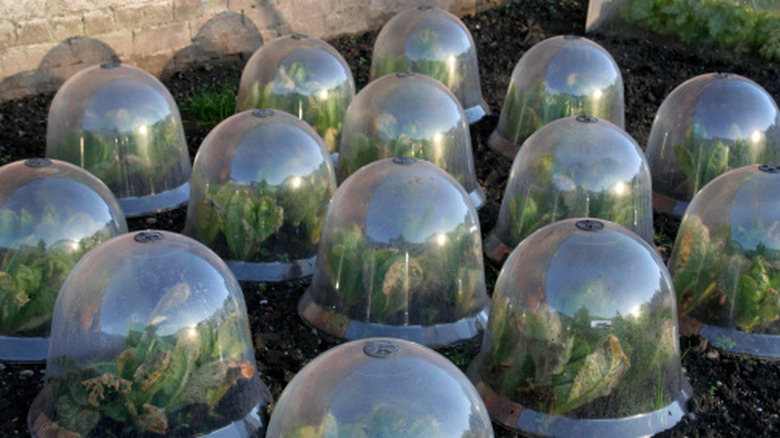
Some plants require more humidity than others, and that can be a challenge in drier areas. Glass cloches can be useful in these situations. When a plant "breathes out," it releases moisture through its leaves. This is called transpiration. Normally, that moisture disperses into the surrounding air and essentially vanishes, but if you place a cloche over that plant, the moisture from the plant's exhalation gets trapped inside the glass and creates its own humid microclimate.
If, for example, you're summering a tropical, humid-loving plant outside and the air is very dry or breezy, you'd need to provide more humidity to let that plant thrive. A glass cloche is a good option, as it creates a terrarium-like environment that's also useful for transitioning a plant that's just overwintered indoors back into the garden. Treat it just the same as hardening off seedlings. Place the cloche over the plant for the first week or so, slowly raising one side and then the other every few days so that the plant has time to adjust to outdoor conditions before you just let it sit outdoors.
Root cuttings more reliably
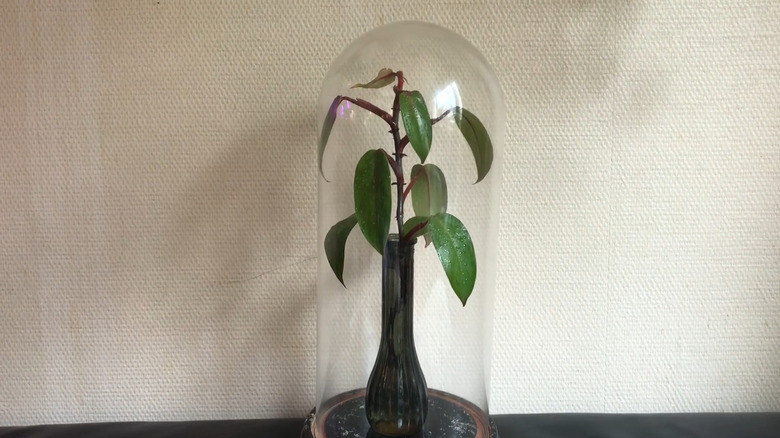
Rooting cuttings from softwood, such as shrubs, some herbs, and tender perennials, can be made easier and more reliable with the use of a glass cloche. One of the main reasons that these cuttings fail before they root is because, without roots, the cutting can't adequately replace the water that it's losing through its leaves, so it wilts and dies, often before the root hairs ever even form. However, if you put a cloche over those cuttings, it slows the water loss, giving the cuttings enough time to develop roots.
You do need to think about air flow, though. If you keep the cloche sealed over the cuttings without ever venting it, you'll create so much humidity that you'll get fungal diseases like botrytis. Softer-stemmed cuttings are particularly at risk, although even the woodier ones are not invulnerable. I generally lift the cloches off first thing in the morning while I let the dogs out to allow all of the condensation that's accumulated overnight to escape. You can stop putting the cloche over the cuttings once you start to see new growth, because this tells you that the roots have formed well enough that the plant is able to put energy into that new growth.
Pre-warm soil before planting

As I mentioned earlier, seeds germinate based on soil temperature. If you want to get planting earlier and give your seeds the best chance of getting started and increase the germination rate, then get the cloche in place over the planting zone at least a week before you plan to plant the seeds. This reduces the time a seed sits in cold, damp soil, and it means that the soil is pre-warmed and at an appropriate temperature by the time you add the seed.
You can then push your planting date earlier without the risk of the seed rotting in the soil. I find this is a particularly effective method in gardens with heavy clay soils. Clay and compacted soils hold water and have reduced air flow, so they are the slowest to warm up.
Create a sterile seedbed
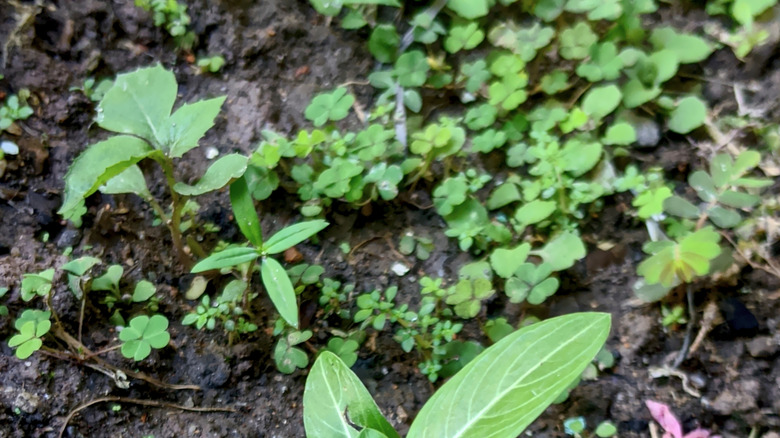
If you have a larger cloche, such as a large lantern-style cloche, you can use it to create a stale seedbed. As a permaculture specialist and a real advocate of no-dig or minimal-dig gardening, I love the sterile seedbed method. Basically, you prepare the garden bed as if you are about to plant — and then you wait. Weed seeds that you've just disturbed in that top layer of soil are going to germinate fairly rapidly. The idea is that while they are still those tiny seedlings, you hoe lightly or burn off, with a weed gun, that whole top layer of little plants. The process substantially depletes the weed seed bank in the top layer of soil, so you reduce the competition for nutrients where you plan to plant your crops or flowers.
Adding a large cloche over the area accelerates the process because it creates good conditions, including warmth and humidity, so it makes the weeds germinate faster. It lets you get two or even three rounds of this early growth, followed by hoeing or burning, compared to no cloche. Just make sure that you don't hoe too deeply, or you will bring more weed seeds to the surface and create a bigger problem.
Decorate with kids as a fairy garden project

If you've got kids and you want to get them more involved in the garden and encourage their love of nature and their imagination, then turning an old cloche into a fairy house is a really simple and fun idea. Making a DIY fairy garden is a fun family activity. You'll need to get some child-safe craft or glass paint that's suitable for outdoor use, and then you can let your little ones go to town and turn the cloche into a colorful fairy house or gnome hotel.
They can paint doors, windows, flowers, butterflies, and maybe add a few painted pebbles or little wooden welcome signs. You could perhaps pop it at the base of a tree or in a small, underutilized part of the garden to bring a little joy and color to the space. You could always add an easy-to-care-for plant that's safe for kids, such as creeping thyme, to the inside of the cloche, as long as you plant it in dappled shade so it doesn't get too hot. Remember to keep one side of the cloche lifted to allow airflow.
Add fairy lights for a garden focal point

A string of solar-powered or battery-powered LED fairy lights clustered inside a glass cloche creates a lovely evening focal point. You can use them as pathway and patio lighting or to create a warm and welcoming environment for an evening seating area. You can make it more organic and interesting by adding dried seed heads or some moss inside the cloche, or even by planting small succulents inside.
Just remember that even though they're under cover, you'll need outdoor-rated fairy lights because you may get some condensation and moisture inside the cloche. You could even make the display seasonal by switching out the contents of the cloche each season. For example, add pine cones along with some sprigs of evergreen in winter, and maybe a small squash or some dried orange slices in fall. Get the kids involved, too, and get them to add their own fun things to each season's display.