

The Pretty Perennial Bulb You Can Grow In A Pot That Butterflies Love
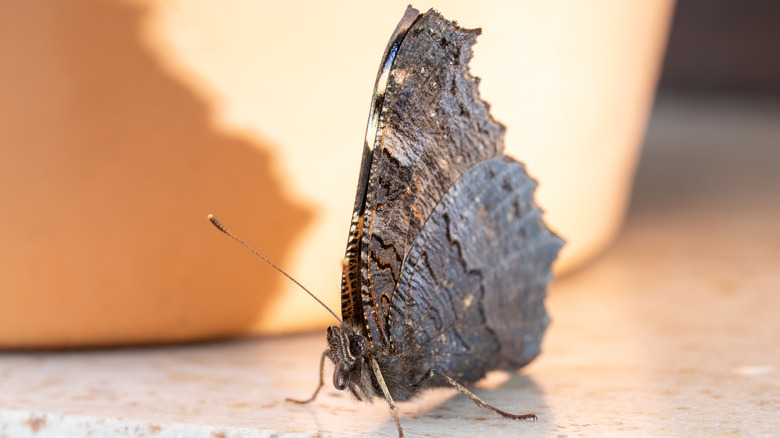
Gardening is hard work, but it's also a rewarding hobby that can produce some of the most magical environments right in your backyard. From the natural beauty of new blossoms bursting to life in the spring to the wondrous wildlife that the right plants attract, a carefully planned garden can create the most enchanting atmosphere. Butterflies are one backyard visitor that contributes to the illusion, and anemones are equally-magical flowers that butterflies love. In fact, they are so magical that it was once believed that when the flowers closed at night, they would house fairies overnight until the morning when they reopened. One particularly notable variety, the poppy anemone (Anemone coronaria), is well-known for its impressive display in small spaces.
There are many types of anemone flowers that can attract butterflies. But poppy anemone is particularly notable, especially since it's the one variety that Joanna Gaines grows in her garden every year. And the garden isn't the only place you can grow this stunning spring flower. You can also grow poppy anemone bulbs in pots, so you can attract butterflies to your outdoor space no matter how limited it is.
How to grow poppy anemone in pots
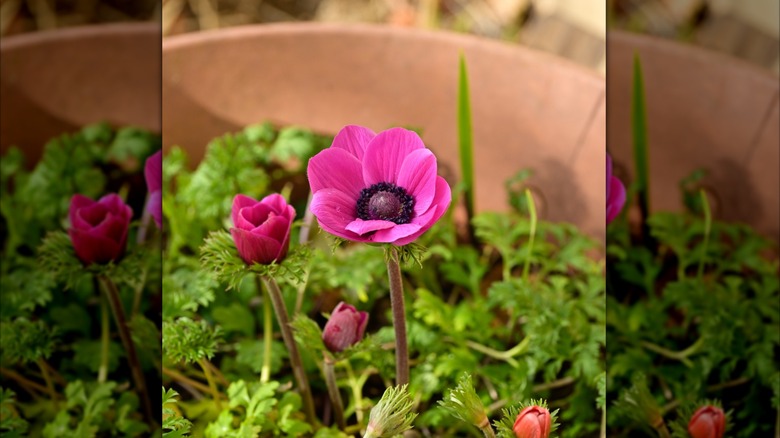
Poppy anemone is a herbaceous perennial flower that's hardy in zones 7 to 10, but when planted in pots, it can be overwintered indoors to keep blooms coming back each season. Planting your poppy anemone bulbs in pots is relatively simple. First, select a pot that can accommodate your bulbs. For a pot that is 10-12 inches in diameter, you may be able to fit four or five bulbs comfortably. Each bulb will produce a single 2.5-inch flower on a stem that can grow as high as 18 inches. Before planting, soak the bulbs in lukewarm water for up to three hours. Plant them about three inches apart at a depth of two or three inches.
Poppy anemones don't like soggy soil, but they do need consistent moisture to grow. A pot with good drainage can help prevent the soil from staying too wet. After planting, check the soil every few days to make sure it doesn't dry out while the roots are getting established. Afterwards, you can keep them outside as long as temperatures are between 50 and 70 degrees Fahrenheit. They will tolerate short periods of cooler or warmer temperatures, but should be brought indoors for winter and during heat waves.
When they start blooming, deadhead spent flowers until the end of the blooming season. Then, let the foliage die back and store it in a dry, dark location like a garage or basement until new shoots start to sprout in the spring. To restart growth in the spring, water well and place in full sun. You can move it outside when temperatures reach between 46 and 54 degrees Fahrenheit.
Tips and tricks to grow poppy anemone for butterflies
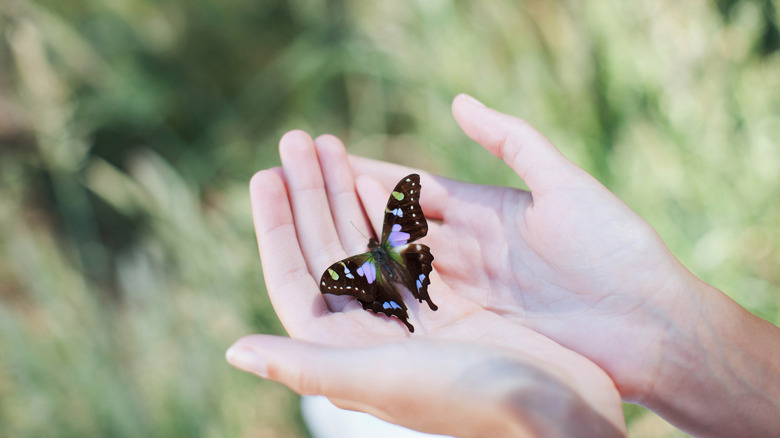
When it comes to attracting butterflies, flower selection is only half the battle. The other half is creating an arrangement that butterflies can easily identify and comfortably feed from. By planting your poppy anemone in pots, you have the freedom to alter the environment to fit your space while providing an ideal environment for butterflies. First, consider adding other plants to your butterfly haven. poppy anemones can be paired with plants like violas, pansies, daffodils, tulips, grape hyacinth, and alliums. Violas, in particular, are known for being fast-growing flowers that attract butterflies and thrive in pots. Butterflies are particularly attracted to pink, purple, orange, yellow, and red flowers.
Once you've selected a good variety of companion plants for your potted poppy anemone, you will want to think about placement. There are two key aspects to consider when placing flowers to attract butterflies: sunlight and protection. Butterflies prefer to feed in sunny locations, which works well for your plants that need full sun to thrive, like the poppy anemones. The area should also be protected from wind to help butterflies safely land to feed. Adding some rocks around the flowers gives butterflies a place to warm in the sun between feedings, and a small area with water can also help, depending on the types of butterflies you are trying to attract.