

Why Leaving A Dead Tree Or Shrub In Your Yard Isn't A Smart Idea
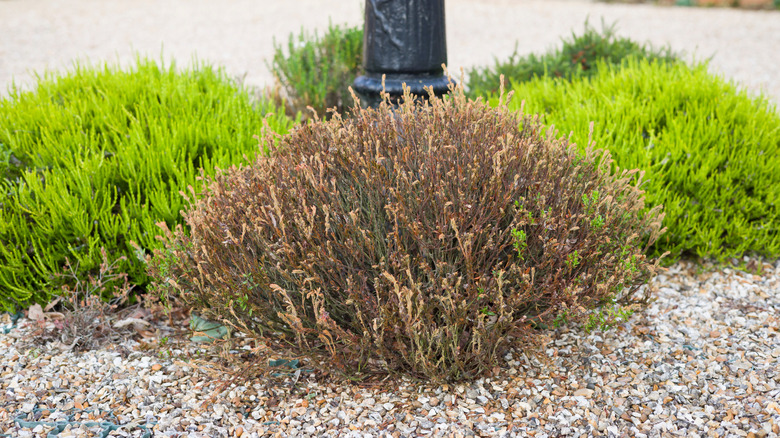
Whether it's the azalea you planted last fall or the old apple tree that's been limping along in your front yard the past few years, spring is often the time of year when the cold, hard truth sets in. You've given it a few more weeks, and the leaves never came. Once you've confirmed that your tree or shrub is dead, leaving it isn't a good idea, and not just because it's causing an unsightly mess in your front yard. Leaving a dead tree or shrub comes with other risks related to adding fuel to wildfires, falling, and harboring pests and diseases.
Although there are some cases where you should consider leaving that dead tree in your yard alone, these days, more people are thinking about the defensible space around their home, and for good reason. Driven by climate impacts like extended heatwaves and drought conditions, there is an increased risk of wildfires in some parts of the country. Defensible space is a buffer zone around your home that's managed to reduce the spread of fire, and it's one of the best ways to protect your home against fires.
Leaving combustible materials like dead tree branches that hang over your roof or dried out shrubs up against your foundation undermines the defensible space in your yard. But even if the threat of wildfire isn't a problem where you live, there are a few other reasons to get rid of the dead trees and shrubs in your yard.
Letting dead trees lie is risky
Live trees can add value to your property, while dead trees and shrubs can actually lower the price of your home. If you're selling, a dead tree or shrub can reduce curb appeal and could even signal to buyers that they need to look for other signs of neglect.
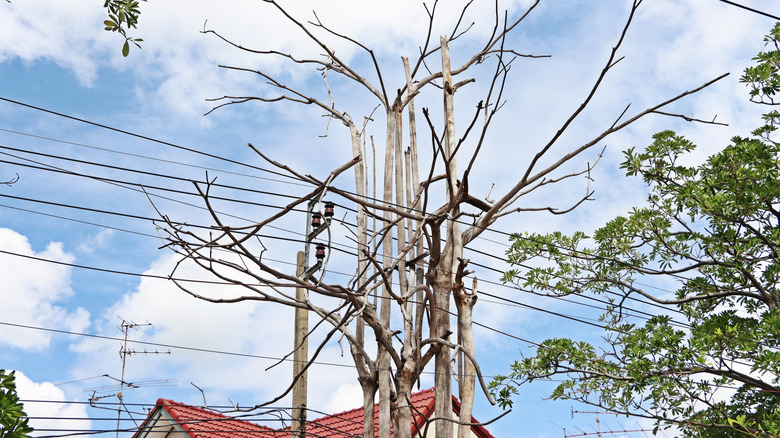
With the risk of falling branches, or even an entire tree, it pays to be proactive about getting rid of a dead tree or shrub in your yard. We all know that decaying wood loses structural integrity, so a dead tree can turn your yard into a danger zone, especially if electrical wires are nearby. Anything in the fall radius, including people, buildings, and vehicles, can be injured or damaged. All it takes is one wind storm or a heavy duty snowfall and you could have a significant problem.
The last major issue to consider is the risk of harboring diseases and pests. Dead trees and shrubs in your yard may already have signs of decay, including woodpecker holes, insect activity, or fungal growth. This opens the door to termites, carpenter ants, and beetles getting into your home, because they are attracted to decaying wood, and it could lead them to your house. Dead trees and shrubs can even harbor diseases or pests that spread around your neighborhood.