

Skip The Nursery Pots: Why You Should Plant Tomatoes In 5 Gallon Buckets
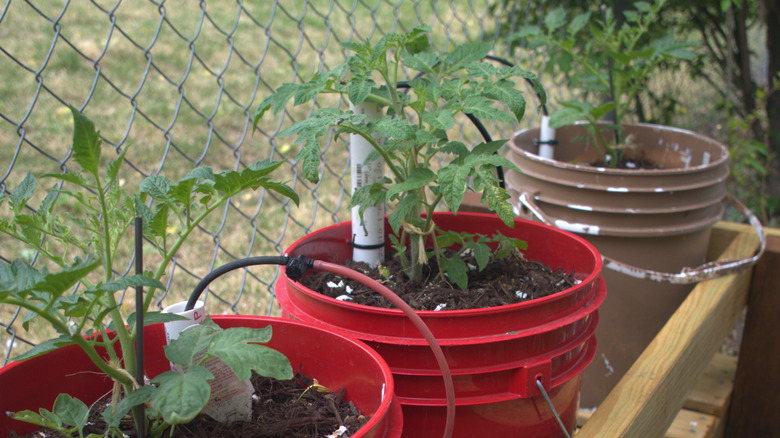
Don't bother fussing with nursery pots to start your tomatoes this year. You can actually grow juicy tomatoes from seed right in a 5 gallon bucket. Not only does growing tomatoes in a 5 gallon bucket help save space but it can also produce healthier plants. With fresh soil every year in your buckets, your plants will be less susceptible to blight or blossom end rot. It's also easier to keep away pesky ground-dwelling pests when you grow your tomatoes in containers. The depth and size of 5 gallon buckets also make them ideal for growing all kinds of tomatoes — even larger varieties. The 14-inch depth offers plenty of room for healthy root growth.
When preparing for this garden project, opt for a BPA-free bucket. Start by drilling holes on the bottom of the container and a couple along the side for drainage. You'll also need to pick a good spot for them. Tomatoes need full sun. Be sure to place your bucket in a location where they can receive at least 6 hours of sun a day. Ideally, soil temperatures should hover around 70 degrees Fahrenheit or warmer in order for seeds to germinate properly. If temperatures outside can't support this, you may need to start your buckets inside next to a sunny window. Once temperatures increase, you can move your plants outside.
How to start your tomato plant in a bucket
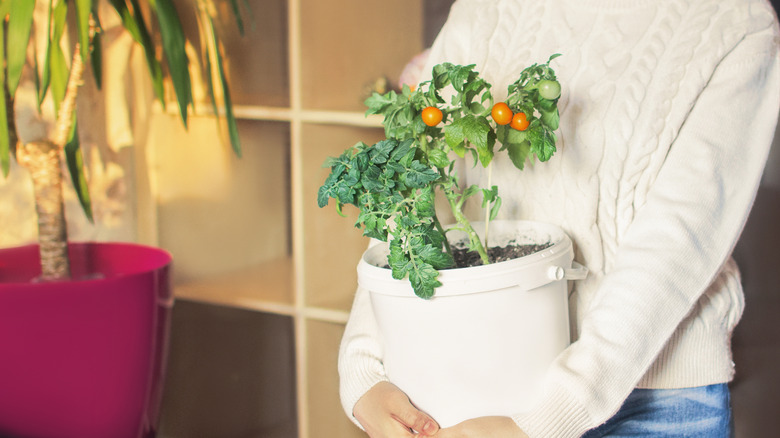
This process will work with any tomato seeds but there are also some cultivars specifically bred for container growing, too. Once you're ready to plant, fill the bottom of the bucket with small rocks or mulch to keep your drainage holes unobstructed. Then fill the bucket three-fourths of the way up with soil. Use fresh, nutrient-rich soil. Since it's harder to keep container plants moist, consider incorporating peat moss or coco coir for better moisture retention. Now sow seeds directly into the bucket and cover them loosely with an inch of soil. Be sure to diligently mist the top of the soil as the tomato seeds germinate. Never allow them to dry out.
When you spot your plants' first true leaves, treat your seedlings with a half-strength dose of water-soluble organic fertilizer. At this point, you can cull the weaker seedlings to make more room for your strongest contenders to grow. Continue to keep the plantlings moist as they get bigger. Once your young plants are a bit larger, place a tomato cage around them now rather than waiting until the point that they need help standing up straight. It can be harder to add cages to support your tomato plants without harming them once they're larger. The work isn't over quite yet. It's vital to actively tend to your plants throughout the season for healthy growth.
Caring for your tomato buckets through the growing season
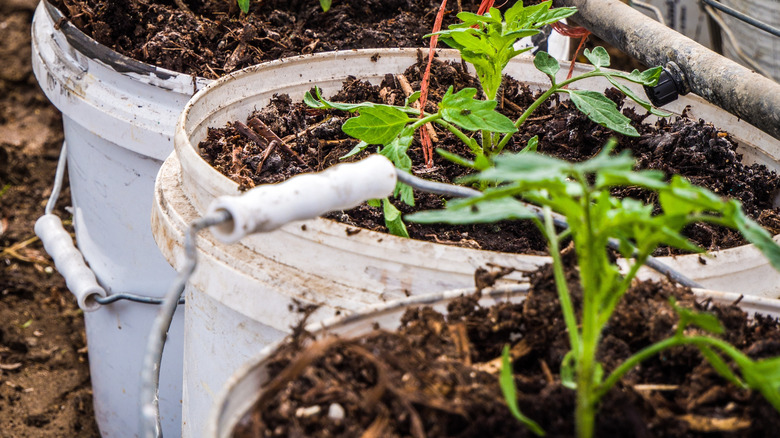
Tomato plants can be a bit needy. And since containers tend to dry out quickly, you may have to keep an especially close eye on your bucket garden to help your tomatoes grow big and healthy. It's important to water your tomatoes every morning and in extreme heat, check midday if they need more water. Be sure to water deeply at the root of your plants until you see water draining from the bottom. If you find that your tomatoes are drying out too quickly, add mulch to the top of the soil to help retain water better.
Tomatoes are already heavy feeders but they might require more frequent fertilization while growing in buckets. The soil simply won't retain nutrients in a container as well as it would in the ground. With that in mind, it's important to apply an organic fertilizer to your buckets every two weeks to support flower and fruit growth.
As long as you keep your tomatoes well watered and fertilized, they should take off. You can harvest them as soon as they turn red (or whatever color your tomato cultivar is meant to turn). Once the season comes to a close, you can retire your spent plant to the compost pile. To grow tomatoes in your buckets again next year, be sure to use fresh soil. You can repurpose last year's soil elsewhere in the garden by amending it with wood ash, compost, or coffee grounds. This revitalized soil can be used in containers or flower beds. You can also just toss old soil on your compost pile.