

The Perfect Companion Flower For Hostas To Attract Spring Pollinators
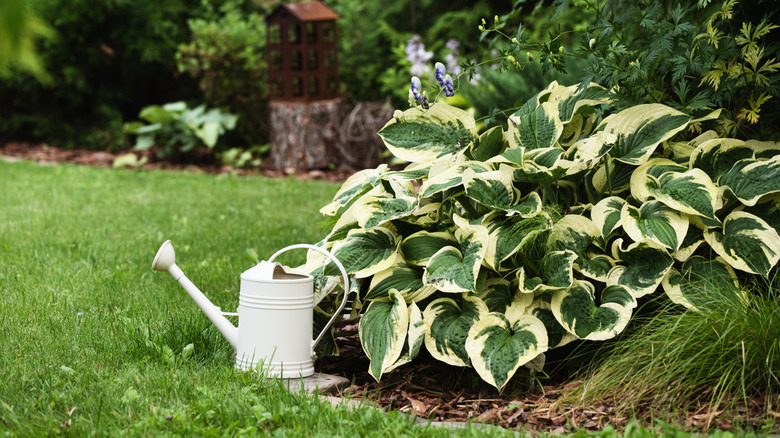
When you want your spring garden to look lush and green, hostas (Hosta spp.) have your back. These ornamental perennials are hardy in a wide range of climates, from the colder conditions of USDA Zone 3 to the warm temperatures of Zone 9. Although hostas can produce blooms that are shaped like little trumpets in white, lavender, or purple hues, there's a really pretty companion flower that's perfect for attracting pollinators and bringing showier color to your space: tulips (Tulipa spp.). Not only do these springtime flowers fit effortlessly into similar hardiness zones as hostas, but they were also one of the 10 flowering plants in Jackie Kennedy's White House Rose Garden. Find out why you won't regret a garden spilling over with a combo of hostas and tulips.
The easy-to-grow hosta is an ideal option for covering the ground with clumpy, coarse foliage, making it one of the best backdrops for tulips' bold, dramatic colors. But it's the timing that makes tulips such a perfect companion. Hostas can attract important pollinators, including bees, hummingbirds, and butterflies. But when paired with tulips, your space can quickly become their favorite spot. Tulips are some of the earliest bloomers and are more or less synonymous with springtime. Depending on the variety, tulips typically bloom from late February to mid-April. Though their bloom time will never be as long as we want, hostas pretty much pick up where tulips leave off in summer, keeping pollinators coming all season.
How to plant tulips with hostas for a showy garden
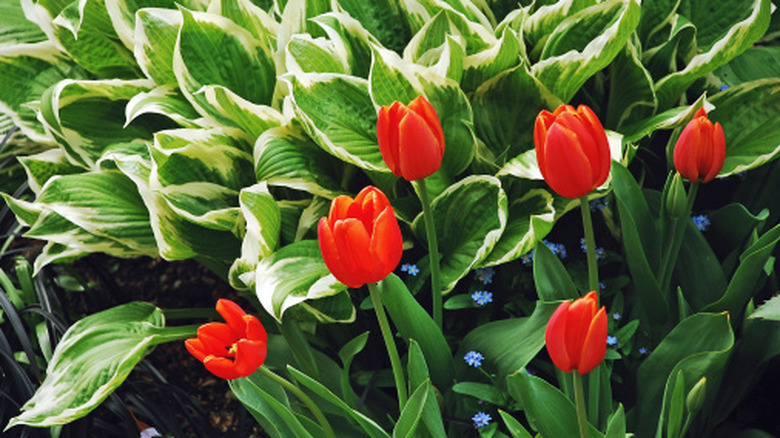
To attract a flurry of pollinators to your yard early in the season, adding tulips to your hostas is a great tactic. A variety of hostas with lush leaves and flowers beckon pollinators, but tulips use ultraviolet patterns to guide pollinators in their direction. It's like getting a double dose of a spectacular scene.
Beyond the lively pollinator activity, pairing bulbs and perennials within the same space is a smart way to camouflage one plant that stops blooming and highlight the other that takes over. As your tulips begin to grow and bloom, hostas remain low and unobtrusive, standing by waiting their turn in the spotlight. But to make the combo work, the key is to plant them at the right time so they aren't competing for attention. It's the best of both worlds in terms of eye-pleasing design for humans and beneficial blooms for pollinators.
Tulips are a low-maintenance bulb that grows well in pots, but in the ground, they should be planted in the fall. If you don't have hostas, they can be planted almost year-round, but the best times are a few weeks before spring and the first frost in the fall. Hostas don't tolerate super-hot, sunny spots. Instead, they prefer mottled sunlight. But it's important to find a balance between the two plants because tulips need to grow in an area that gets at least 6 hours of full sun, like underneath tree canopies that have yet to fill in after winter. Tulip bulbs need less than 12 inches of space, so make sure you're familiar with the hostas' full growing potential for a showier garden.