

What To Do If You See A Termite Swarm In Your Yard Or Home
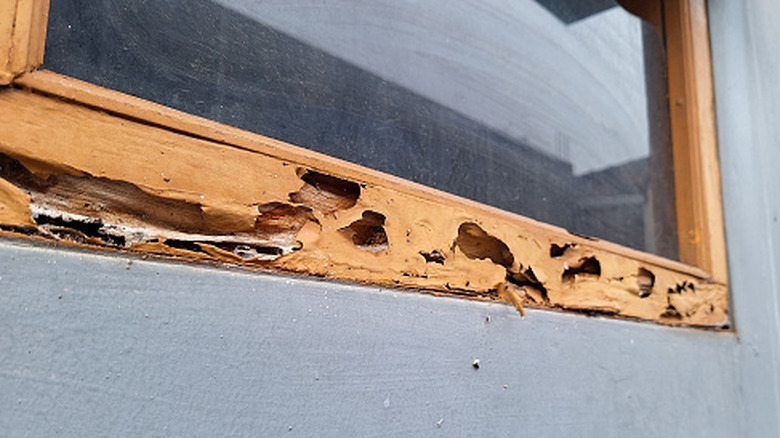
If you have a fear of insects, you don't want to see bugs living in and around your home in large numbers. Seeing dozens of almost any kind of insect near your home may leave you feeling nervous (or downright terrified). However, some insects do far more than cause fear. Seeing termites swarming in your yard or house could mean you're at risk of experiencing expensive damage to the structure.
If you believe you have swarming termites, the first step is verifying what you're seeing. Swarming termites are tiny insects, usually dark-colored and about ⅜ of an inch in size. You could see thousands of insects flying or walking as part of a swarm. However, seeing even a few termites flying around inside your house can be a sign of a significant infestation. It can be difficult to see them actually flying in a swarm, though, as they don't fly well, and the swarm usually only lasts around 40 minutes. It's more common to see piles of discarded wings, after the swarm ends.
If you believe you are seeing clues that indicate a swarm of termites, you should focus on the best ways to get rid of the termites. You could try some DIY methods of removing these destructive insects, such as using bait. However, many people rely on professional exterminators to eliminate the threat because they offer a guarantee of success. The option you select may depend on where you're seeing the bugs.
What you should (and shouldn't) do if seeing a swarm indoors
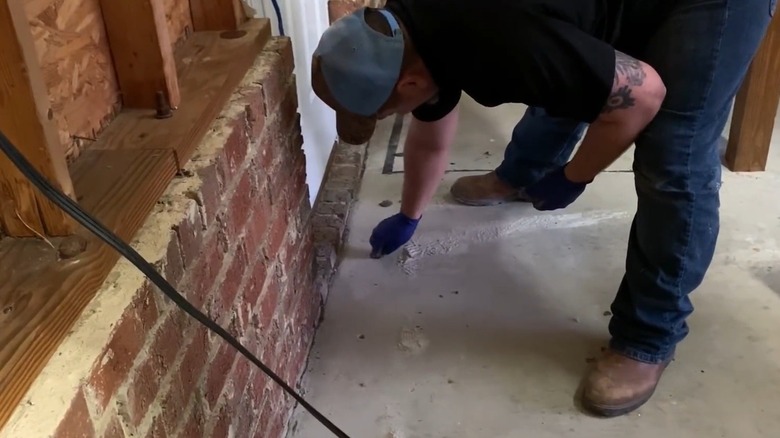
If you believe you are seeing active termites moving or flying inside your house, or if you find discarded wings and dead termites along window sills or close to a light source (like a lamp), you should call a professional for help. An indoor swarm often means you have a higher risk of an active termite infestation inside your home, which could be actively wrecking your home's foundation.
Call a professional for an inspection and suggestions on the right termite treatments to deploy to eliminate the insects. Don't panic and spray the bugs or try to smash them yourself. Don't tear open or drill into walls where you think termites may be hiding, as this may simply cause them to spread to other areas. Depending on the level of infestation you have, pros may not need to open walls or tear up flooring to treat the termites, so you aren't necessarily helping them by digging into the walls yourself.
Instead, try to spot where they're moving into or out of walls and mark these locations, giving the professional a head start on where to apply treatments. Try to collect some insects (alive or dead) or discarded wings in a plastic bag that you can show to the professional, as some homeowners may have flying ants or small bees inside the house and misidentify them as termites.
Steps to take after seeing a termite swarm in your yard
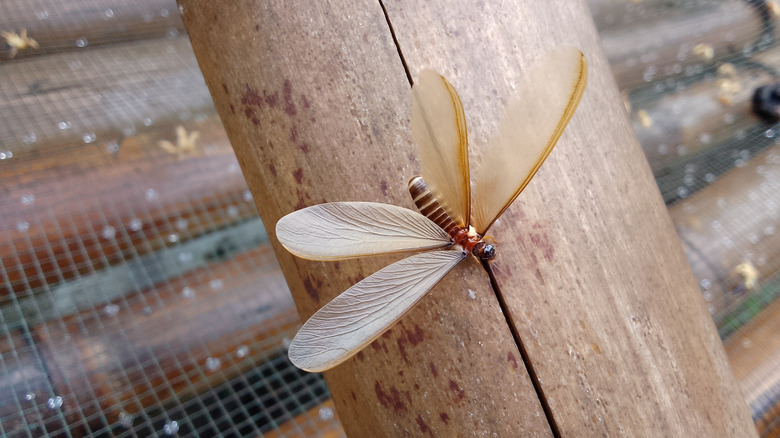
If you see the swarm outdoors, it doesn't necessarily indicate that your home has an infestation or is in current danger. However, an outdoor swarm could lead to a future infestation. When termites swarm, they're sending insects away from an existing colony to try to establish new colonies. You may want to call professionals for help to receive a guaranteed outcome in battling the insects outdoors. If you make a mistake during a DIY treatment, it may not fully eliminate an established colony.
If you want to try a DIY option outdoors, you could use an insecticide spray (foam or liquid) around the foundation, which is designed to eliminate termites in the soil. Another option is installing termite bait treatments in the ground around the home, which is effective for managing subterranean termites, which build underground nests. Whether you call a professional or try to eliminate the swarm yourself, you can take precautions around your home and yard to prevent a termite infestation in the future. Start by looking for areas of persistent moisture around your foundation from leaky pipes or poor grading, as termites are drawn to damp soil. Termites are also drawn to wood chip mulch, so you should make sure these materials are at least 6 inches away from your foundation. Use a barrier of coarse sand around the foundation. Termites typically cannot build tunnels in coarse sand with particles sized between 2 and 2 ¾ mm.