

The Peel And Stick Installation Rule You Should Remember Before Summer Heat Hits
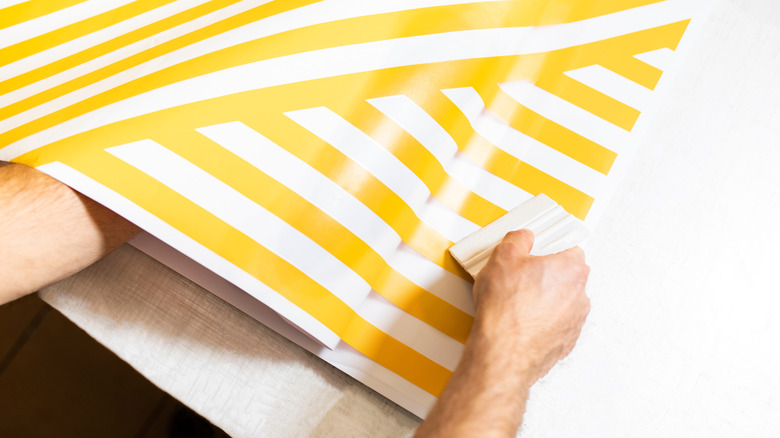
When it comes to wallpapering your space, you don't want to get stuck with a faulty design. Among the biggest mistakes DIYers make when hanging wallpaper is not seamlessly lining up any patterns. But, as HGTV star Galey Alix noted, there's another potential problem to consider. Even if your installation looks picture-perfect when you've finished, "when you have temperature changes, drywall can slightly expand and contract," she told Parade Home & Garden, "which will create visible gaps in your peel-and-stick panels if you don't overlap them during installation."
Unless you live somewhere with a temperate climate that sees few fluctuations in temperatures, once that summer heat hits, those slight gaps could truly drive you up the wall. That's why, "for peel-and-stick," explained Alix, "I always recommend a ⅛th inch overlap when installing." While that small of an overlap isn't so big that it would mess up the look of the design, it will provide a bit of wiggle room should walls expand ever so slightly.
How to Try This Wallpaper Hack
While some like it hot, your drywall certainly does not. In extreme heat and high humidity levels, the naturally porous gypsum in the drywall tends to absorb moisture and can cause the walls to expand. If possible, take preventative steps when installing your drywall by opting for specialized, high-quality, moisture-resistant drywall. Proper ventilation and a top-notch HVAC can also help your home withstand those larger temperature swings that can cause expansion and contraction and keep your home's interior environment as stable as possible.
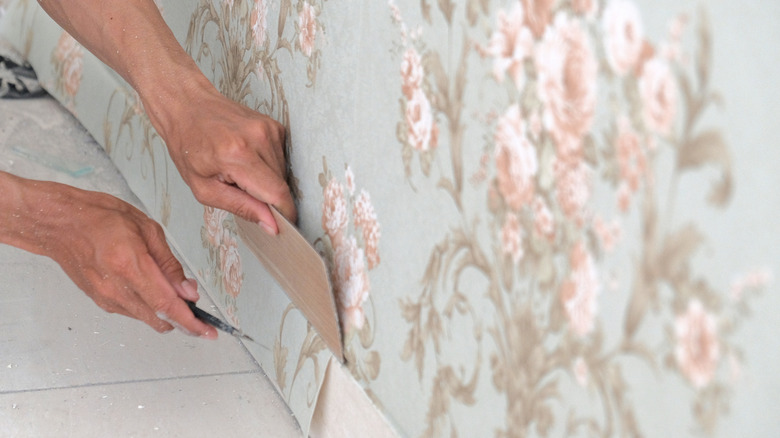
But overlapping the seams of your wallpaper offers another layer of protection. Before you try it, check the instructions on your peel-and-stick paper, as some are designed to be overlapped while others are meant to be butt-jointed, where the edges meet but don't cover one another. Those designed to be layered generally come equipped with an indicator line at the top of the panel to help you properly straighten things out.
If you're concerned about the top sheet properly gripping the bottom, you can apply a thin layer of wallpaper seam adhesive for a quality stick. And it's always smart to use a seam roller to gently press the paper down. This guarantees a firm grip and helps make the seam less noticeable, though a squeegee, a plastic paint scraper, or even a credit card can also get the job done.