

The Beautiful Flowering Perennial That Is Highly Attractive To Birds And Pollinators

Are you looking for a plant to fill a challenging spot in your garden that also boasts bright blooms that will attract scores of birds and other pollinators? There's a colorful, low-maintenance perennial that will thrive in your poor and rocky soil, yet can also be incorporated into traditional backyard designs. Its bright, daisy-like, yellow flowers add a wild touch to cultivated gardens and cheer up drab rock walls or marginal, sandy areas. If you haven't guessed already, the plant in question is lanceleaf coreopsis (Coreopsis lanceolata).
Best grown in USDA Hardiness Zones 4 to 9, lanceleaf coreopsis — also known as lanceleaf tickseed — will cover a garden bed in sun-hued blooms from May to July. The cheerful yellow flowers on long stalks seem to float above the plant's clouds of sword-like foliage. Lanceleaf coreopsis grows up to 2 feet tall, with a spread of 1 foot — or a bit wider. The blooms of this tough perennial are daisy-like in shape, and the bright-yellow petals have toothed ends. The flowers are followed by striking, dark brown seed heads.
There's good reason to incorporate lanceleaf coreopsis into your bird and butterfly garden, or use it as a wildlife-attracting plant in a xeriscape or cut-flower garden. Birds and other small seed-eating wildlife particularly appreciate it as a late summer through early fall food source. Among the many bird species you might see visiting this cheerful perennial in your yard are chickadees, doves, finches, cardinals, indigo buntings, warblers, mockingbirds, and red-winged blackbirds. Many butterfly species are drawn to the flowers, including painted ladies, buckeyes, and skippers. Fortunately, while this wildlife favorite attracts pollinators such as the sweat bee, it is resistant to browsing from bigger critters, such as deer.
How to grow drought-tolerant coreopsis to feed backyard wildlife
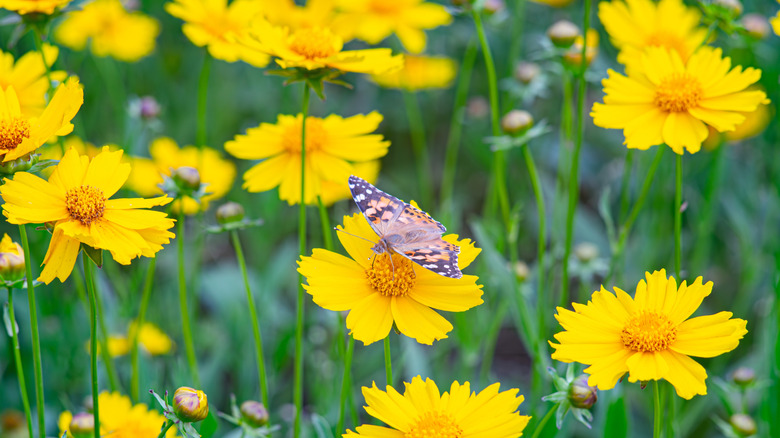
As this plant's other alternative name — sand coreopsis — suggests, this colorful perennial is happy living in dry, gritty conditions. In the wild, lanceleaf coreopsis scrabbles along sandy banks and sand dunes, as well as gravelly roadsides and sparsely vegetated bluffs. In home gardens, it's a natural choice for the xeriscaping trend that can help your garden in a drought. You can also transform a sunny rock garden with this low-maintenance perennial. That being said, lanceleaf coreopsis isn't averse to a bit of moisture. It tolerates moderate watering if it's planted in well-draining soil.
Choose a sunny spot for lanceleaf coreopsis — and a site that hasn't been overly enriched with fertilizer. Remember, you're trying to mimic the sandy, low fertility conditions in which this yellow-flowered perennial thrives. If your planting area needs better drainage, work sand or gravel into the soil. It's also not a good idea to interplant lanceleaf coreopsis with other tickseeds, or you risk hybridization. Although it's not considered invasive, this flowering beauty tends to self-seed lavishly. You can expect it to spread.
Lanceleaf coreopsis isn't among the most long-lived of perennials. Dividing the plant every two or three years can prolong the life of your patch. During the growing season, frequently cut off some of the spent blooms to keep the plant looking neat and bolster its health. Bring the cut flowers indoors for your vase. Make sure, however, to leave plenty of coreopsis blooms for the butterflies to savor and for the birds to enjoy once the flowers mature into seed heads.