

For A Low-Maintenance Garden, Add This Shade-Loving Perennial To Your Yard
Have you ever struggled to find just the right plants for that shady spot in your garden that generally doesn't get too much attention? It can be a challenge to find a species that looks amazing, doesn't mind the lack of sunlight, and is happy to do its own thing without too much input from you, the gardener. It's probably even more difficult if you have your heart set on a grass-like plant that will add a bit of softness to the landscape. Lucky for you, there's a charming ornamental perennial grass that is going to suit you perfectly. It's known as Japanese forest grass (Hakonechloa macra) and it loves those shady spots in your garden, especially if your summers are hot.
There are plenty of reasons why you should add beautiful Hakone grass to your landscaping, but the most prominent one is that it requires minimal care. Japanese forest grass will thrive in USDA Hardiness Zones 5 through 9 and forms an attractive mound that's under 2 feet high and wide. You'll appreciate the grass-like bright green leaves that have a cascading growth habit, which looks adorable under taller growing trees. In the fall, the leaves tend to change color slightly, exhibiting a faint blush of pink and red, just before the entire foliage dies back over winter. Japanese forest grass is a unique ornamental grass that looks perfect planted along a shady driveway, as well.
How to grow Japanese forest grass in your shady garden
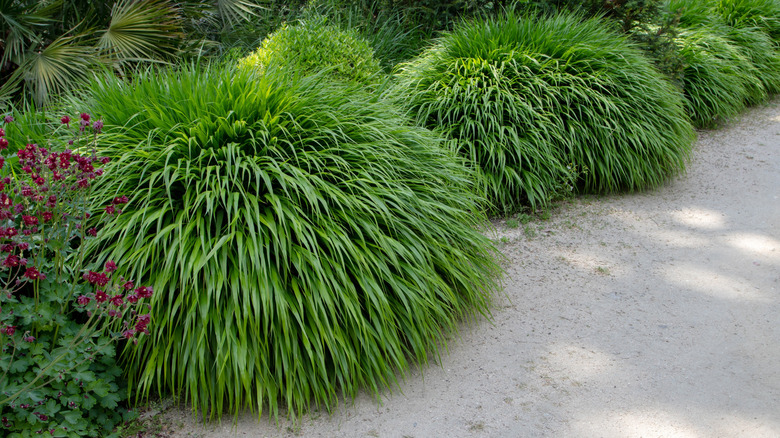
Japanese forest grass loves soil that's full of organic matter, which is why this is the perfect plant for your shade garden. As long as the soil can drain well and doesn't remain wet, this grassy perennial will fit right in. You can plant it as a specimen under a lovely shade tree, or plant a few of them along a nice, shady border. You can space them fairly close together, as Japanese forest grass is a slow grower, and it could take years before you'll have to divide the clumps. That's just another reason why this plant is so low-maintenance.
In fact, once you've planted Japanese forest grass in your yard, all you really need to do is keep it watered until it becomes established. There are a few tips that you might want to follow, though, if you want this species to look its best. If your region gets harsh winter frosts, you might want to cover the crown of the plant with a fairly thick layer of mulch to prevent root heaving. In late winter, it's a good idea to remove the old foliage to keep your plant looking nice and fresh once growth resumes again. You'll find that there are quite a few cultivars available, including 10 Japanese forest grass varieties you should plant for beauty and texture. Many of these have variegated leaves or golden foliage.