

What To Do If You Find Spiders In Your Bird Feeder
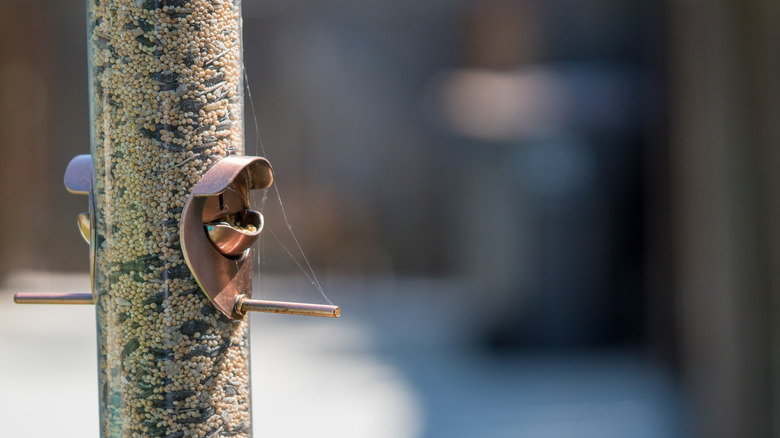
Spring is the perfect time to prepare your birdfeeder for the upcoming season. There are many budget-friendly DIY feeders that will keep birds flocking to your yard year-round, and while effective and charming, these feeders can lead to a different kind of guest — spiders. While spiders don't inherently enjoy bird seed, they do enjoy the steady supply of prey that this seed brings, like flies and other small insects. While your first instinct might be to reach for a can of bug spray or pesticide, it's actually a manageable problem that can be tackled with basic solutions.
The good news is that most spiders are actually harmless to birds (they even act as a food source). However, a thick spider web can block the feeding areas or even entangle smaller birds, making the feeder an unintended hazard. The best solution is a manual cleaning with a soft brush. Wipe away the webs you see, including any egg sacs. A simple mixture of warm water and mild dish soap is usually enough to clear the area and discourage the spiders from rebuilding their architectural masterpieces right where the birds are trying to eat. You'll need to ensure there is no soapy residue left behind, since it can strip the natural oils from a bird's feathers — otherwise, you might end up needing a new bird feeder.
While cleaning, check for spider egg sacks. These look like small, silk-wrapped balls. Removing them in the spring prevents hundreds of spiders from hatching on your feeder later in the summer. Avoid using harsh chemical pesticides, since these can linger on the plastic or wood and potentially poison the birds. Lastly, you'll want to focus on cleaning the anchor points. Spiders usually attach their webs to the hooks or poles holding the feeder. Cleaning those specific spots is often more effective than cleaning the feeder itself.
How to keep your bird feeders spider-free for good
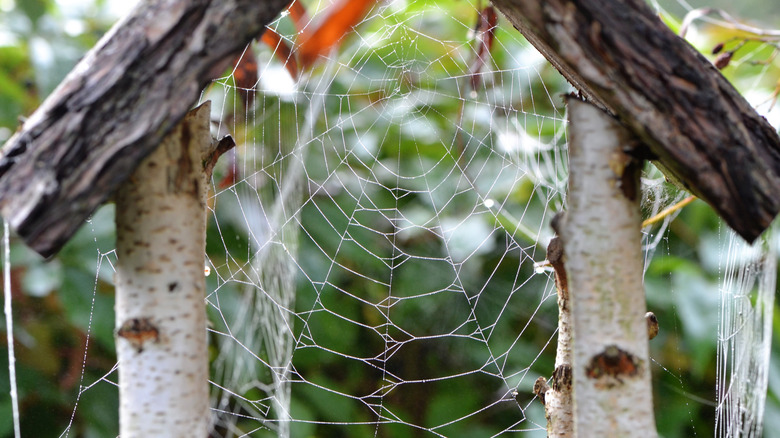
Even though the spiders themselves are relatively harmless to any bird visitors you might have, their webs can be a real nuisance. To keep your bird feeder spider-free, you must be consistent with your maintenance. Every time you go out to refill the seed, take a quick cloth or brush and wipe down the poles and hooks, where spiders likely anchor their webs.
If you notice a specific feeder is constantly covered in webs, it might be too close to a "bridge" (like a tree limb or a porch eave). Moving it just a foot or two into the open can make it much harder for spiders to anchor. Also, spiders love the insects that live in the "hull pile" under your feeder. Using a "no-mess" seed mix (seeds without shells) can reduce the debris that attracts the spiders' lunch in the first place. Avoiding the top mistakes you're making with your bird feeder will help you not only avoid spiders, but will ensure a healthier environment for your feathered friends to thrive.