

Plant This Long-Blooming Perennial For Pretty Pink Flowers From Summer Into Fall
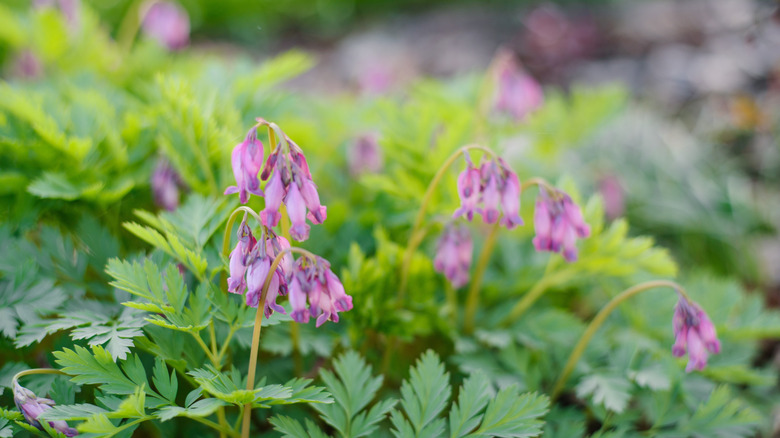
Growing flowers is a simple way to brighten up any yard. It is no surprise, then, that gardeners and homeowners are always looking for new flowers to grow in their gardens. And if that sounds like you, wild bleeding heart (Dicentra eximia) is definitely worth a look. It is a herbaceous pink perennial from the poppy family, known for its pretty pink and purple flowers. The flowers are shaped like hearts, appearing on the plants in late spring and fall. Just keep in mind, though, that this blooming is usually not continuous, especially in warmer regions. The flowers will, however, come back when the weather starts to cool at the end of summer or early fall.
The flowers are also nectar-rich, and they attract a number of pollinators to the garden, including bees, butterflies, and hummingbirds. They are a good pick if you are trying to bring more pollinators into your yard and garden. As for their leaves, wild bleeding hearts have lacy gray-green, finely cut foliage with a fern-like appearance. And in terms of size, they grow about 1 to 2 feet tall and equally wide. Their growth rate is slow, but the wait is totally worth it, as once established, they can live for up to 10 years.
Wild bleeding hearts prefer dappled sun and moist soils
When it comes to growing wild bleeding heart, you can use both seeds and division. Division, however, is the preferred method because these plants grow slowly and can take a while to establish from seed. You can also buy wild bleeding heart plants at some of the best places to find the most affordable houseplants online or your local plant nursery. No matter how you start wild bleeding heart, make sure you pick a spot that sits in partial shade or filtered sunlight. This is not to say that it cannot grow in full sun. It definitely can, especially if you keep the soil moist.
It can grow in full shade, too. However, in full shade, it won't produce as many flowers. As for the soil, make sure it is fertile, moist, and well-drained. Do not let the soil get dry in summer or stay too wet in winter — wild bleeding hard won't tolerate those conditions. Other than that, the wild bleeding heart is relatively low-maintenance. Even better? It does not have any serious pest or disease problems. They are a good choice if you are trying to create a low-maintenance flower garden.
You can grow wild bleeding hearts individually in containers as filler plants or grow them in groups in shaded borders or rock gardens. If you are growing them in groups in beds, make sure that you maintain a spacing of about 18 inches between the plants. Placing plants too close to each other increases competition between plants and can also lead to fungal and pest problems.