

Plant This Shrub In May That Creates Privacy To Boost Curb Appeal All Year Long

Maintaining an attractive front yard is a key component of making a good first impression. While curb appeal is especially important if you're selling your home, it's also a good way to contribute to the overall beauty of your neighborhood. One of the easiest ways to boost your home's curb appeal is planting trees, flowers, and shrubs in your front lawn. Landscaping is one of the first things someone will notice when they come across your home, and there are an array of beautiful plants for your front yard. Privacy hedges, in particular, aid in offering sanctuary from street noises and prying eyes while also increasing property value. Holly (Ilex spp.) is perfect to establish in May if you want to build a hedge.
There are several different varieties to choose from under this umbrella, but hollies are broad-leaved shrubs. Most are evergreens, but there are some deciduous varieties, too. Evergreen varieties are typically more desirable for privacy hedges since they can retain their leaves year round. This plant is suitable to grow in USDA Hardiness Zones 4 to 9. They're typically characterized by dark leaves and their signature red berries, however, some feature white, orange, yellow, or even black berries. You can plant your holly any time of year, but they will transition easier if you opt to establish them in your yard in spring or fall. May is a great month to aim for in many inland regions because the danger of frost has likely passed at that point.
Choosing holly for your hedge
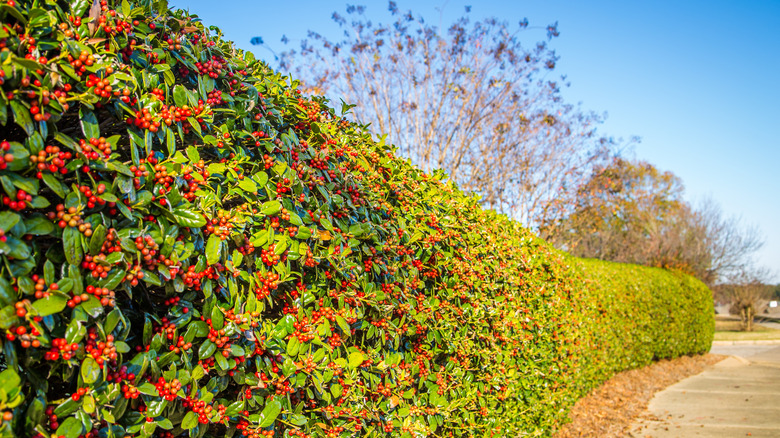
There are plenty of plants that lend themselves nicely to hedging, but holly offers an array of compelling benefits. To start, it's tough against pollution, making it an excellent option for high-traffic urban front yards. Growing anywhere from 2 to 10 feet, they can serve as a fantastic windbreak or as a wildlife shelterbelt. This beautiful bush can also attract songbirds. If you're looking for a hedge to boost your curb appeal all year, evergreen holly will remain beautiful even through the winter. This diverse group of plants includes everything from weeping to rounded bushes. Good holly varieties to use for cultivating hedges include the Japanese holly, English holly, or Meserve holly.
Keep in mind that most varieties of holly are dioecious, meaning they require both a male and female plant for its fruit to set. While there are some self-fertile cultivars, you'll need one of each sex in most cases to see this plant's full potential. It should be fairly obvious which plant is which at the garden center, as the vendor will clearly mark male and female plants for you to easily identify them. If you already have a holly in your yard you're hoping to make into a hedge, it might be a bit harder to distinguish. Females produce berries, but only if there's a male nearby. It might be a safer bet to examine its flowers in spring. Male plants will feature more prominent flower stamens.
How to plant and care for holly
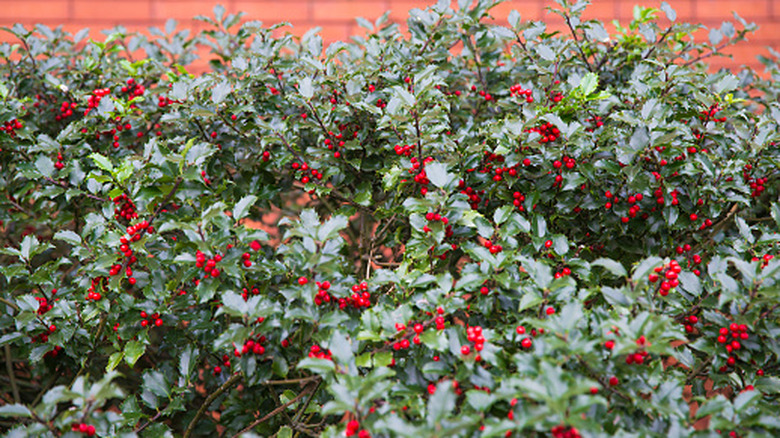
It's not terribly difficult to successfully grow and care for holly, as it's actually a fairly easygoing plant. To set them up for success, plant in an area with full to partial sun. These plants prefer well-drained, slightly acidic to neutral soil. If you're hoping to hedge your hollies, you'll need to plant them closer together. How close will depend on your desired privacy hedge height. If you're going for a low hedge, plant your holly 3 to 4 feet apart. For a medium hedge, plant your holly 5 to 7 feet apart. For an 8 to 12 feet screen, plant your holly 4 to 6 feet apart.
When you're ready to plant your holly, create a saucer-shaped hole for each plant roughly two to three times the size of the plant's root ball. Loosen the root ball before placing it in the hole. Backfill the hole with soil and pack it in firmly to get rid of any air pockets. Give your freshly planted hollies a good soak. Consider adding a layer of mulch at the base of the holly bushes, being careful to avoid direct contact with the trunks. This will help with moisture retention. Water your plants on a 1-inch-per-week basis for the first year.
Once they're established, these plants are pretty low maintenance. Apply fertilizer in the spring to encourage hedging. You only need to prune them if they need shaping or if they have damaged branches. Wait to do major shaping until winter or early spring while the plants are dormant to encourage lateral growth. Light shaping can be done in spring or summer, but be sure to check if your cultivar's blooms grow on new or old growth before you trim it.