

Upgrade Your Driveway Edge Using A Low-Cost, Natural Feature That Prevents Flooding
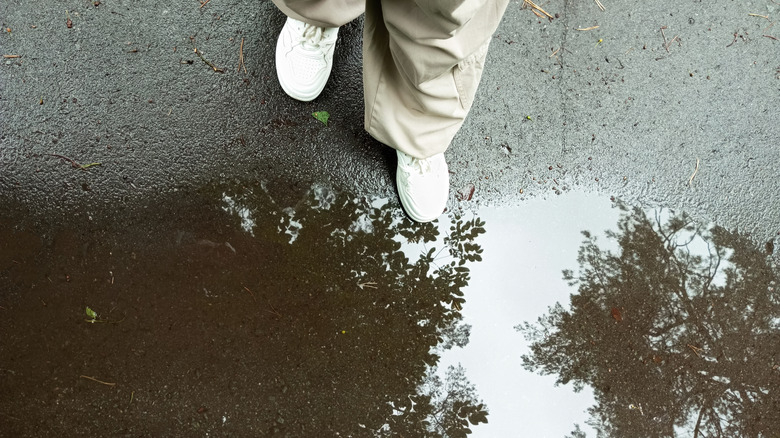
Driveway surfaces like concrete and asphalt don't absorb water, so rainwater runoff along the edges can accumulate quickly and lead to issues like pooling, erosion, and flooding. However, you don't need to invest in an expensive upgrade or drainage system to fix this problem. There are plenty of driveway edging ideas to boost curb appeal, but one method stands out due to its affordability and capacity to improve drainage. Using a simple combination of berms and swales as driveway edging can help you redirect rainwater naturally, while blending right into your landscape. Best of all, you're just reshaping the soil you already have!
One of the more budget-friendly driveway edging ideas, the method works with gravity rather than fighting against it. A swale is a shallow, gently sloped trench that helps manage runoff, while a berm is a raised ridge of soil created alongside the swale. When rainwater flows downhill, it tends to pick up speed and carry soil with it, leading to erosion and pooling at the lowest point. Swales interrupt that flow, reduce its water, and give water time to soak into the ground. Meanwhile, berms act like a side barrier to keep the water in place. The combination of swales and berms not only reduces risk of flooding on your driveway, but it also improves soil moisture and plant health nearby. It's a drainage solution that keeps your grass happy and healthy.
Steps for constructing a swale-and-berm driveway edge
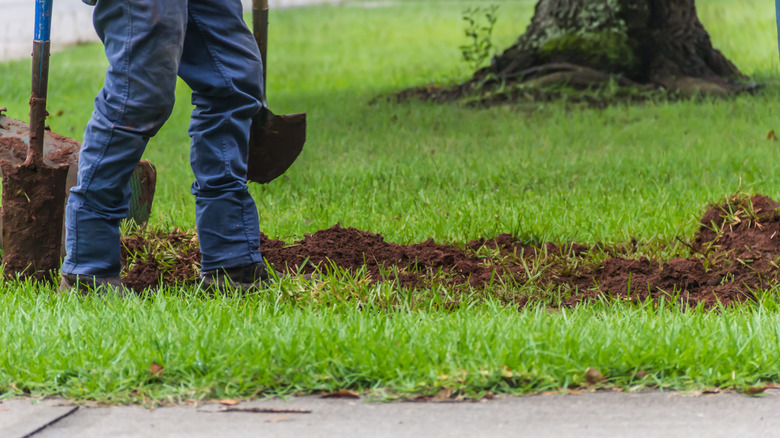
Observe how rainwater moves across your property. During or after a heavy rain, note where the runoff forms and what direction that it flows in. That natural path will be your guide. From there, dig a swale along the edge of your driveway, following the slope of the land. Use a shovel, pickaxe, or garden trowel to excavate. The swale doesn't need to be deep, but you should make it wide. For example, a 12-inch-deep swale should be about 3 to 4 feet wide. Pile the soil you excavate on the downhill side to form the berm.
The goal is to set up the swale so it directs the water before it gains momentum. You can channel it to a garden bed or a section of your yard that can handle more moisture. Just make sure that the runoff isn't channeled towards a neighbor's property; in some jurisdictions, it may also be illegal to direct the runoff to a municipal drain. You can run water to test the new feature once it's complete or just wait for the rain to come. Maintain your swale and berm with regular mowing and removal of any buildup or grass.
Additionally, you can reinforce the feature with native plants, grass, or small shrubs along the berm. It will give your driveway edge aesthetic appeal, but the vegetation will also anchor the soil, preventing it from washing away and improving infiltration. Research plants that complement each other and ensure there's adequate space between them. You can also reinforce the berm with stones or mulch if the soil is loose. Over time, roots will grow and naturally strengthen the structure.