

The Type Of Butterfly Bush That's Noninvasive With Long Lasting Blooms For Pollinators
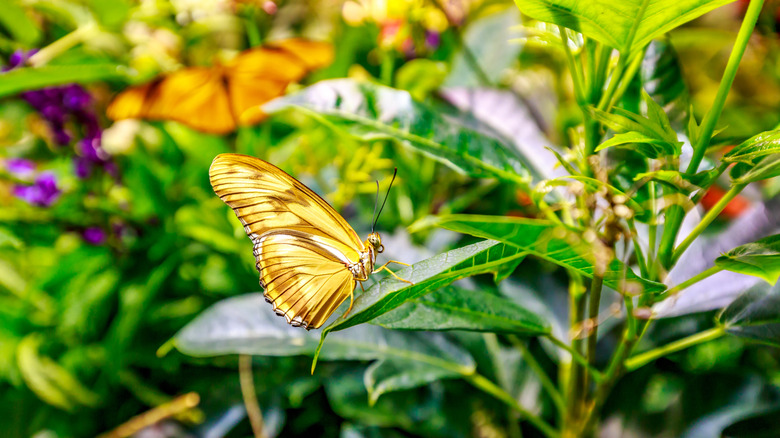
Everyone loves a shrub full of pretty pollinator-attracting blooms, but here's the bitter truth about the butterfly bush: it will quickly outcompete other plants in your garden. That's where newer members of the butterfly bush (Buddleja davidii) family come in — they have been bred to stay in their lane. Among the newer butterfly bushes available to the public is 'Blue Chip' (Buddleia × 'Blue Chip'). It's a compact butterfly bush hybrid cultivar with fragrant blue flowers that will draw butterflies, hummingbirds and other pollinators to your garden all summer without the aggressive growth.
'Blue Chip' is the inaugural cultivar in the Lo and Behold series of miniature butterfly bushes developed by the Raulston Arboretum in North Carolina. It was created as a compact, container-friendly, non-invasive butterfly bush. It lacks wandering suckers, and its seeds are infertile. With a height and spread of 1 to 2 feet, 'Blue Chip' grows well in containers, along walkways, in ornamental beds, and in butterfly gardens. This dwarf butterfly bush cultivar boasts spikes of fragrant, bright blue flowers that attract pollinators just as well as its more invasive cousins. Best of all, 'Blue Chip' blooms through all of summer and even into early fall — you can expect flowers from June through to September. It thrives in USDA Hardiness Zones 5 to 9.
Give 'Blue Chip' plenty of sun for long-lasting butterfly-attracting blooms
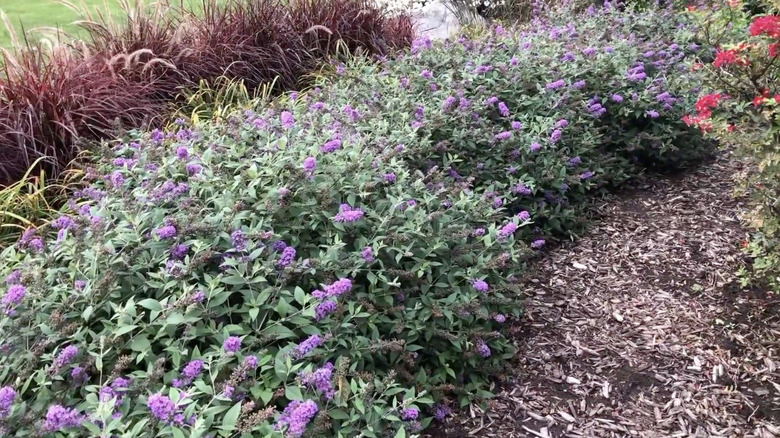
The 'Blue Chip' butterfly bush isn't overly fussy about soil conditions, but it will rebel if you don't grow it in full sun. In fact, this flowering shrub is perfect for full sun areas in your yard. Establish one or more plants in any spot where they'll receive at least six hours of sun a day, and you'll be rewarded with fragrant blue flowers that will attract butterflies into early fall. Otherwise, the plant will lose blooms and start looking weedy as it seeks more sunlight. The one downside is that some gardeners find the dwarf or small cultivars less attractive to butterflies than Buddleja davidii. Another is that the plant can be vulnerable to nematodes in some areas, though growing it in a container with a pasteurized potting mix can help reduce the risk.
This compact butterfly bush will thrive in sandy, loamy, or highly fertile soil, and it will even tolerate clay. However, it dislikes boggy conditions. To keep it healthy, you need to amend well-draining soil with compost and keep it consistently moist. Plant 'Blue Chip' so that its crown sits a little above the soil line. If planting this shrub in groups, which is recommended for maximum butterfly attractiveness, space them 1 to 3 feet apart. Not only is 'Blue Chip' one of the best flowering shrubs to plant if you have a small yard or garden, but it's also fairly low-maintenance. Just before spring, prune any dead growth down to the crown so that your plant will grow vigorously and produce plenty of blooms.