

Consumer Reports' Helpful Advice For Getting The Lowest Price On Appliances
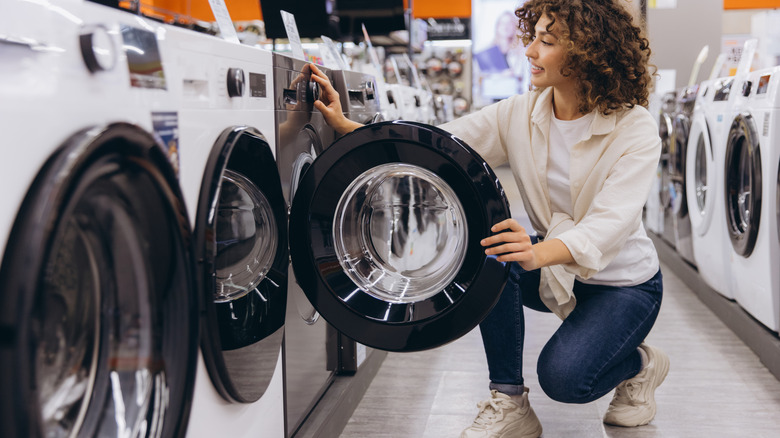
Whether you're ready to replace your yellowed toaster that no longer matches your renovated kitchen or need a new refrigerator because your current one no longer cools like it used to, you're probably searching for a good deal. After all, replacing or buying new appliances can be a costly affair, and it's always better to avoid paying an unnecessary premium where you can.
Waiting for the best time of year to purchase a new home appliance – like Black Friday sales, when some prices can drop 25% — might be ideal, but you may not be able to hold out that long before needing a replacement.
What's the alternative, then? In its appliance store buying guide, Consumer Reports made the case for monitoring price changes of your target appliance over time, arguing that this helps you learn how low its price has gone in the past and keep that as your target when you enter the market for it.
Why tracking price trends can be useful
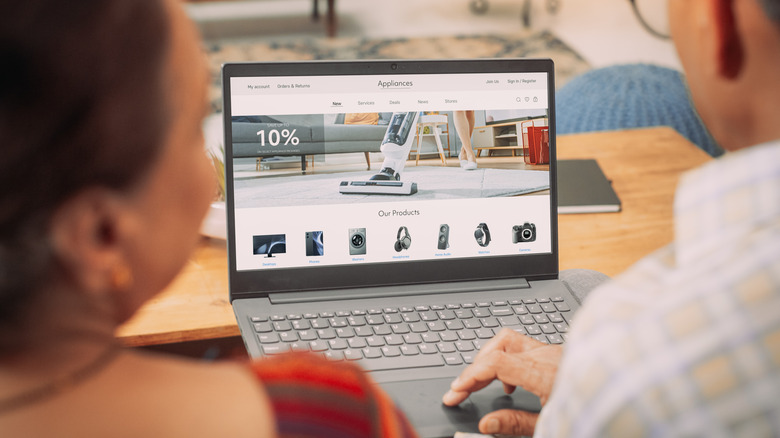
Many manufacturers and online retailers show heavy discounts to drive website traffic and sales, especially for popular models. But they may be relying on mere semantics or even portraying inflated prices to create the perception of a bargain.
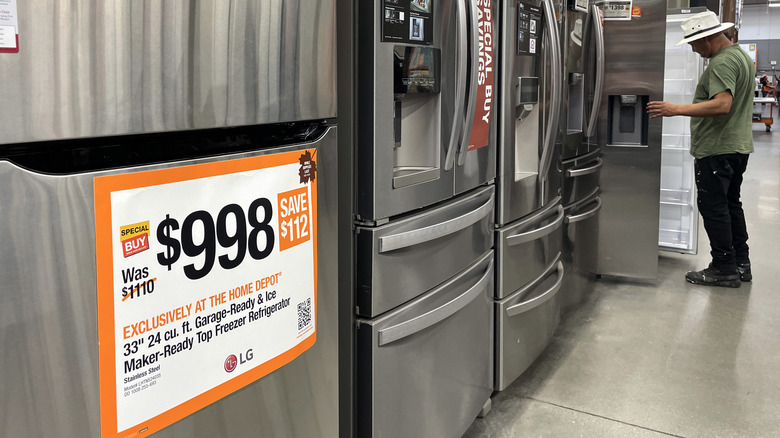
Basically, manufacturers often display different prices, which is legally allowed but can be deceptive in practice. For instance, you may find a listed price or the manufacturer's suggested retail price (MSRP) online. This is the price manufacturers recommend to standardize pricing, so dealers won't undercut each other for greater sales. Taken from a high price point, any discount would feel like a steal, even though it's more likely that the product was previously sold at a much lower price. For this reason, knowing the price history can be a great way to differentiate a good deal from a bad one.
Other than that, to maintain brand value and reputation, appliance companies also dictate a minimum advertised price (MAP). That's another way of setting a floor price, ensuring sellers don't "advertise" prices below it. However, that doesn't stop them from offering additional discount coupons or rebates that lower the overall cost. If you're keeping track of such options, you can get a pretty good deal.
How to monitor price history
Fortunately, you don't have to undertake the laborious practice of checking prices every day or week across various websites to figure out price history — lots of price tracking websites can do that for you instead, and many of them are free. Perhaps the best known is CamelCamelCamel. Apart from updating deals on popular products every day, it allows you to set up "price drop alerts," either sent to your email or RSS feed. However, it only tracks Amazon's pricing. And while buying appliances from Amazon can be convenient, it's not always the best choice. For a start, it may not have the lowest price, and secondly, it keeps a limited inventory of large appliances, so you have to consult different retailers.
In contrast, websites like Price Tracker go through deals from a plethora of sellers, including AJ Madison, Best Buy, Home Depot, and Menards. PayPal's Honey shows about four months' worth of price history across various online sellers, and notifies you (if you sign up for its Droplist) when your target appliance's price drops.
Consumer Reports runs a tracker of its top-performing product recommendations as well. So, if your choice overlaps with their endorsements, that's another option to consider. Finally, don't be afraid to bargain. Through member surveys, Consumer Reports also found that emailing online marketplaces for a lower price works 90% of the time.