

The Inexpensive Way To Fill Large Planters With A Common Storage Item
We may receive a commission on purchases made from links.
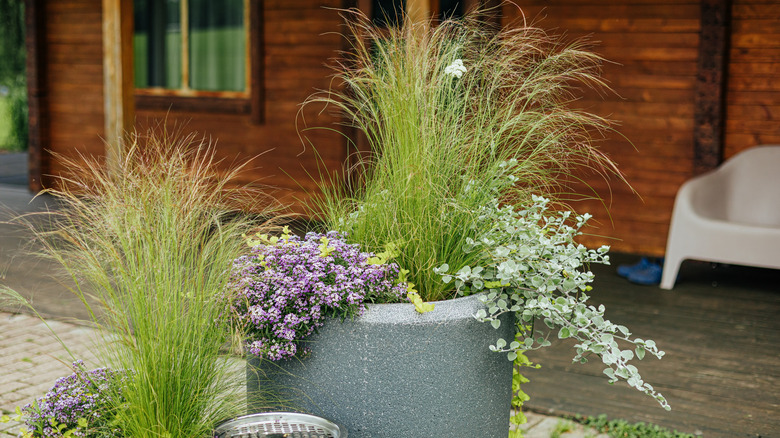
Spring has arrived, and it's flower season once again. Large planters are a great way to take advantage of the abundant flowering annuals available at this time of year while also decorating your front entrance. All you need to do is pick some pots you like — such as this set of two 30-inch tall Toriexon Black Metal Planters — and fill them with potting mix. Then choose your favorite spring flowers that grow beautifully in containers for porch decor, from pansies and ranunculus to annual salvia and lobelia. Whatever you select, it's a good idea to narrow the gap between your plants' roots and the bottom of the pot. The remedy? Pop a couple of buckets into the container before you plant it out.
Large planters are undeniably gorgeous, but they come with a catch. They can hold a surprisingly large volume of soil. A big container full of potting mix is heavy, plus buying lots of the best type of soil to use for a thriving container garden can get expensive. It's especially inconvenient when you need to move the pots around your garden or replace a degraded soilless mix. Rather than filling the entirety of your new 3-foot-tall container with pricey store-bought dirt, consider nestling an upturned bucket inside it to take up space, topped with another plastic flower pot for your plants. Ideally, you can use an old (clean) bucket from your garage or garden shed. But even buying one is inexpensive — a 5-Gallon Orange Homer Bucket from The Home Depot costs less than $4. You'll also need a bag of Zoofox Small Washed Gravel or similar stones.
How to plant flowers on top of an empty bucket
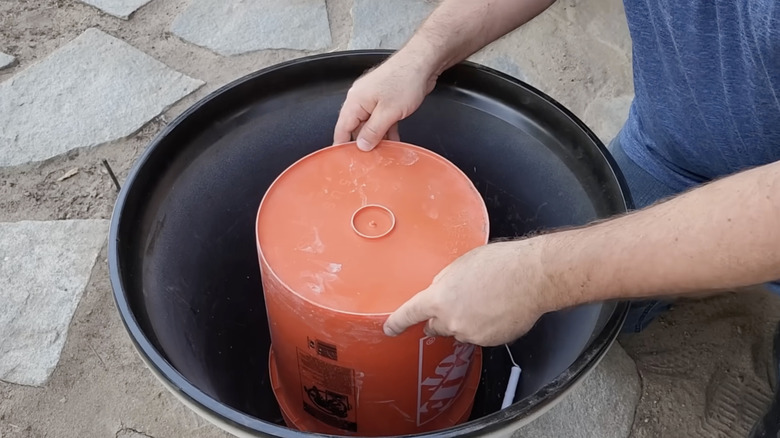
To start saving money on potting mix, evenly disperse a few handfuls of gravel in the bottom of your tall planter. The rocks will weigh it down, ensuring it doesn't get too top-heavy and flip once you've planted it with flowers. Next, turn the bucket upside down and place it inside the planter, right on top of the gravel. You can fill any gaps between the planter walls and the sides of the bucket with more rocks if you wish. Rest a large plastic flower pot on top of the upturned bucket — choose one that won't protrude too far above the rim of the planter and try not to block the drainage holes. There you have it! All that's left to do now is plant your flowers into the plastic planter as usual.
If you don't have a bucket to spare or can't afford to buy one, there are plenty of other ways to fill the bottom of large planters while keeping them light and movable. You can even use this opportunity to recycle items that would otherwise probably end up in a landfill. For example, empty water bottles, crumpled milk cartons, plastic takeaway containers, or glass bottles work almost as well as a bucket when piled into the bottom of a planter with some gravel filling the gaps. However, it's vital that you still top them with the nursery pot, just as you did with the bucket. Directly adding soil to a partially filled planter can interfere with proper drainage. When you empty your planter at the end of the growing season, carefully separate the plastic from the soil and stones.