

Turn An Old Nursery Pot Into A Mini Pond That Supports Pollinators And Frogs
We may receive a commission on purchases made from links.
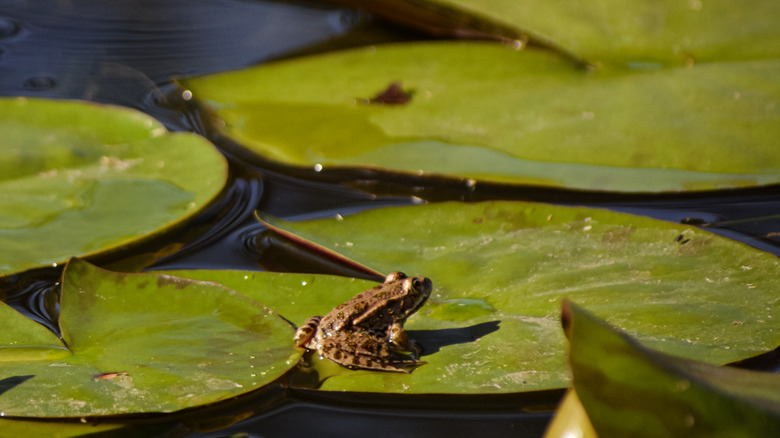
For most DIYers, watching videos of extreme backyard makeovers on social media — where gardening content creators build luxurious koi ponds with waterfalls, lights, and filtration pumps — is inspiring, but seemingly unattainable. In fact, if you want your own backyard pond, it doesn't have to be an extravagant affair. The goal is to create a valuable wildlife habitat, and even a small pond supports insects, frogs, and other aquatic life in your yard. Rather than building an enormous or elaborate water feature that costs more than your budget can handle, start small by turning an old nursery pot into a mini pond.
Looking for creative ways to reuse plastic nursery pots in your garden? Making a mini pond in your backyard is a surprisingly simple project that only requires a few supplies and an hour or so. Choose a large nursery pot that's at least 8 inches deep and seal the holes with a wildlife-safe sealant, like Aquascape Black Silicone Sealant, so that it doesn't leak when filled with water. You'll also need some clean sand or gravel, some larger stones or bricks, and some aquatic plants — a mix, including oxygenating submerged plants, flowering marginal plants for pollinators, and floating plants for shade, is best.
Popular native pond species include fragrant water lily (Nymphaea odorata), pickerelweed (Pontederia cordata), spatterdock (Nuphar advena), Canadian pondweed (Elodea canadensis), and floating leaf pondweed (Potamogeton natans), among many others. Taking plants (or aquatic creatures) from the wild can introduce disease and invasive species into your garden, so always shop at a local nursery or pond supply store. For soil, use Microbe-Lift Concentrated Aquatic Planting Media or garden soil, but avoid regular potting mix, especially if it has added fertilizer.
Make your backyard mini pond inviting for visiting wildlife
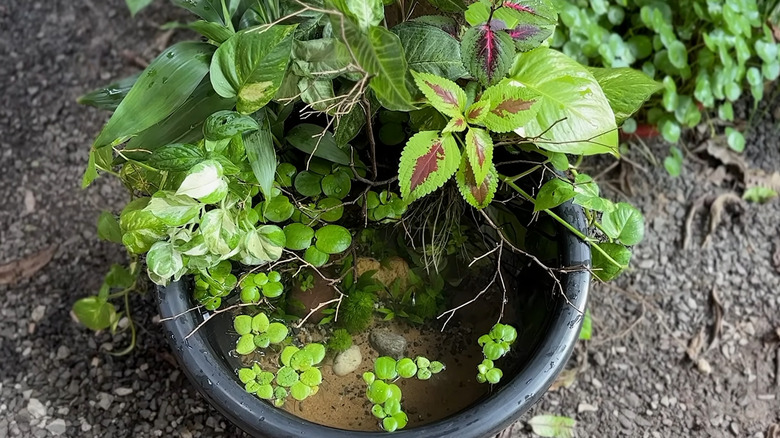
First, find the ideal spot for your backyard mini pond. Warm water is at increased risk of algae blooms, so situate your pond in a spot with mixed sun and shade to keep the water cool. Add a layer of garden soil or planting medium to the bottom of your sealed pot, then top that with a layer of sand. Add a final layer of gravel and the base is done. Frogs and other wildlife need ramps to help them out of the water, which you can make by partially submerging stones or bricks in the pond. You can bury the roots of your aquatic plants directly in soil, or you can grow them in a couple of small Supvox Slotted Plastic Planting Baskets. Some people even use nylon mesh bags with a little gravel for weight.
Now you're ready to fill your mini pond with fresh water. The chlorine in tap water can harm plants and aquatic wildlife. Fill a bucket with water from the faucet and let it sit for a few days to off-gas before adding it to your pond. If you've DIYed your own rain barrel, you can use water from there directly. Add a Yeomi Solar Water Fountain to the pond to reduce stagnation and keep the water free from mosquito larvae. Finally, consider the critters your mini pond may attract. If you get the balance of all these elements right, your pond should attract frogs to your garden — as well as pollinating insects and all manner of other wildlife — in no time. While it can be tempting to add goldfish to a small backyard pond, consider skipping them if you want to attract frogs, since they prey on tadpoles.