

The Kitchen Cabinet Trend That Allows You To Mix And Match Is Now The Design Standard
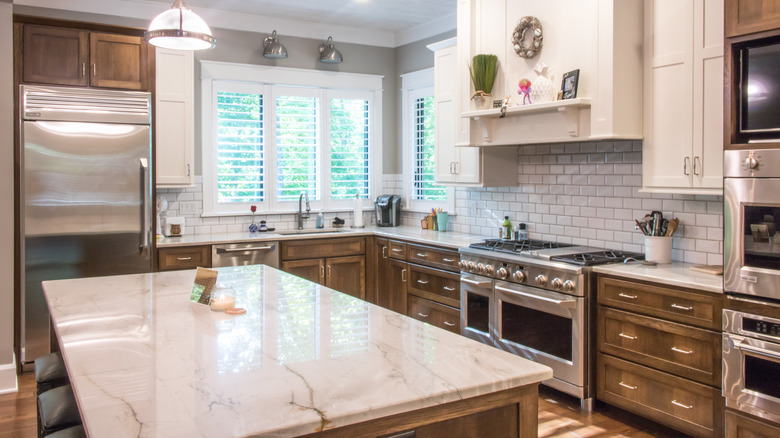
If you're planning to list your apartment or condo soon, flaunting the most-wanted kitchen features will boost your home's value. However, if you aren't ready to spend hundreds on upgrading your kitchen, an easy fix is swapping out dated cabinet hardware. But you don't have to necessarily purchase matchy-matchy knobs or pulls. Opening up about the reasons in an exclusive sit-down with House Digest, Camia Brown, NCIDQ, founder and principal of Camia Brown Interiors, tells us, "Mixing knobs and pulls started as a trend, but it's evolved into standard design practice. What was once considered daring is now an opportunity to add personality and visual interest to the kitchen."
Although matching knobs, bar pulls, and appliance pulls from the same collection used to be the norm, you don't have to do that anymore, feels Brown. She expands, "I now tell clients that hardware pieces need to coordinate; like cousins, sisters, or best friends. They should be related through a common thread like finish, shape, or style, but they don't all need to be identical. This shift reflects a broader movement toward layered, collected interiors that feel personal rather than catalog-perfect." Worried this kitchen cabinet trend might be a passing fad? Our expert thinks it's here to stay since it's both functional and aesthetic. She says, "Different cabinet types genuinely benefit from different hardware styles. Drawers work better with pulls, doors can shine with statement knobs, and mixing them creates visual rhythm in what might otherwise be a monotonous, boring wall of cabinetry." Just avoid a few common mistakes when incorporating this trend, and you'll be in good shape.
Tips for choosing mixed cabinet hardware for your kitchen
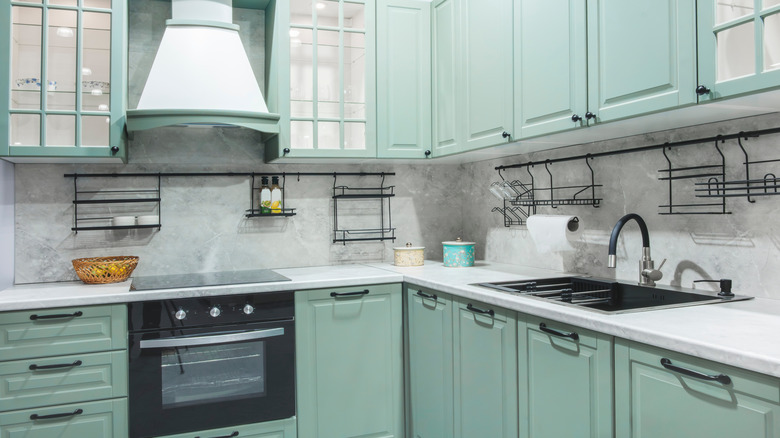
When selecting mixed cabinet hardware, Camia Brown suggests establishing a common thread between knobs and pulls. She shares with House Digest exclusively, "Your hardware should share at least one unifying element, whether that's finish (all brass or all matte black), shape language (all geometric or all organic curves), or style era (all modern or all traditional). Think of it as creating a curated collection rather than mixing randomly." Since it's hard to judge how different pieces will work together, she recommends ordering samples before making a final decision. And, in case you don't want to spend money on pieces you might not even use, Amazon just launched a ton of new home products, including cabinet hardware. So, you can keep the ones you like and return/replace the ones you don't.
Another tip is to choose hardware based on function, not just appearance. Brown illustrates, "Drawers typically work best with bar pulls or cup pulls for easy grip, while upper cabinet doors can handle decorative knobs. Heavy pot drawers might need substantial pulls, while small upper cabinets could take delicate knobs." You also want to take your cabinet door and drawer size into account, advises our expert. She notes, "A slim Shaker profile calls for more delicate hardware, while wide rails can handle bold, oversized pieces. If you have integrated pulls on lower cabinets, your upper cabinet hardware becomes even more of a focal point. The scale of your hardware should feel proportional to the scale of the cabinetry."
Mistakes to avoid when choosing mixed cabinet hardware
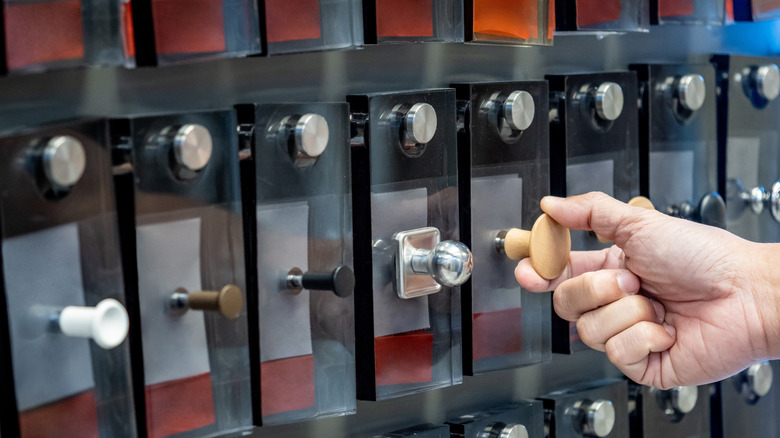
While mixed styles are a kitchen remodeling trend that is gaining popularity, you don't want to combine too many distinct finishes or shapes. This can be especially tricky when selecting pieces from different manufacturers. Camia Brown concurs and states in her exclusive chat with House Digest, "Mixing metals and finishes is an art; it can be a disaster if not done correctly." Giving an example, she mentions, "Mixing brass knobs with chrome pulls with leather-wrapped handles creates visual chaos rather than intentional design." If you'd like your cabinet hardware to feel intentional rather than random, our expert proposes, "... limit yourself to a maximum of two hardware styles, and ensure they share a clear relationship through finish or design language."
Moreover, don't overlook your kitchen's existing design scheme when selecting new hardware. Drawing from her experience, Brown continues, "I see homeowners fall in love with ultra-modern edge pulls but install them in a traditional kitchen with ornate cabinetry, or choose fussy, decorative knobs for a sleek contemporary space." So, she says homeowners should always consider their countertop, backsplash, and cabinet's profile to ensure all the different elements gel well together. Finally, never commit to a knob or pull design unless you test it out in your kitchen, Brown advises. Don't ignore this step if you're ordering hardware from different places, especially if you're purchasing them online. It's because pictures aren't always a true indicator of how a piece will look in your kitchen, concludes Brown. You also can't fully assess functionality without handling the hardware in person.