

No More Boring Vertical Blinds: Cover Sliding Glass Doors With An Energy-Efficient Alternative
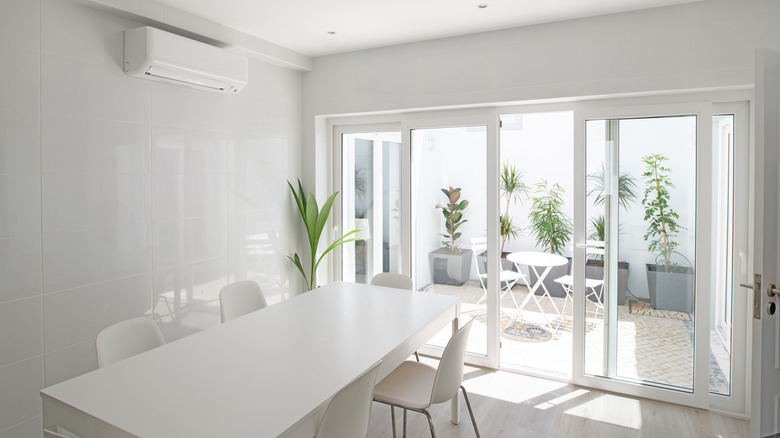
Sliding glass doors bring in natural light and open up a space, but figuring out how to cover them without sacrificing style can be tricky. For years, vertical blinds have been a very common solution, due to their functionality and easy adjustment. However, they don't always complement the look of a room. In a small room, vertical blinds can feel bulky when opened, especially in minimalist or modern spaces. This is where a structured cornice can come into play as the perfect solution.
Beyond aesthetics, vertical blinds don't always perform as well as expected when it comes to comfort. Gaps between slats let light leak through unevenly, and depending on the material, insulation may be limited. In rooms where sliding doors take up most of the wall, issues with insulation due to vertical blinds can become really apparent — especially when it gets really cold, or in sunrooms.
For homeowners looking to soften the look of a room while also improving how the space feels day to day, it can be a great idea to explore an alternative that blends design and function. A structured cornice with or without drapery can offer flexibility in appearance, performance, and insulation.
How cornices and drapes create a more polished, functional look
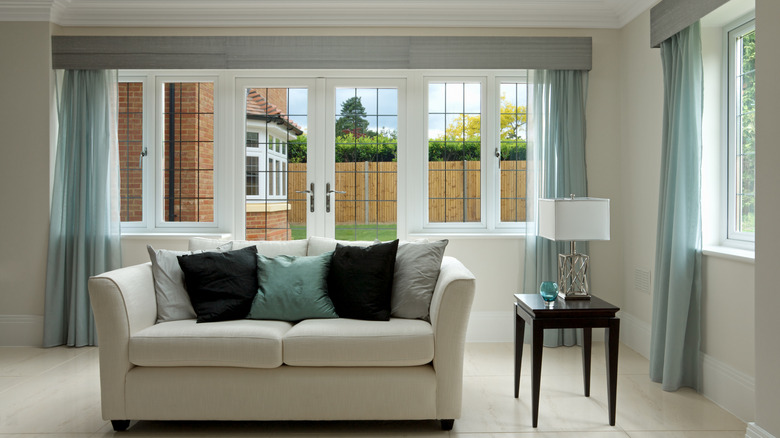
A cornice is a decorative structure installed at the top of a window or door frame, typically made from wood or other hard materials and often wrapped in fabric to match surrounding décor or add a pop of color. On their own, cornices can help partially block light throughout the day without covering the window, and when paired with drapery panels, light can be fully blocked — even more than with classic curtains.
Cornices paired with drapes also add a sleek, designer look to the room since no hardware is visible. This window treatment works especially well on sliding glass doors by allowing the fabric panels to frame the doors rather than covering them in sections as blinds do. Cornices with drapes also offer a greater range of motion than vertical slats, since they can be fully opened to access natural light or closed for full privacy or darkness.
On top of elevating the overall look of the room, this setup can also improve your home's energy efficiency. Heavier drapery helps reduce heat transfer by adding a layer between the glass doors and the inside of the room, which creates a pocket of insulation. The cornice enhances insulation even further by covering the top of the window, which helps block any airflow in from outside, while also keeping heat from seeping out of the room. While this combo won't replace insulated windows, it can definitely help manage temperature fluctuations in rooms with large glass surfaces.
What to consider before making the switch

While cornices and drapery panels are a sleek and effective alternative to blinds, they do require more planning. Installation can be complicated since the cornice needs to be mounted very securely and sized perfectly to span the width of the door. It's also important to know the right curtain weight for you, since heavier materials improve insulation and light control, while lighter fabrics create a softer, more casual look with less insulation.
Functionality is also essential when installing cornices and drapery. Sliding glass doors can be high traffic, so drapes should be easy to open and close without obstructing movement. Panels that are too thick or dark can not only make a room look smaller, but also be difficult to maneuver in tighter spaces, so proportion and placement matter.
For those that may not be ready to commit to a full cornice and drapery setup but still want a similar effect, it's best to assess the look of your home and study how to choose the best window treatment for your needs. However, for homeowners looking to move away from bulky vertical blinds while adding both visual pops and a practical layer of insulation, cornices paired with drapes are an unbeatable solution.