

Replace Spent Spring Flowers With A Beautiful Summer Bloomer

After a long, cold winter, enthusiastic gardeners eagerly look forward to those first warm days of spring and the pretty flowers that start to brighten up the yard again. Spring blooms are the highlight of a much-loved garden, and it's easy to keep that eye-catching display going by replacing the spent spring blooms with flowers that will have summer beds bursting with color. One such flower that you'll want to consider is the Mexican sunflower (Tithonia rotundifolia). These annuals bloom from late summer right until the first frost, providing your garden with glorious color and vibrancy. Flower colors range from yellow to orange, and the blooms are also perfect for cutting and putting in a vase to brighten up the inside of your home.
Not only are Mexican sunflowers quite spectacular to look at, but they are also surprisingly easy to grow and handle a variety of soil types well. To top it off, they are loved by pollinators such as bees, butterflies, and even hummingbirds. Attracting these creatures to your garden during summer is particularly important if you'd like to get a good crop from the warm-season vegetables and fruits you're growing. Just take care not to grow Mexican sunflowers too close to your vegetable patch — they're allelopathic and could stunt the growth of your edibles.
How to add Mexican sunflowers to your summer garden
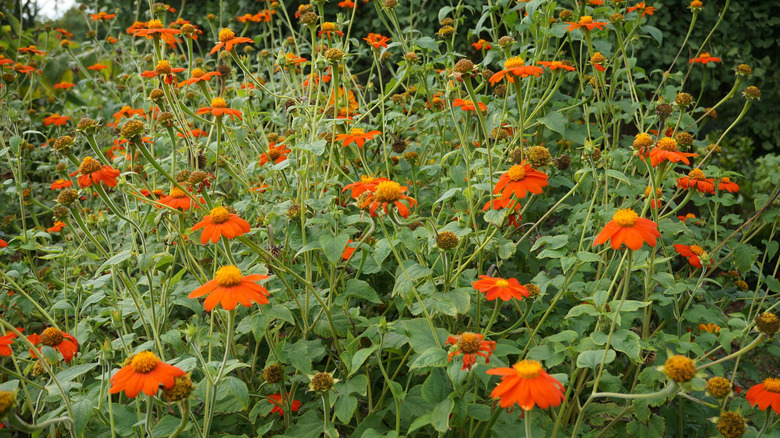
You can grow Mexican sunflowers from seed, or you may find them in pots at your local garden center. Choose a sunny spot for them to flourish, but ensure that the soil is not too rich. They grow well in areas that support other summer annuals, like zinnias and cosmos. If the soil contains too much organic matter, you may end up with lots of foliage, fewer flowers, and weak stems that will flop over. That said, you may find that your Mexican sunflowers will still need staking to keep those lovely blooms upright.
These plants will grow quickly to reach heights of up to 6 feet, so they work best at the back of a border. Growing them along a wall or fence should also protect them from strong winds. If you pinch back new growth when the plants are still young, you should be able to promote a bushier habit and stronger stems. Deadheading the spent blooms will reward you with more flowers, but if you let a few go to seed toward the end of the season, you may find pretty little goldfinches visiting your garden for a tasty feast. You might like to collect a few of those seeds, too, so you can sow them again the following year. Finally, if you absolutely love sunflowers but want some color in the winter garden, you could consider Mexican marigolds, which survive mild winter temperatures.