

This Easy-To-Grow Houseplant Will Be Everywhere In 2026
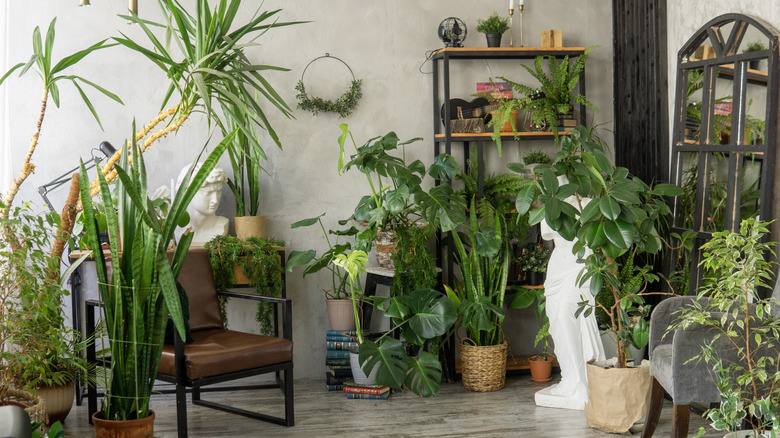
Whether you're new to houseplants or have an ever-growing collection, there is never a shortage of indoor plant species to learn about. Every year, the National Garden Bureau turns the spotlight on a particular plant species that demonstrates a range of positive attributes. Whether you have a green thumb or not, by taking heed of these annual recommendations, you'll be introduced to new plants that are perfect for your windowsill or sunroom. This year, the National Garden Bureau has declared 2026 the Year of the Ficus in the houseplant category, shining a spotlight on the many attractive options you have within this diverse genus.
Plants in the Ficus family — broadly and commonly called figs — run the gamut of shapes, sizes, and growing preferences — from small upright houseplants to immense outdoor trees. They're present in almost every climate and habitat worldwide. Additionally, while ficus are known to be a little persnickety at times, once established, they're moderately easy to care for — with one minor caveat. A ficus might not be the ideal houseplant for people with a latex allergy or for pets likely to nibble the leaves or come into contact with broken plant parts. With the Year of the Ficus already well underway, it might be time to adorn a room in your home with this large-leafed plant. Some of the most popular ficus plants that will bring nature into your home include the fiddle leaf fig, the rubber tree, and the weeping fig.
Want a ficus houseplant? Try the fiddle leaf fig, the rubber tree, or the weeping fig
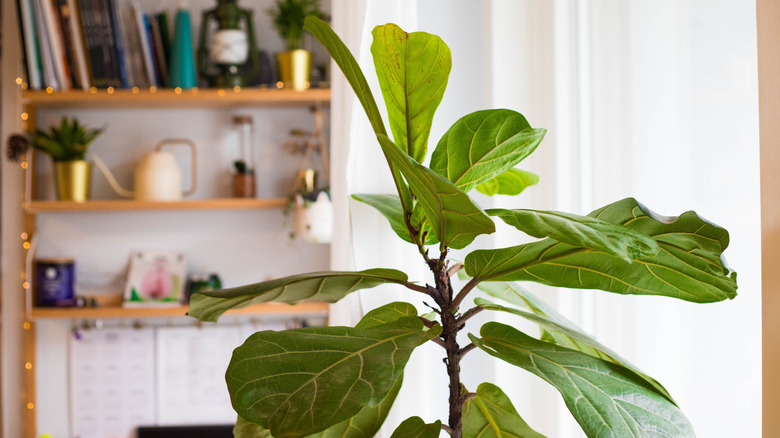
Giant plants are trending, and the most popular one to add to your home right now is arguably a fiddle leaf fig (Ficus lyrata). This dramatic plant features large, leathery, rounded deep green leaves and can grow up to 8 feet tall. If that's a little too big for your home, there's a dwarf fiddle leaf fig cultivar called Ficus lyrata 'Bambino' that maxes out at 5 feet when mature. These tropical plants appreciate temperatures between 65 and 75 degrees Fahrenheit, bright indirect light, and moderate-to-high humidity levels. Water your fiddle leaf fig regularly and deeply without overwatering it when the top 2 inches of soil are dry.
If you're looking for an especially low-maintenance ficus houseplant ideal for newbie indoor gardeners, pick up a rubber tree (Ficus elastica) at your local garden center. This subtropical to tropical fig has thick, oval-shaped leaves and is very forgiving when it comes to care. You will typically only need to water your rubber plant once every one to two weeks, letting the soil dry out completely between waterings. While these plants thrive in bright light, they will tolerate living in a low-light room.
The weeping fig (Ficus benjamina) has been grown indoors since the 1970s, when it often graced public spaces in shopping malls. It's more tree-like in shape than the fiddle leaf fig or rubber plant, with small, elliptical, pointy-ended leaves. Outdoors, weeping figs will grow up to 50 feet tall, but as houseplants, they only reach heights of 10 feet at the most. Prune the plant to keep it compact — in fact, miniature cultivars like 'Wasana' and 'Too Little' are popular bonsai trees.