

What To Do If You Find Cow Killer Ants In Your Yard
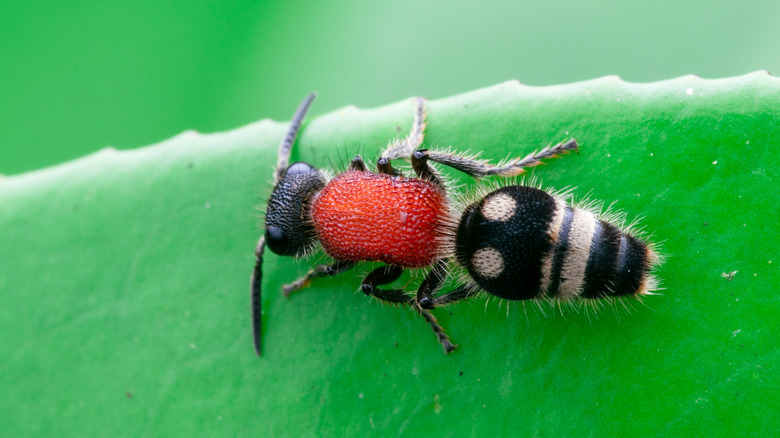
You don't need to identify every bug that you find in your yard, but some may have you typing in search terms like "fuzzy red bug" or "big red and black ant." If you've just looked up the latter, then you're probably looking at the cow killer ant (Dasymutilla occidentalis), one of thousands of velvet ants in the Mutillidae family of the Hymenoptera order. Interestingly, they're actually not ants at all, but wasps. With all the folklore and misconceptions around cow killer ants, you may be wondering what to do if you find them in your yard. If there are only a couple, you likely don't need to take any action, but if you see many, professional help may be needed.
Most importantly, do not try to handle or squish the insects. If you get stung by a cow killer ant, the result is usually pain and swelling, like when you get stung by a bee. If you're allergic, you could have a reaction. The male cow killer ant has wings, doesn't sting, and looks more like a wasp, while the female is fuzzy and wingless. She spends her life on the ground, and although she doesn't have wings, she has a stinger that delivers one of the most painful stings of all insects.
But if you spot one of these, don't panic. With all the different types of wasps you might find in your yard, the good news is that cow killer ants are a type of solitary wasp. There aren't any nests or swarms of them nearby, and they are not aggressive, so simply avoiding them and leaving them be is usually sufficient. However, since they're parasitic wasps, their presence could indicate something else.
Here's what it means when you find cow killer ants
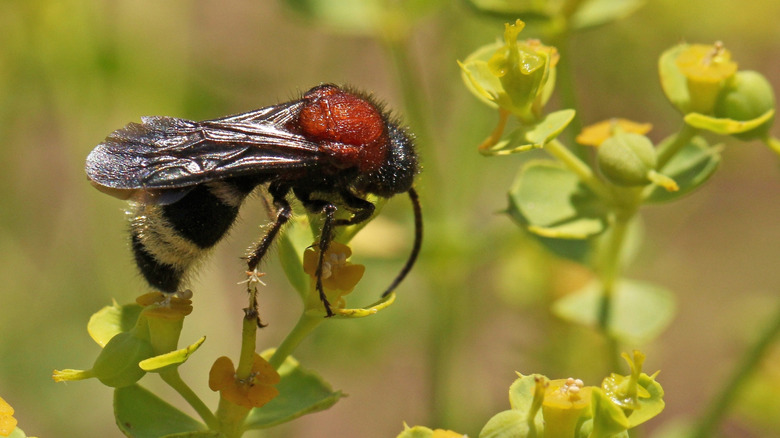
The name cow killer ants comes from an old myth that their sting is painful enough to kill a cow. This is an exaggeration, and the cows are fine, though you still don't want to touch one and get stung. Here's what you need to know: A female cow killer ant lays her eggs on young host insects, often other wasps and bees that nest on the ground. Cow killer ants are sometimes called predators or parasites, but they are technically a parasitoid, which is something in the middle (only the larvae are parasites). That means if you have cow killer ants, then you probably have another type of ground-nesting bee or wasp nearby. Still, since many of these are beneficial bees you want in your garden for pollination, they're just part of your ecosystem and do not require removal.
Avoid running around barefoot or wearing open-toe shoes in your yard in the summer, especially in the South, where cow killer ants are prevalent. Since they hang out in sandy or dry soil, keeping your yard covered with a thick lawn is another way to keep them away. During the late afternoons of warm months, when they're most active, keep an eye on kids and small pets when they're outside playing.
While seeing one or two cow killer ants isn't a problem, if they keep showing up, call a pest control expert for assistance rather than trying to handle them yourself. At least you can be thankful you don't have a bee's nest in your wall to deal with.