

Say Goodbye To Traditional Mulch: The Eco-Friendly Alternative That's More Durable
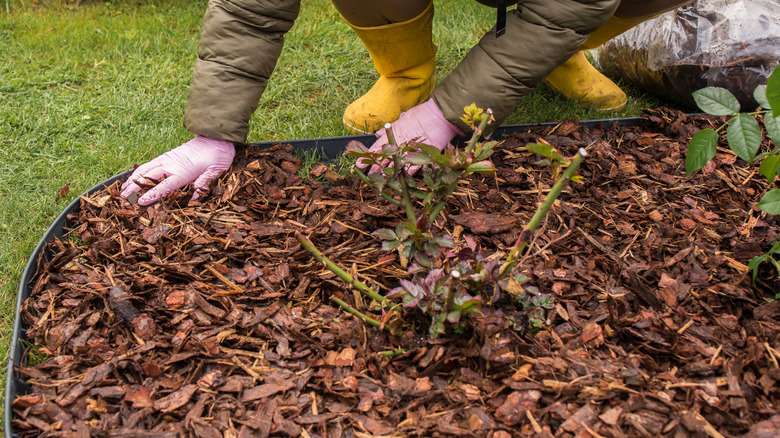
When walking or driving around your neighborhood, you might have noticed a trend that's getting more popular among homeowners. That is to replace traditional mulch materials like bark or wood chips with an alternative that's even more eco-friendly and highly durable. These savvy gardeners are choosing an ancient Roman garden technique, and mulching their garden beds with stone materials, like rocks, pebbles, or gravel, for some very good reasons.
While you're probably aware of the benefit of using traditional wood mulches in that these products will eventually break down and add valuable nutrients to the soil, they also have some major disadvantages. The positive aspect that makes wood mulches desirable, also makes them slightly less eco-friendly than stone, and that is the fact that they need to be replaced every one to two years. This means more ongoing expenditure and additional work for you.
On the other hand, stone materials don't break down and can look fantastic for years to come without any more input from you, although they're going to cost you considerably more in the beginning. This makes stone the ultimate eco-friendly product, especially if you decide to choose locally sourced materials. You can also get your stone mulch in a variety of different colors and sizes, and you can even get blends that have different colored stones in the same mix. This leads to a whole range of stunning gravel garden ideas to transform your outdoor space that you might like to explore further. While this type of garden mulch is available in bags, these can be quite heavy, so you might find that it's better to get a bulk load from a landscape supplier.
Stone mulch is low maintenance and modern
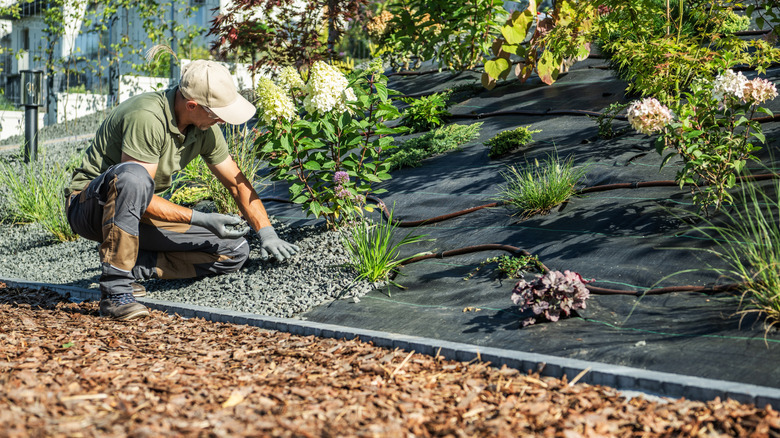
Traditional wood mulches don't always stay where you put them. They can be blown around in high winds, displaced by heavy rains, and even scattered onto your paths by birds. This means that you may spend time sweeping or blowing the mulch off the paths and back onto the garden beds. This is not the case with stone mulch. As long as you have some type of edging, the stones are going to stay put and don't require any effort from you to keep them covering your garden beds. While wood mulch looks natural and rustic, stone mulch tends to look much more modern. Plus, pebbles or gravel aren't easily bleached by the sun, as wood chips or bark are. You can also create interesting variety in your landscaping by using different types and colors of stone.
While there are plenty of advantages to using stone as a mulch alternative, there are a couple of drawbacks. For one, stone is far heavier than wood mulch, so it's going to take a bit more effort to get it onto your garden beds. You might even have to rent a machine or hire a professional landscaper to do it for you. The other con with stone is that it's going to get quite hot when it's exposed to the sun. Unfortunately, this could be a landscaping mistake in hot climates because the heat is going to reflect up onto your plants, meaning you'll have to be more vigilant with watering when the temperature climbs upwards. You may find that mist irrigation would be beneficial, unless you're growing species that enjoy the heat and are not bothered by it.