

Termite Season Is Here — How To Tell If You've Been Affected
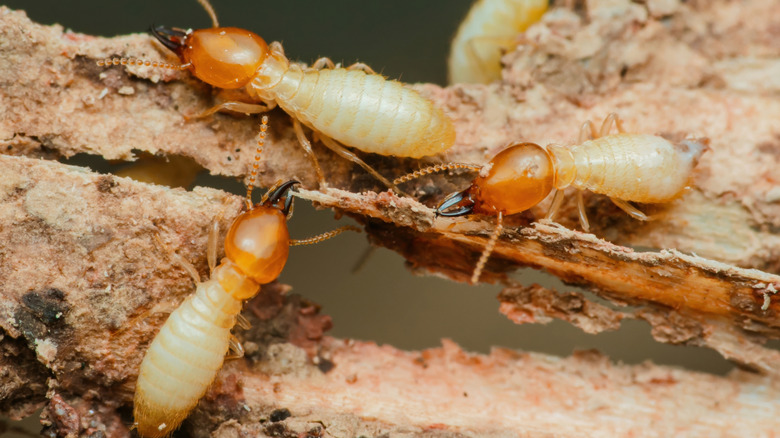
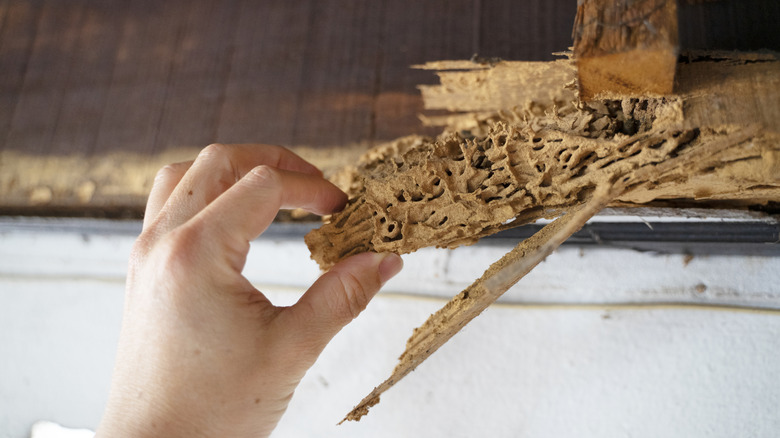
There's little worse than taking a look at your home's exterior and finding out you have uninvited roommates eating the literal foundation of your home. Termites can cause catastrophic structural damage, and while there are several professional ways to get rid of termites, they can be incredibly costly. Even though termite prevention is always better than dealing with a full-blown infestation, it's crucial for every homeowner to know how the signs of infestation manifest before it's too late.
There are a few things to look out for when inspecting your property. First, inspect your home's foundation and exterior for mud tubes. Subterranean termites build pencil-sized mud tubes to travel between their underground colonies and your home's wood. You'll want to check your foundation, crawl spaces, and porch pillars for signs of these tunnels. Break off a small piece of the tube — if termites rebuild it or start crawling out, you have an active infestation.
You can also listen to your walls to check for an active infestation. Termites are surprisingly noisy eaters. Soldier termites will also bang their heads against the wood or shake their bodies to signal danger to the colony. If you put your ear to a wall, you might hear a faint clicking or rustling sound. To test, tap on your walls or wooden beams. If they sound hollow or "papery," the interior has likely been consumed.
Other ways to tell if you have termites
Before learning what to do if you find termites in your yard, it's essential to know what you're looking out for. Termite swarmers (winged termites) leave the nest to start new colonies. While these look similar to flying ants, they are a bit different and definitely are more troubling for your home's structure. When a swarm has concluded, you might find piles of discarded, translucent wings on windowsills or near light fixtures.
While we often blame humidity for a "sticky" door, it can also be a sign of termite activity. As termites consume wood and tunnel through frames, they produce moisture that causes doors and windows to swell and stick. They also leave little wood-colored pellets called frass. These look like tiny piles of sawdust or coffee grounds, and are essentially termite droppings. You'll need to look for these deposits near baseboards, windowsills, or in corners.
If you notice a termite problem, it's highly recommended to call in a pro to assess the damage. After the initial treatment is complete, it's crucial to keep an eye on things, since termites often keep coming back even after treatment. It's best to watch out for reappearing mud tubes, which indicate your termites have returned or the colony survived.