

13 Shrubs To Fill Bare Flower Beds For A Fuller Looking Landscape
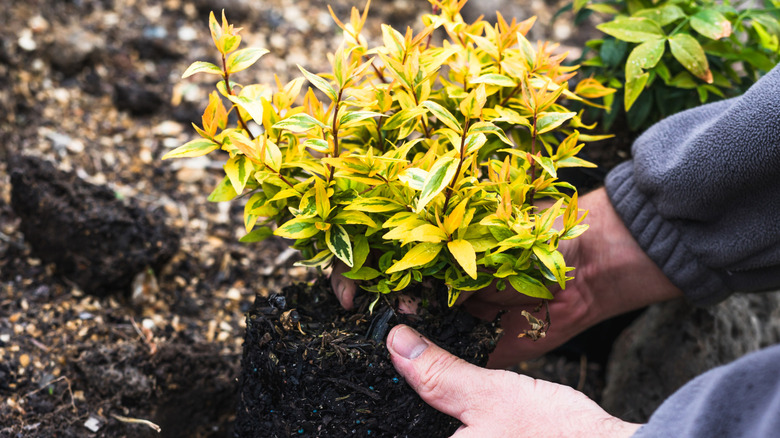
There's nothing worse than working hard to perfectly plan and establish your plantings, only to realize that, for some reason, your seedlings didn't take. Even worse, by the time you realize that these plants aren't going to take, you've already lost a lot of your window for starting a new round, and you're left with an unattractive bare patch. If you want to fix up your garden, you need something that grows fast, such as American elderberry, Russian sage, and beautyberry.
Planting these kinds of bushes in bare patches will help to fill up your flower bed in no time. However, while fast-growing shrubs can be a positive, they will need regular maintenance if you don't want them to get too large. Several plants on this list can grow close to 20 feet tall. It can make them ideal for a hedge or if you're looking for a bit of privacy, but it may be a lot if you're just looking to fill a part of a flower bed. Regular pruning is the key to keeping many of these plants smaller, or you can look for dwarf varieties.
Additionally, before picking any of these shrubs, make sure you do your research. Several of these plants are considered invasive in specific areas of the country, and they should never be planted in these regions. Also, narrow down your selection by only choosing plants that thrive in your USDA hardiness zone, and can tolerate the soil and light conditions where your bare patches are to help ensure these plants thrive and don't leave any empty spots like the flowers before them.
Buttonbush
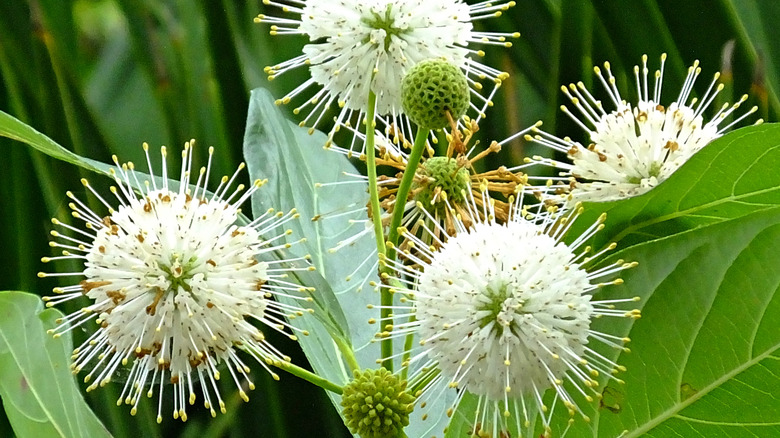
Buttonbush (Cephalanthus occidentalis) is a fast-growing shrub native to most of the United States. It's found to thrive in zones 5 through 10. This unique plant produces circular bunches of flowers with anthers that stick out. They prefer to be in wet soil and attract pollinators of all kinds, including butterflies and bees, especially once they begin blooming in June. Aquatic birds also love these flowers. Most varieties can reach 8 feet tall and wide, but there are smaller options, like the 'Kolmoon', which can help for a more manageable garden.
Spiraea
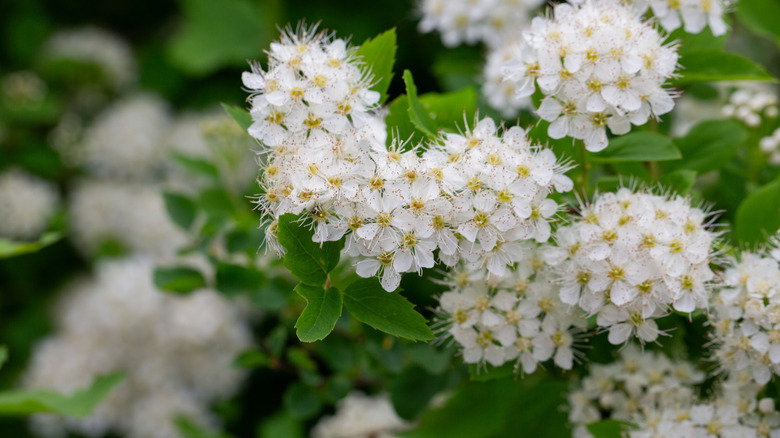
Spiraea (Spiraea prunifolia) is a great filler shrub if you have a big bare patch in your garden, as they can grow up to 2 feet in a single season. Depending on the species you pick, they can get up to 10 feet wide at full size, though you can help control this somewhat with pruning. Most varieties thrive in zones 5 to 8. They produce an abundance of flower clusters in various colors, and their leaves can turn a stunning range of fiery shades in the fall to draw your eye most of the year.
Rose of Sharon
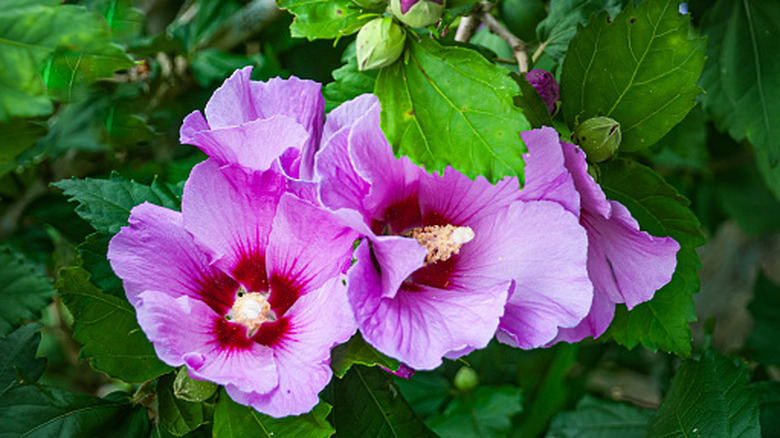
Rose of Sharon (Hibiscus syriacus) is a hibiscus species known for its large and abundant flowers. They are low maintenance, which makes them a nice addition to any garden. But their rapid growth is what really helps them shine in any flower bed in zones 5 through 9, if you don't mind them stealing the show. They can grow pretty tall — up to 16 feet — and are a flowering shrub that creates privacy and sends butterflies flocking to your yard. However, there are smaller cultivars, like 'Lil Kim,' which only grows to 4 feet tall. Be careful growing this shrub in the eastern U.S. where it is considered invasive due to its deep taproots and ability to outcompete other plants.
Russian Sage
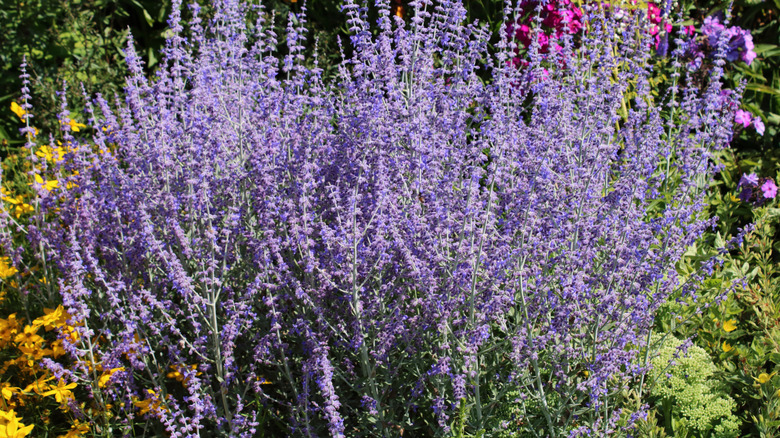
Russian sage (Salvia yangii) helps fill flower gardens in drier climates. They are drought-tolerant and deer resistant, making it a helpful garden plant and one that doesn't need much maintenance to thrive. It is best in zones 4 through 9. Its purple flowers and silvery leaves look gorgeous beside white and yellow blooms, though it also works alongside ornamental grasses and succulents. It's considered a vigorously growing plant, and you can find cultivars that grow to all sorts of sizes, such as the 2-foot-tall 'Little Spire' or the 4-foot-wide 'Longin'.
Cotoneaster
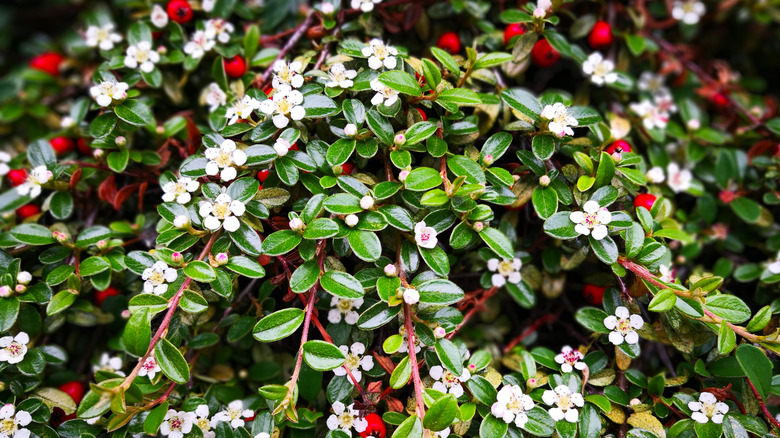
Cotoneaster (Cotoneaster spp.) is a fast-growing flowering shrub that pulls double-duty for ground cover. It grows in zones 3 through 5 and thrives in well-draining soil. Cotoneaster is known for its rich green leaves, white flowers, and bold red berries. They attract birds and bees to your yard as well and can grow up to 10 feet tall. However, there are some varieties that look different, featuring pink flowers or black berries. All cotoneasters are introduced to the United States, and some species are considered invasive, so it may be best to plant a sterile variety like Cotoneaster 'Autumn Inferno.'
Butterfly bush
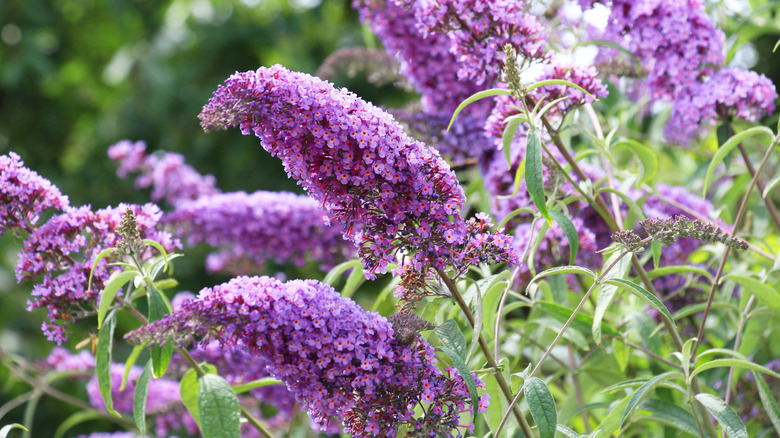
Another fast-growing flowering shrub to fill up spaces in your flower bed is the butterfly bush (Buddleja davidii). These bushes can grow several feet in a single growing season, and they usually reach a mature height of between 4 and 10 feet tall. However, there are also a few compact varieties, like the 'Butterfly Candy' cultivar, which only reaches 3 feet tall and wide. While there are several varieties, most produce stalks of flowers ranging from pink to indigo. As the name suggests, they attract all sorts of pollinators, including butterflies and hummingbirds, and thrive in zones 5 through 9 or 10. Be aware that butterfly bush is considered highly invasive in parts of the U.S. including the Pacific Northwest.
Cherry laurel
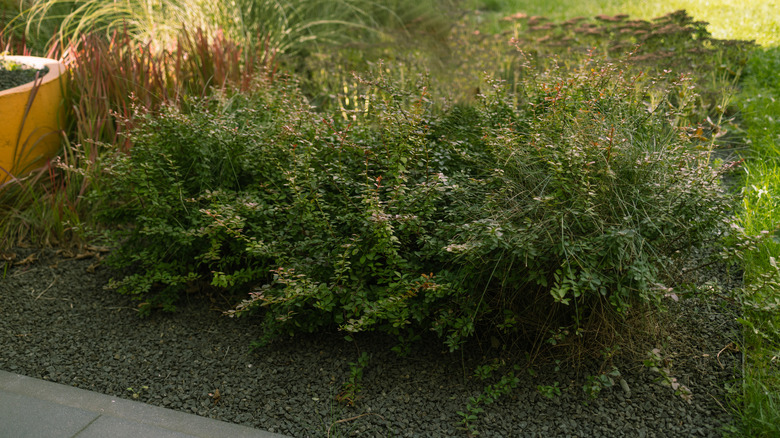
Cherry laurel (Prunus laurocerasus) is an evergreen that has beautiful glossy leaves, sure to shine in your garden. It's often used as a hedge, as this shrub can get pretty big, growing around 18 feet tall and 25 feet wide, so it works to fill in large bare patches, or you can keep it carefully pruned so it stays smaller. They are hardy in zones 6 through 8 and can handle a little neglect, though if you want them to grow fast, a bit of compost or manure can help with their growth. Do not grow this shrub in areas where it is considered invasive, largely the Pacific Northwest. It is also crucial to note that it is safe to touch but highly poisonous to humans if ingested.
Potentilla
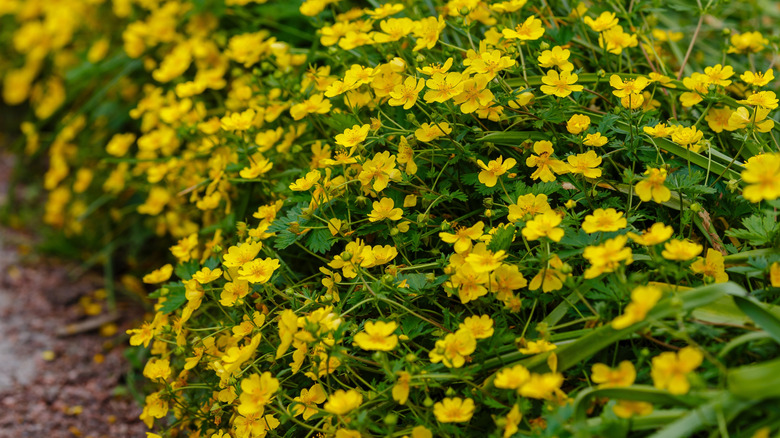
Closely related to roses, potentillas or cinquefoil (Potentilla fruticosa) grows quickly during the summer and fall. It's a colorful long-blooming shrub that has no problem growing in clay soil, especially in zones 2 through 7. Many types of cinquefoil are native to most of the United States, but some species such as common cinquefoil (Potentilla simplex) are considered weeds and Potentilla recta is considered invasive in some parts of the U.S. However, shrubby cinquefoil (Potentilla fruticosa) grows quickly and looks beautiful, which could make it an excellent filler in a colorful flower bed that grows between 2 and 4 feet tall and wide.
American elderberry
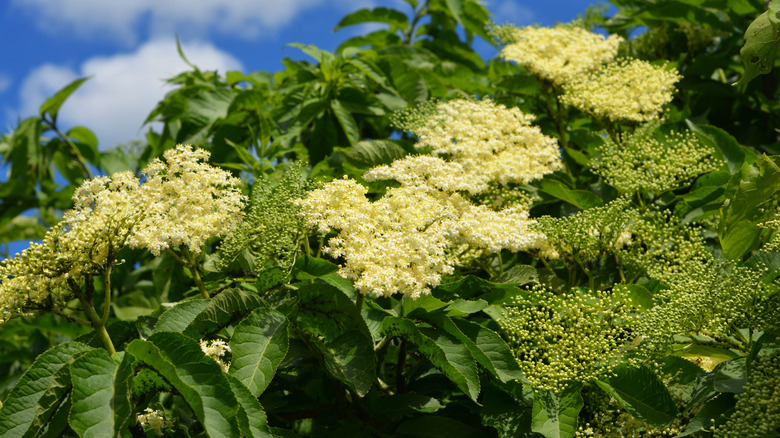
If you're looking for a multifunctional shrub that produces edible berries and grows fast to fill a bare patch in your yard, native American elderberries (Sambucus nigra ssp. canadensis) can be a perfect option. It grows easily in zones 4 through 10. This 5- to 12-foot shrub with berries brings wild birds to your yard, and usually appears about four weeks after the flowers bloom in late spring.
Beautyberry
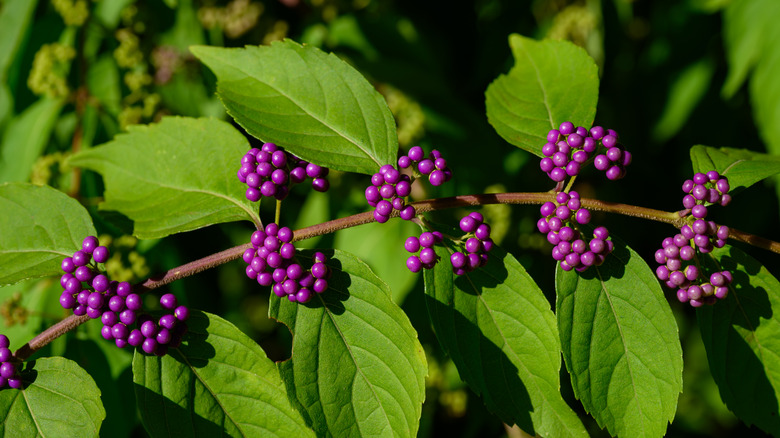
One berry-producing shrub that will keep birds and wildlife fed all fall and winter and fit all of your requirements is the beautyberry (Callicarpa americana). It's a beautiful bush with bright green leaves, pinkish flowers, and magenta-colored berries. If you want this shrub to thrive, it needs full sun and moist, but well-draining, soil. It's native to the United States, and is hardy in zones 6 through 12. This shrub can get between 5 and 8 feet tall and wide, though you can keep it a little smaller if you stay on top of pruning.
Chinese fringe flower
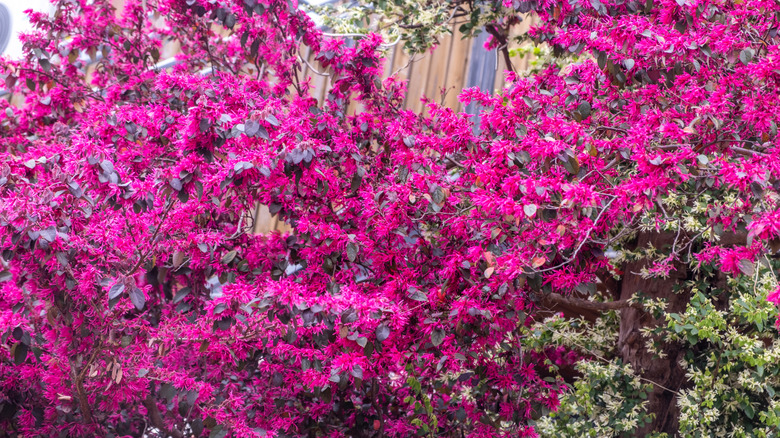
Chinese fringe flower (Loropetalum chinense) is a shrub that can grow big, and quickly. Thankfully, with some pruning, you can keep it compact so it doesn't take over the rest of your flowers. There are also several cultivar options, and each comes in different sizes, so you can find one that fits your preferences best. For example, 'Dwarf White' only grows about three feet tall and wide and has white flowers, instead of the more classic pink blooms. Chinese fringe flowers thrive in zones 7 through 9 and enjoy full sun or partial shade.
Mock orange
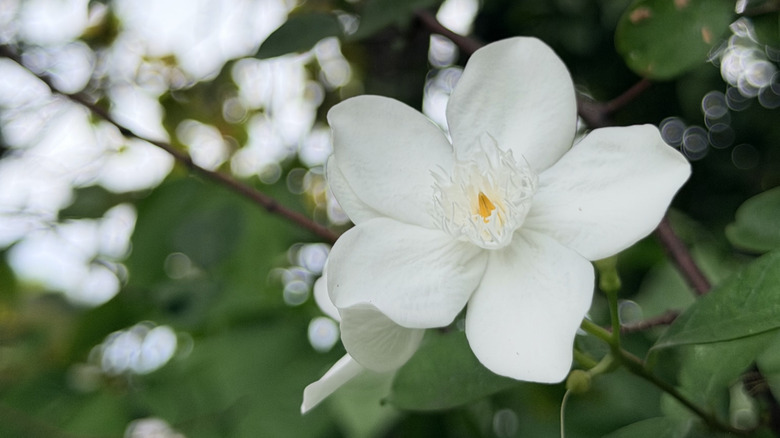
Another fun shrub for those that live in zones 3 through 8 is the mock orange (Philadelphus spp.) Some species are native to the United States, especially in the western and northwestern parts of the country. This shrub grows quickly, and can get anywhere between 2 and 10 feet tall and wide. It is a beautiful plant with big white flowers and a lovely fragrance that smells very similar to oranges. These shrubs do have preferences, but they are pretty good at handling neglect and can pop up and thrive even if you forget about them.
Lilac
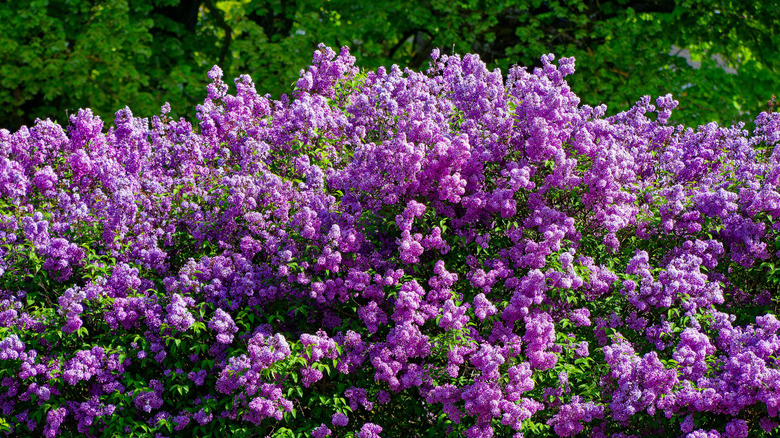
As long as you avoid the mistakes everyone makes when growing lilacs (Syringa vulgaris) — like using too much fertilizer and planting them somewhere without enough sun — you can grow these beautiful and fast-growing shrubs in your yard in zones 3 through 8. They can grow up to 15 feet tall and 12 feet wide. The purplish pink color that shares the same name with these plants is the one they're most known for, but there are plenty of varieties where the flowers can come in a range of colors, including blue, yellow, and white.