

Don't Throw Out Potato Skin Scraps — Turn Them Into A DIY Fertilizer That Plants Will Love
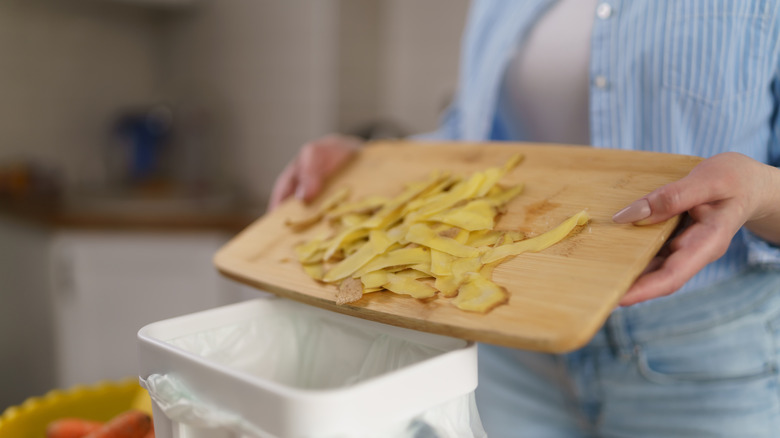
If you love to cook and your family is fond of all things potato, you're probably going to end up with quite a few potato peels over the week. Instead of just throwing them out or into your compost bin, there are plenty of other smart ways to repurpose potato peels in the garden. If you're already familiar with making your own compost tea or steeping banana skins in water for a potassium-rich nutrient solution, you can actually do something quite similar with your potato skin scraps. It's relatively easy to turn them into a DIY liquid fertilizer for your plants, both inside and out, and best of all, it's not going to cost you anything.
This process allows you to create a nutrient-rich foliar spray for your houseplants or a liquid tea that you can use to fertilize your potted plants outdoors. You can use it to give an extra boost to plants that love potato nutrients, like tomatoes, strawberries, roses, and hydrangeas. Raw potatoes contain a range of nutrients such as potassium, phosphorus, magnesium, and calcium. On top of that, the skins also contain iron, manganese, and zinc. To go even deeper into their composition, potato peels contain phenolic compounds, which are instrumental in defending plants against environmental stresses such as pathogenic infections. To put it quite simply, your plants are going to love your potato skin tea.
How to make fertilizer tea from potato skin scraps

Making your own fertilizer tea using potato skins is super easy. All you need is a glass jar with a lid and some water. Place your potato peels in the jar and cover them with water. Let this sit in a cool, dry spot, like your garage, for around three to seven days. Once a day, stir the mixture.
After about a week, grab a large bowl and a strainer and strain the liquid from the jar. Throw the peels into your compost bin and pour the fertilizer tea either into a spray bottle for your houseplants, or into a jar to water your indoor and outdoor plants around once or twice a month. As this recipe will only make around half a jar of liquid fertilizer, you should be able to use this up in one go and then make a new batch for next time. If you do end up with any leftover and decide to store it in the fridge for a couple of days, it may end up smelling bad or fermented. At that point, it's likely gone off, so discard it in your compost.
This solution is perfect for use on the vegetables and herbs in your garden, as well as many flowering plants. However, if you want to use it on cacti and succulents in your home, it's a good idea to dilute it to half strength with water, just like you would with any other type of liquid fertilizer. Finally, if you want to make use of other veggie scraps and household items, check out an impressive range of infused water fertilizers proven to naturally improve soil.