

Not Brick, Not Concrete: The Natural, Long-Lasting Alternative For Your Patio
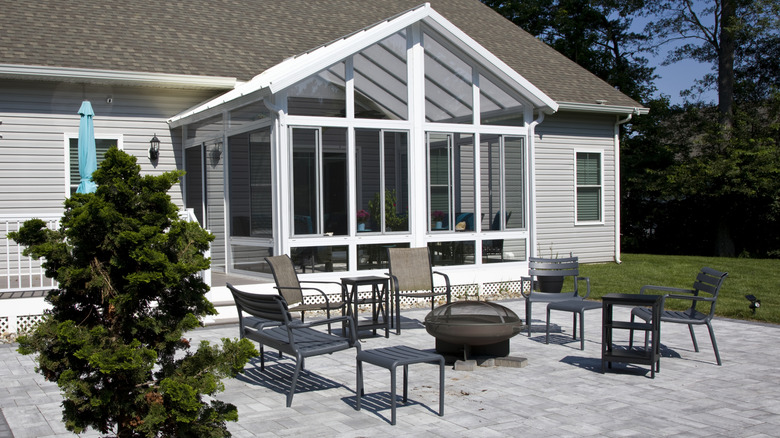
The patio is an important part of your exterior. It serves as the hangout space where you entertain guests throughout the seasons, from summer BBQs to late night winter catch-ups around the fire pit. This means that it goes through a lot. A necessary step in picking out patio material, to make sure it stays strong over the years, is looking for an option that is tough and long-lasting. Brick and concrete are popular patio choices, as they are hard wearing and durable. But they aren't that versatile in terms of how they look, and you may be searching for something a little more interesting. For a strong and stylish material for your patio, you may want to go for travertine. Tough and long-lasting, it shares many benefits with brick and concrete (plus a few more).
Travertine is a type of limestone that is found around the world, from the Mediterranean hills of central Italy to the magical Yellowstone National Park in the U.S. It is formed by mineral hot springs, with the water creating texture on the stone's surface. Travertine can be naturally found in various colors, from delicate creamy white tones to more vivid red hues. Iron carbonate present in the stone is what creates the red shades. Alongside the unique colors, travertine has patterns and swirls within the stone, making every patio unique. With proper care, a travertine patio can last up to 100 years. This means that it is just as good as brick in terms of its longevity, and better than concrete. Interestingly, much of the Roman Colosseum was made out of travertine, which is still standing after nearly 2,000 years.
Is a travertine patio right for you?
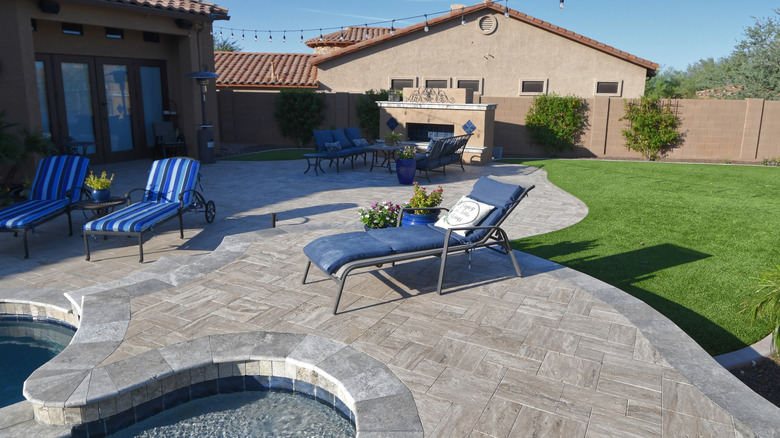
Travertine is a stunning natural material that makes an interesting alternative to concrete and brick. But, before you add it to your yard, it is important to weigh the pros and cons. Firstly, you need to consider the price, as it is generally more expensive than other options. Travertine usually costs around $12 to $25 per square foot installed, whereas concrete is around $8 to $12, and brick is around $10 to $17. The installation of travertine is costly and difficult, and the price increases if you want a rarer color or style. This alone may mean you avoid it and opt for a more commonly used paver material that is easier to get and install.
Alongside cost, travertine is a bit more high-maintenance than other options. As it is a porous stone, it can stain easily, and this means that regular sealing is necessary to keep it looking its best. However, if you remember to seal it every one to two years, you can avoid damage and subsequent repairs to your patio.
Still, even though travertine is pricey and needs regular maintenance, its benefits may outweigh these points for you, especially if you live in a warm climate. Alongside its durability and beauty, it is a heat-resistant stone; that means it can withstand harsh sun and not get too hot under bare feet. Furthermore, its slip-resistant qualities make it a great material for your pool deck. If you think travertine is right for you, check out the amazing styles and colors of this stone to find your perfect patio.