

What It Means When Your Spider Plant's Leaves Turn Yellow (And How To Fix It)
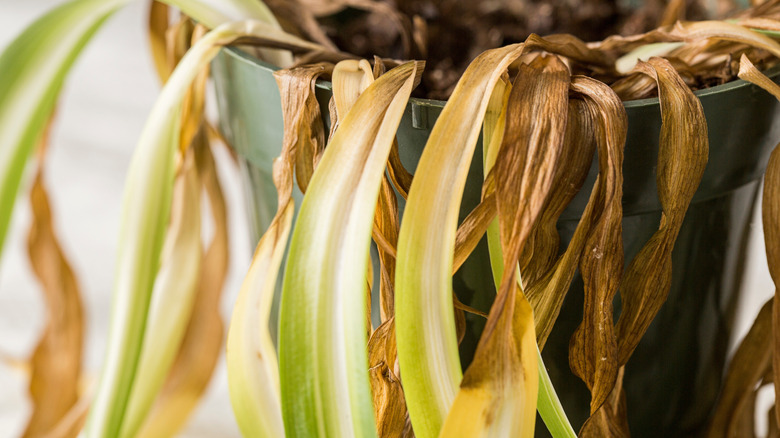
Spider plants (Chlorophytum comosum) are popular options for houseplants for many reasons, including their long, showy tendrils, charming spiderettes, and striking green and cream color palette. For beginner houseplant owners, it's often recommended to grow and care for a spider plant because they're relatively low-maintenance. However, if you've noticed that your spider plant's leaves are slowly turning an unsettling shade of yellow, there are a few things that could be happening. The most likely cause is that you are watering your spider plant too much. Yellowing leaves may also indicate an issue with sunlight levels, dry air, or even pests. It may take you some trial and error to determine exactly what is causing the yellow leaves.
Though spider plants are known for being easy-going, these popular houseplants still require a specific set of conditions in order to thrive. Spider plants need well-draining soil, indirect sunlight, and a regular water, roughly once per week. Luckily, spider plants are resilient, and they make it pretty obvious when something is off with their care. If you keep an eye on their leaves and coloring, you should be able to quickly notice if anything is wrong and how you can adjust their care to boost their health.
Improper watering and environment can cause yellow leaves
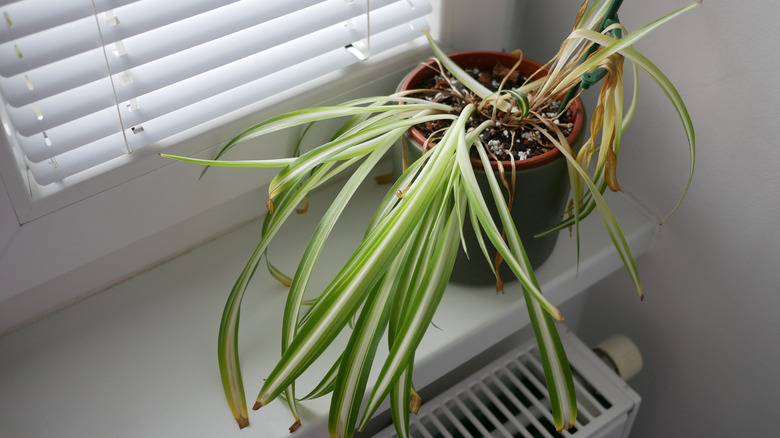
If the leaves are wilted and the soil is emitting a foul odor, your plant is most likely dealing with root rot. Root rot is a fungal problem that can occur when the roots are waterlogged, usually from overwatering or poor drainage. Unfortunately, root rot can be difficult to mend, depending on how far it's progressed. In severe cases, you may have to throw the plant away. However, you can try to decrease the moisture levels by repotting your spider plant so it thrives again. Ensure you get rid of all previous soil as well as any dead leaves or roots before moving it to a new container. In the future, allow the soil to dry out between waterings.
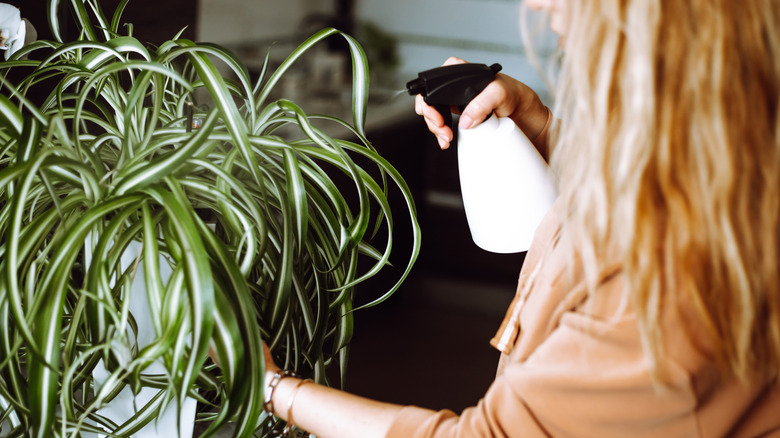
If you're certain that overwatering isn't the issue, your spider plant might also be reacting to dry air or improper temperatures. These plants love humidity, so it's advised to keep them in an area that can provide this environment, like a bathroom. You can also spray the plant lightly with water on occasion or add a humidifier to the room. Make sure to set your spider plant in a spot that has warm enough temperatures, ideally between 60 and 85 degrees Fahrenheit.
Another cause for yellow leaves on a spider plant is due to its lighting conditions. If your spider plant has been kept in direct sunlight or shade, you may need to relocate it to an area with bright, indirect light. A windowsill or nearby shelf is usually sufficient, but you can supplement with indoor grow lights if your home is too dark.
Preventing pests and providing adequate nutrients
With the right amount of water, sunlight, and warmth, your spider plant should be relatively happy and green. However, there are a few other culprits that might cause a healthy plant to turn yellow. It's not common for spider plants to have issues with pests, but mealybugs, scales, aphids, and spider mites can and will infest them. Spider mites will pierce and drain the leaves of sap, causing a stippled yellow look. These tiny insects pierce the leaves of your spider plant to feed on the sap, which can eventually cause the leaves to turn yellow, shrivel, or drop. Getting rid of pests is tricky, and they can spread to your other houseplants if you're not careful, but neem oil, insecticidal soaps, or diatomaceous earth might easily take care of common houseplant pests.
Lastly, if you've checked all these factors and still had yellow leaves, your spider plant may require more nutrients. Applying a standard fertilizer with a 1-1-1 ratio every three to four months should do the trick. However, avoid adding too much fertilizer as it can stunt the growth of your plant, prevent it from developing spiderettes, or turn the leaf tips brown.