

Turn Yard Waste Into Mulch That Can Help Grow Bigger, Juicier Tomatoes
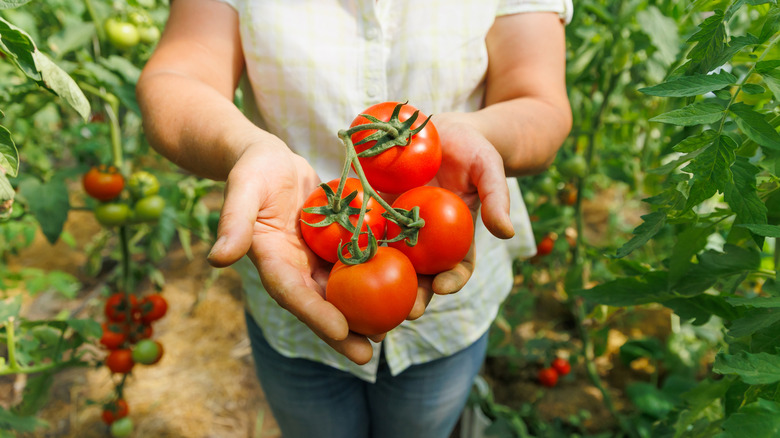
You're excited about your tomato garden and are determined to make it the best it's ever been this season. You know mulching your plants is good for them, but you don't love the idea of spending even more money on the garden (especially if you already went over budget at the nursery). If you're looking for an eco-friendly, money-saving way to mulch your veggie garden for bigger, juicier tomatoes, look no further than your own lawn clippings.
Grass waste is your tomato plants' new best friend and a great way to repurpose your lawn clippings for a healthier yard and garden. First of all, for those who are unfamiliar or have newly acquired green thumbs, mulch is something gardeners spread on top of the ground where plants and flowers are grown to affect the soil. Grass clippings are an organic form of mulch that helps tomatoes grow big and healthy because, as they decompose, they feed the soil, making it nutrient-rich and improving its structure. Tomato plants also have cold-sensitive roots that appreciate a layer of mulch to retain a bit of warmth.
To get started, gather all your grass clippings in a container and head to the tomato garden. A pair of gardening gloves are helpful for protecting your hands as you work. Depending on how big your garden is and how much grass clippings you have, a wheelbarrow can be a handy way to transport the clippings.
How to use grass clippings as mulch in your tomato garden
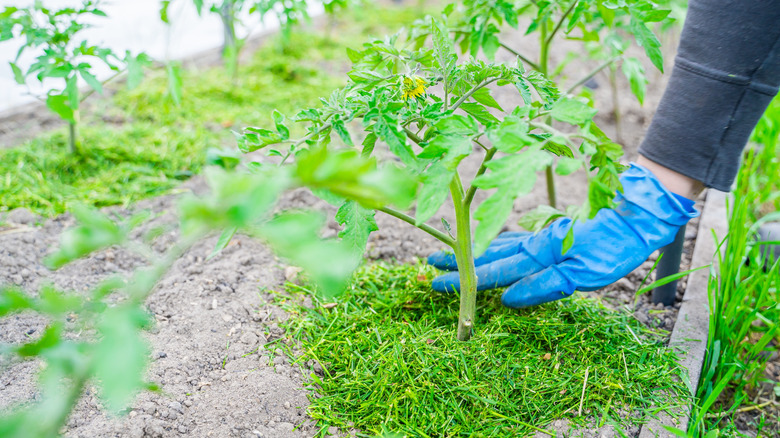
First, a word of caution: Before spreading grass clippings in the garden, make sure they're free from chemicals and completely dry. Don't use clippings from your lawn if it's recently been treated with any type of herbicide. You don't want to introduce those chemicals into your tomatoes. Wait until the lawn has been mowed several times after treatment before using the clippings. You also want to wait for the grass clippings to dry out before spreading them in the tomato garden. Wet clippings can clump together and prevent air and moisture from getting through to the soil below.
To avoid common mulching mistakes in your garden, it's important to know when to add mulch and how much of it to use at a time. As soon as temperatures begin to rise in the spring, you can add a layer of mulch to help lock in some of that cozy warmth the roots love so much. Ideally, you want 1 to 2 inches of grass clipping to be present at a time. When you lay the clippings down, be sure to leave a bit of space around the stems of the plants. And then maintain a thin layer of mulch throughout the season, reapplying as needed. Note that things like rain can cause the mulch to decompose faster, so it's a good idea to check after any rainfall to see if you need to reapply the mulch.