

How To Choose The Perfect Shade Of Green Paint
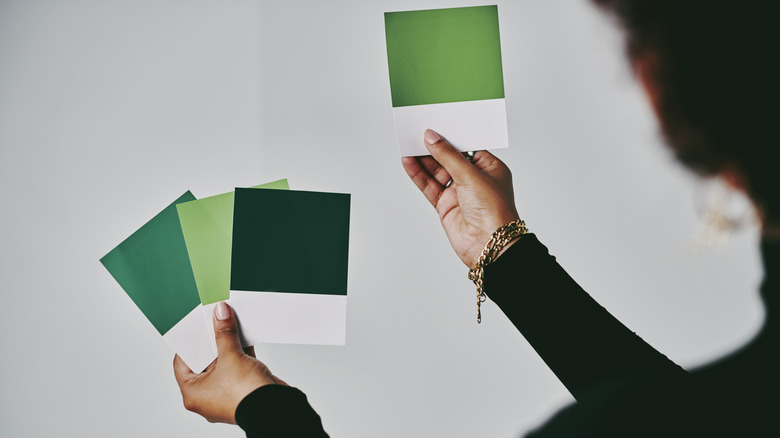
Color trends come and go, but various shades of green have been popular in decor for a while now. Whether deep rich shades like emerald and teal, or muted, neutral sage greens, this versatile color can create a wide variety of looks depending on how you use it. There are a few ways to ensure you're choosing the perfect shade of green for your project, so let's look at some things to consider.
The first consideration is what room or area you're painting. Although there are no hard fast rules for what colors to paint things, sometimes the form and function of the painted area can be a consideration for your color choices. For example, studies show that painting a bedroom a bright color can disrupt sleep, because bright colors are stimulating. For a more relaxing vibe, pastels, muted, and neutral paint colors are recommended. Kitchens and dining rooms can be hubs of social activity, so warmer, more vibrant colors can be appropriate. Living rooms or entertainment rooms can work with either muted, neutral, or bright colors, depending on your own preferences and style.
Another consideration is your furnishings and your existing color palette. Unless you're also planning to upgrade your furniture and window treatments, your choice of green paint will need to work with your existing colors, including painted or wood trim, ceilings, and floors. This is where paint samples can be very useful: whether holding cards up next to things or getting custom paint samples to try on the wall, this preparation can save time, expenses, and possible regret down the road.
Consider your green's value and saturation
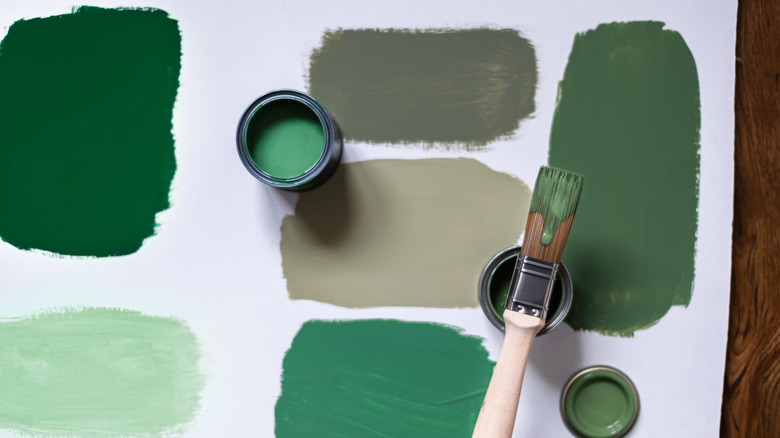
Green is a versatile color for decor, with an enormous range of possibilities, so settling on one color may seem daunting. When perusing colors, pay attention to how they make you feel, and which ones you really like. That may seem obvious, but remember you'll be looking at these walls constantly. Choosing between darks and lights, neutrals and brights, and different warm or cool hues of green is all part of the process to guide your choices.
Dark colors can feel sophisticated and cozy, but usually work best with some contrasting lighter colors. Dark greens look great with natural wood trim and floors or cream trim colors. Red and green can be too sharp a contrast and give off a "winter holiday" vibe if not done carefully: but a deep neutral forest green, like Benjamin Moore's 'Hunter Green', with maroon drapes or a cinnabar sofa can look stunning. Brighter shades like emerald or grass green on walls are a bold choice, but can work with neutral furnishings or an eclectic style and color palette full of prints and textures.
Light colors may seem uplifting, but can give off an "ice cream" pastel vibe which isn't for everyone. Pale neutral greens can be soothing, nature-adjacent colors, especially in combination with abundant natural light. Neutral colors can also feel drab, so choose carefully for a green that has the appropriate feeling for your room. Warm greens give an earthy vibe, while cool greens can feel refreshing.
Choosing between cool or warm hues of green
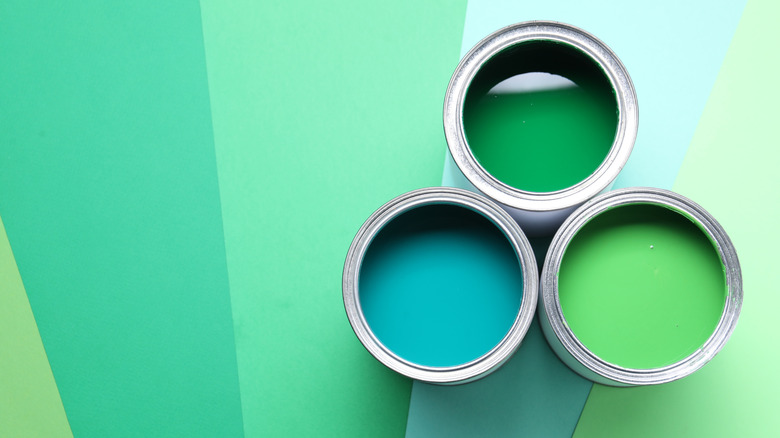
There's not just one right way to develop a color palette. You can utilize the color wheel to create palettes of contrasting colors, adjacent colors, analogous colors, or monochromatic colors. Many designers enjoy using palettes associated with different styles or eras, like classic, contemporary, or retro color palettes. The world of color may seem overwhelming at times, but using tools available at paint stores or on websites can help narrow down some choices.
Again, it's important to consider the colors of your room apart from the walls. Since green is in the middle of the spectrum, it can sometimes work as a bridge between warm and cool colors. As an example: imagine deep green walls with gold velvet drapes and a plum purple sofa. These jewel-like tones can look wonderfully vibrant together, but their respective warm or cool undertones can make all the difference. Does your plum sofa have blue undertones or brown undertones? These observations will help guide your choice of green wall paint.
For greens, undertones will usually be blue, yellow, or grey. Blue undertones characterize green shades of teal, turquoise, jade, and many other rich colors. Pairing rich teal walls (a shade like Benjamin Moore's 'Jade Garden') with a brown-toned plum sofa? Sure! Yellow undertones can include moss, avocado, chartreuse, or pistachio. These create a whole different look than blue-toned greens with that plum sofa: but moss-green walls with an indigo-violet sofa? Could be gorgeous! Color swatches and paint samples are your friends. There are many neutral shades of green, but also many warm or cool greens, suitable for many looks and tastes, so why not explore?