

Plant This Ornamental Shrub For Delicious Berries & A Yard Full Of Pollinators

The Amelanchier cultivar 'Regent' comes from a shrubby species whose every common name seems to have a story to tell. The plants are known as "serviceberry" because they bloom in April, just as the ground thaws enough for grave-digging. In contrast to that slightly morbid alias, "shadblow" acknowledges that shad fish begin running at the shrubs' bloom time. Most winningly of all, the "junebush" common name honors the time when Amelanchier's blueberry-like fruits are ripe for the picking. These days, cultivars like 'Regent' (Amelanchier alnifolia 'Regent') combine common serviceberry's flowering and fruiting traits with a compact shape and accelerated blooming time that brings the pollinators in even earlier.
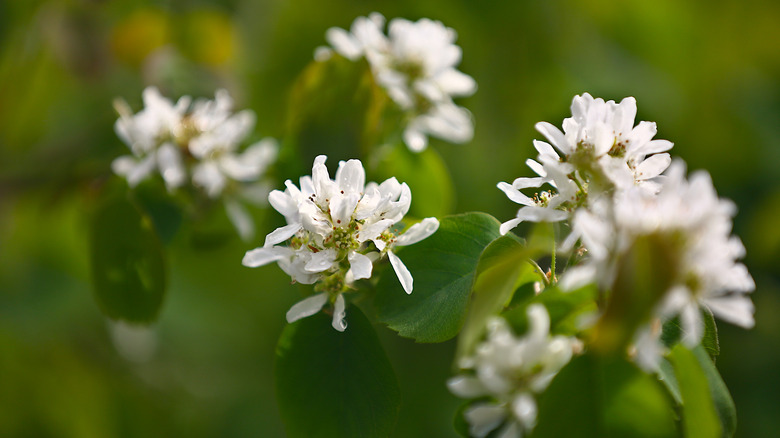
'Regent' grows best in USDA Hardiness Zones 2 to 7. Because it's a cultivar of A. alnifolia (the serviceberry variety best known for high-quality berries), 'Regent' shrubs deliver berries with a consistent size, bountiful harvest, and — most importantly of all — sweet taste. The shrub grows about 4 to 6 feet tall and wide. In April, ornamental, large, white flowers appear, followed by June berries and blazingly beautiful fall foliage.
Because its flowers appear so early, 'Regent' and other serviceberries provide nectar for just-emerging pollinators. That's why this serviceberry cultivar serves as an ideal anchor if you're starting a pollinator garden. Among the pollinators that 'Regent' attracts are species of bees and butterflies. Not only do these pollinators flock to serviceberries for the plants' nectar, but serviceberries also act as hosts to butterfly larvae. These may include striped hairstreak, viceroy, and the Canadian tiger swallowtail.
For best berry production, give 'Regent' full sun and rich soil
Plant 'Regent' where it can get at least two hours of sun a day. This ornamental cultivar does well in both partial shade and full sun. It thrives in a range of soil conditions, but well-drained, with a neutral to slightly alkaline pH level, is preferred. If berry production is important, full sun and loamy soil is the winning combination. Choose a planting area that accommodates the serviceberry's potential 6-foot spread.
If you have plenty of room on your property, you may appreciate the species' tendency to form thickets, although 'Regent' isn't as prone to spread as other serviceberry varieties. It does, however, produce plentiful root suckers that can end up taking up more room if not removed. Although it isn't prone to serious issues, keep an eye out for diseases and pests such as powdery mildew, rust, scale, and borers. Early detection and treatment will keep 'Regent' happily bearing.
Not surprisingly for a bush whose other common name is "juneberry," the berries are typically ready for picking in June. You may choose to grow this fruiting shrub to feed and attract spring birds. But if you'd rather reserve at least some of the harvest of this berry-producing bush for yourself, put up bird netting just before the berries are ready. Alternatively, harvest them before they ripen to outwit the scavenging wildlife. Pick the berries in the morning, just after the dew on them has dried.