

How To Tell If Your Growing Zone Is Best For Cool Or Warm Season Grasses

Whether you're starting a lawn from scratch or you're overseeding an existing one, it's important to identify what type of grass you have and what will work best in your climate. Turf grasses are broadly grouped into two categories: cool-season grasses or warm-season grasses. The distinction mainly comes down to growing patterns and timing. Cool-season grasses begin growing earlier (in late winter or early spring) but are prone to going dormant during the hottest part of summer. Warm-season grasses, on the other hand, start greening up a little later but tolerate the hottest days of summer better.
While they can have a similar look, the distinction makes a huge difference in the amount of effort you'll have to put into maintaining your lawn, how early your lawn will green up, and how long it will stay green. The distinction primarily comes down to how hot your summers get and, to a lesser extent, how cold your winters get. For climates with milder summers, you want cool-season grasses. For climates with more intense summers, warm-season grasses will do better. But some of the country lives in what's called a "transition zone." If you're in this region, both cool and warm-season grasses could work.
Not sure which growing zone your yard would be classified as? The most important details to consider include your typical summer temperatures and winter temperatures. But you'll also need to factor in details like how shady your lawn is.
How to figure out your turfgrass growing zone

When choosing turfgrass, you should know your USDA hardiness zone and your typical summer temperatures. Your hardiness zone tells you the coldest temperature your region experiences. This matters because some grasses may die rather than simply go dormant if temperatures drop too low. Cool-season grasses also tend to tolerate frost better than warm-season varieties.
This is most problematic for gardeners who regularly get below freezing temperatures. If you have milder winters with only occasional sub-freezing nights, both cool-season and warm-season lawns are likely to survive winter. Because of how different two climates in the same hardiness zone can be, you also need to look at the hottest temperature your climate hits in the summer. Many cool-season grasses struggle to produce energy and maintain growth once temperatures rise above 87 degrees Fahrenheit.
If your summers are consistently in the upper 80s or higher, a cool-season lawn might start to look haggard and may even go dormant in the summer. In this case, warm-season grasses are the best grasses to handle extreme heat. If temperatures above 87 degrees are rare or only happen a few times each season, however, you may fall within a transition zone, a region with temperatures suitable for both grass types. Bear in mind, however, that the "transition zone" might be shifting as the climate warms. If you live along the bottom edge of the transition zone as it's depicted on some maps, you might want to opt for a warm-season lawn just to be safe.
Light levels also matter when deciding between cool or warm-season grasses
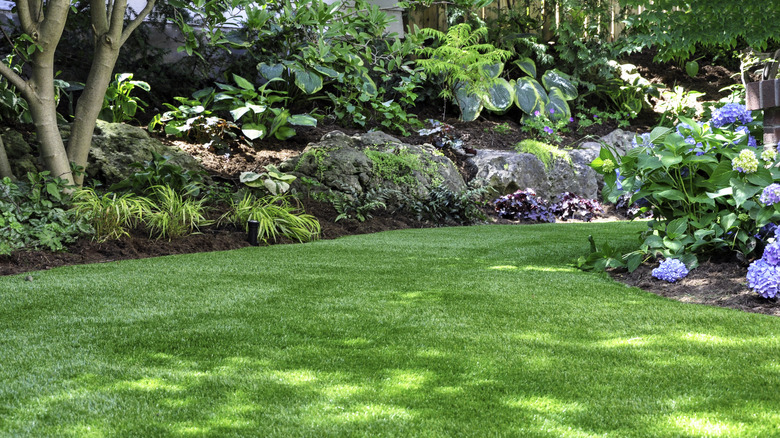
Your climate — including the hottest and coldest temperatures your lawn will experience — is the biggest piece of the puzzle when deciding which type of grass will do best in your yard. But you'll also want to consider how much shade your lawn receives. If you're truly in a transition zone where either grass type could thrive, for example, the biggest deciding factor here would be light levels. Even a lawn that technically receives several hours of sun may still struggle if nearby trees create dense afternoon shade during the peak growing season.
Cool-season grasses tend to tolerate lower light or fewer hours of sunlight than their warm-season counterparts. So if you're in a transition zone but have a partly shaded yard, go for a cool-season variety for a better chance of growing a lush lawn in shade. If it gets full sun, however, go for a warm-season grass as it'll love the long hours of light and better tolerate any above-average summer temperatures that come around. Paying attention to both temperature patterns and sunlight exposure can save you from having to reseed struggling areas year after year. A grass variety that naturally fits your environment will usually stay healthier with far less effort.