

Plant This Container Flower In May & Attract Pollinators All Summer Long
May might seem like the start of summer, but for most spring gardening activities, it's actually more of a deadline. With only so many planting days in the spring, it can be a scramble to get everything in the ground on time. By the time May rolls around, if you're looking for a container flower that will sprout from seed in just a handful of weeks, then orlaya (Orlaya grandiflora) is one to consider. With its umbels of white flowers, it's a popular alternative to invasive Queen Anne's lace. And best of all, you can plant these fast-growing annuals and get blooms about eight to 10 weeks later.
Along with other fast-growing spring flowers like snapdragons and cosmos, you can sow orlaya directly into the garden or containers in May, as long as the danger of frost has passed in your USDA Hardiness Zone. You can start them indoors six to eight weeks earlier if you want, but if you prefer a simple method, direct sow them instead. Simply spread the seed where you want them to grow and cover lightly with soil, then water regularly until they're established. For a container planting, you can do this directly in the pot they'll stay in all season.
Popular with florists, the white umbels of orlaya are also a pollinator favorite. The plant's common name, white lace flower, perfectly describes the clusters of florets perched on long stems. It attracts all types of butterflies, bees, and other pollinators and is surprisingly easy to grow, even in containers.
How to care for Orlaya for summer blooms
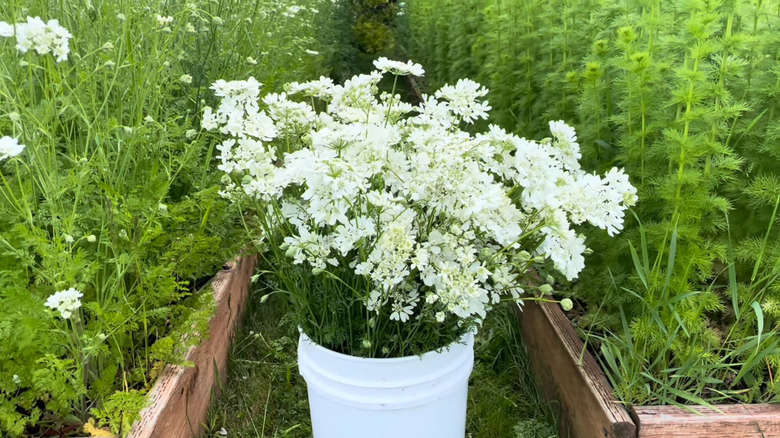
Orlaya is one of the flower varieties Joanna Gaines relies on for a colorful garden. Although everyone from wedding florists to honeybees loves this plant, it is resistant to deer, and it has very few pests, which makes it even easier to grow. Orlaya does best in rich, well-drained soils. While it tolerates poor soils when it's grown in the ground, the best growing medium for a container is a mix of compost and potting soil. You should also use a deep-enough container that it doesn't get rootbound, especially since it has a long taproot. In the ground, they perform better if you space them about 6 to 12 inches apart, and a container that's deeper than 6 inches is usually sufficient.
Once they start blooming, keep them deadheaded throughout the rest of the growing season to help them produce more flowers. The bloom time is from early summer to frost, although they are sensitive to extreme heat, so blooming often declines when temperatures climb. As a frost-tender annual, they may survive a couple of light frosts, but once they get hit hard, that's it for the year. Since they reseed readily under the right conditions, you can let them come back on their own or save the seed to plant in either the fall or the spring.