

The Birdbath Mistake That's Keeping Birds Away
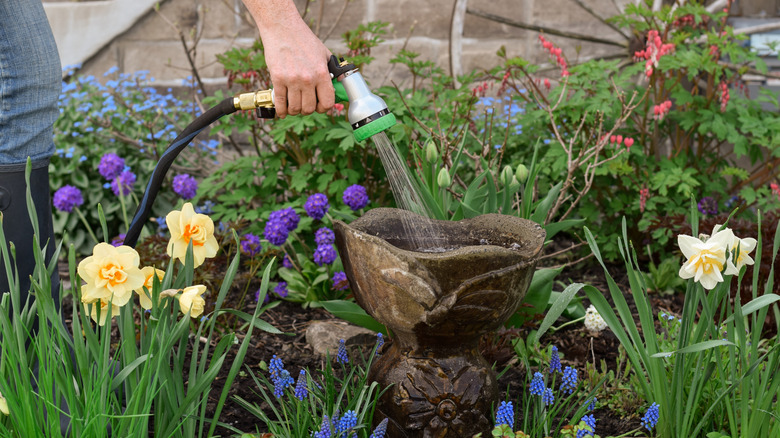
If you have a bird feeder but no birds, you may be missing a crucial step — you need to add a birdbath. Having a birdbath in your yard is a great way to encourage repeat visits from many species. Let's say you set up a birdbath with the best intentions, only to find it remains a ghost town. Often, the problem doesn't lie with the water or the location of the birdbath, but with the size of the basin. While a shallow bowl is great, a basin that is too small may discourage birds from visiting for all kinds of reasons — from space to safety. If your birdbath is roughly the size of a cereal bowl, it likely isn't providing birds with what they need.
Birds don't just sit in the water. They vigorously flap their wings to clean their feathers. In a too-small basin, a single robin or blue jay can splash out nearly all the water in one session, leaving the bath bone-dry for the next visitor. On top of that, most birds are territorial about personal space while bathing. A small bath only accommodates one bird at a time. This creates a waiting room scenario, with the smaller birds being pushed away from the spot by the larger ones — sometimes to the extent that they stop visiting the spot altogether. What's more, leave a small volume of water in the sun and it will heat up quickly. Warm, stagnant water is a breeding ground for algae and bacteria like Salmonella. Birds may avoid such water for their own safety.
Getting the right-sized birdbath for your backyard
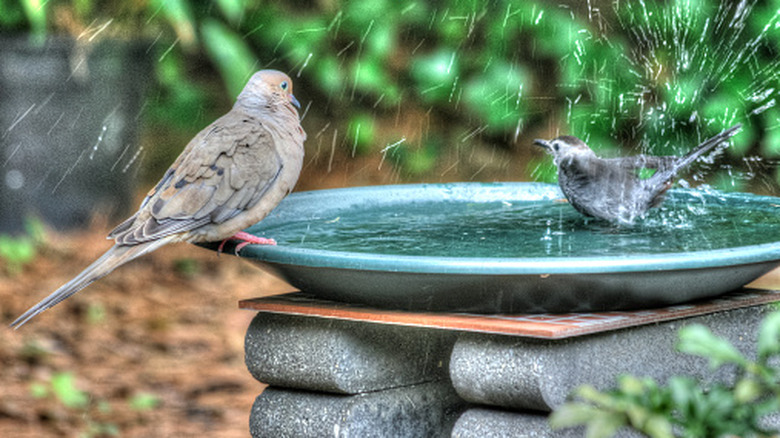
While you can turn a simple birdbath into a decorative feature birds will love, the size of the bowl is what matters most. You want to aim for a bowl with a minimum diameter of 12 inches. A dish this size will have room on the rim for a few birds to land at a time and hold enough water so that a big bird won't empty the dish in one bathing session. A wider, shallower basin is always superior to a narrow, deep one, too.
Remember to account for weight of the bowl in addition to its size. Smaller, lighter baths are more likely to topple over or wobble when birds land on the rim. Birds won't visit an unstable birdbath. If you have to use a smaller basin due to space constraints, set up several baths at varying heights — one on the ground and one on a pedestal, for example. This ensures that there is a backup water source in case one dries out. It can also reduce territorial disputes and cater to the preferences of different species.
When considering the best birdbaths for your yard during winter, the same rules apply, though you'll want to prioritize keeping the birds safe. Birds can't get fully soaked in extremely cold weather because ice can form on their feathers before they dry, leading to hypothermia. During winter, add large, flat stones to the basin to keep the water shallow — ideally no more than 2 inches deep — and create perches. In fact, you can keep the stones in the birdbath year-round.