

28 Cascading Ground Covers To Fill Window Boxes For Added Beauty
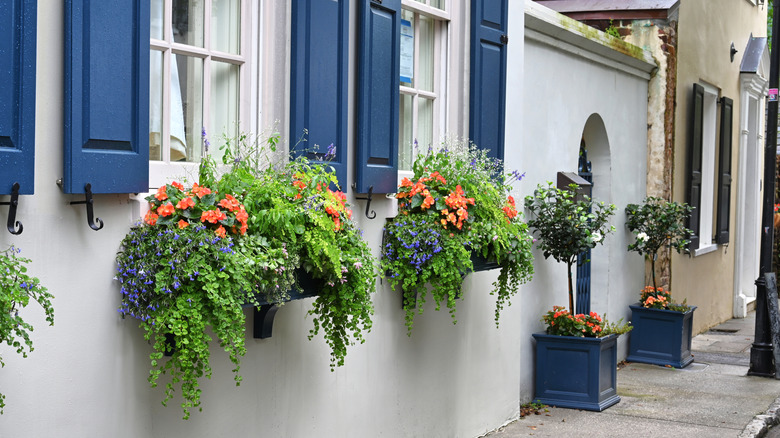
Window boxes are an excellent way to add drama and color to your home, and they work well even in limited spaces. Often designed around the "thriller, spiller, filler" formula, they may include ground covers that help fill in or cover the soil. These then lurch past the edges, "spilling" out and down the boxes, striking a breathtaking display. Ground covers can also help slow evaporation, improve soil moisture retention, and minimize splash-back on nearby plants during heavy rain.
If you're looking to finish your window boxes in style, consider adding cascading ground covers such as golden creeping jenny, creeping thyme, Rozanne geranium, purple heart, Red Ribbons rose, sweet potato vine, or any of the other plants listed below. Before setting your heart on one, ensure it can adapt to the growth conditions available – think sun, soil, wind, and drainage. Also, note that due to the soil being limited, window boxes dry out faster and have access to fewer nutrients. As a result, you'll likely need to water and fertilize your plants more frequently. However, make sure the boxes have adequate drainage holes to help prevent root rot and fertilizer burn. To fill out the window boxes quickly, consider spacing the plants closer than you would for landscape beds.
Golden creeping jenny
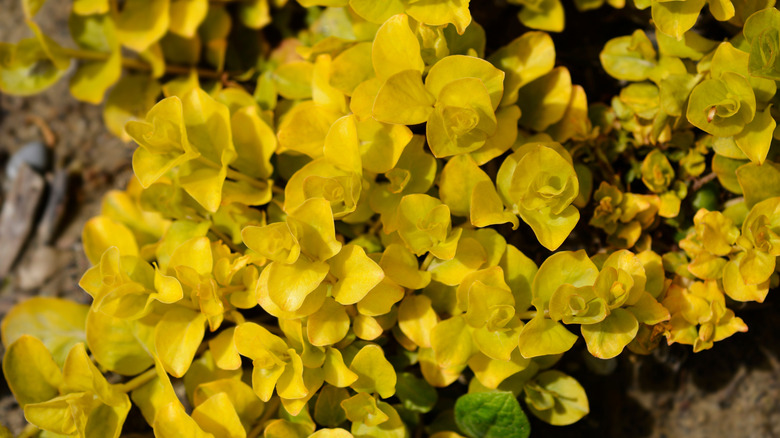
Depending on sun exposure, the foliage of golden creeping jenny (Lysimachia nummularia 'Aurea') may appear brassy gold in full sun or lime-chartreuse in part shade as it elegantly trails down the sides of a window box. It may, infrequently, produce yellow flowers in the summer. Unlike the invasive standard specimens, 'Aurea' is relatively well-behaved. Still, if it bothers other plants growing alongside it, you can easily pull out the seedlings, as they're shallow-rooted. It remains nearly evergreen in USDA zones 3 through 9. In ideal conditions, golden creeping jenny can grow about 6 inches high and spread about 2 feet wide.
Ornamental bacopa
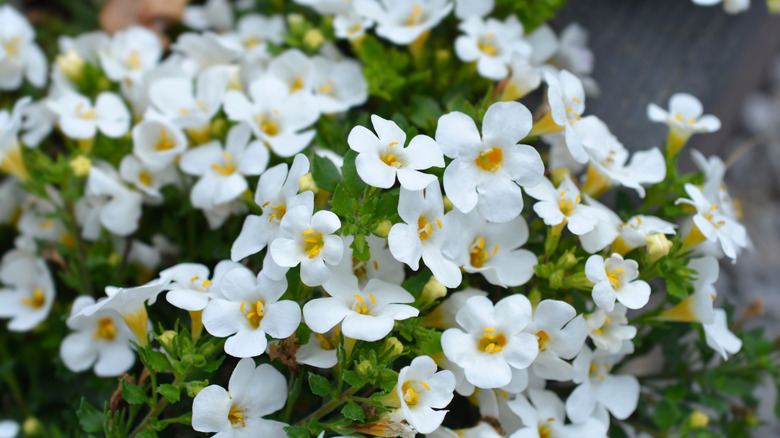
You can sow seeds or propagate cuttings of ornamental bacopa (Chaenostoma cordatum or Sutera cordata) in spring for dark green, hairy foliage that cascades over the edges of baskets and window boxes. It also features pretty white or yellow flowers all through summer and fall. Since it grows quickly, you must water and fertilize it more throughout the season, and trim the trailing stems occasionally. Bacopa can handle humidity, but not poor drainage. Consider cultivars like 'Snowflake' and 'Calypso Jumbo White' for that spilling effect. Bacopa is perennial in zones 9 through 11, but it's typically grown as an annual elsewhere.
Italian bellflower
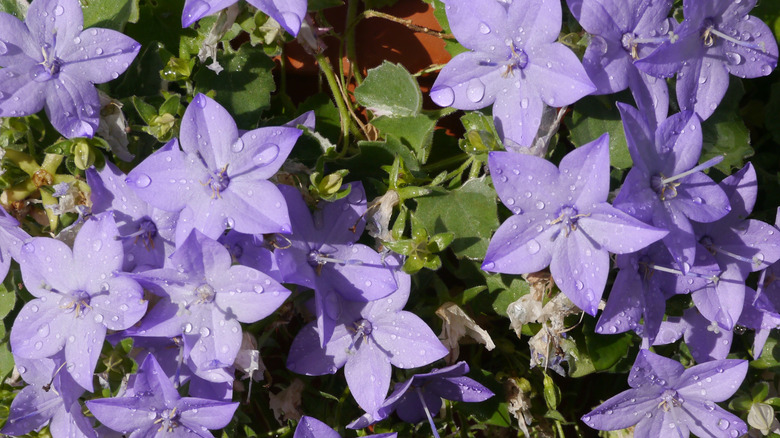
Italian bellflower (Campanula isophylla) is a soft-stemmed perennial that grows in USDA hardiness zones 7 through 10. But protect it from frost, or the plant may be damaged. You may like it best in mid-summer when its purplish-blue flowers smother the heart-shaped foliage continually for over two months. Compact cultivars like 'Alba' produce white blooms. Since it thrives with long hours of direct sunlight, plant it in your sunniest window boxes. Keep the potting media consistently moist (but not soggy) for the best performance — amending it with sand or perlite can help with moisture retention and drainage.
'Angelina' stonecrop
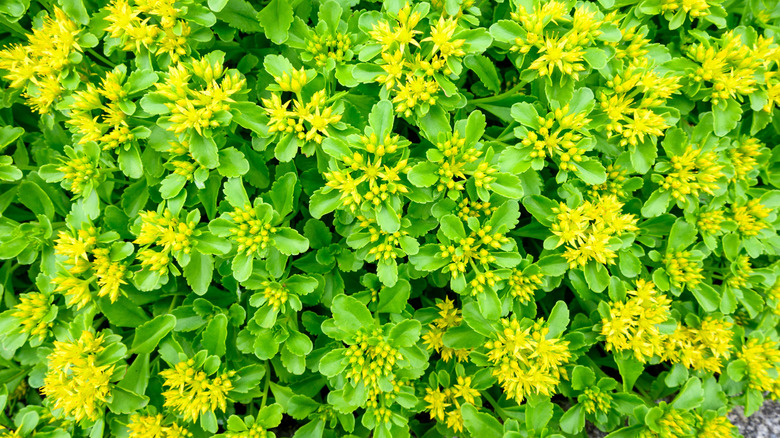
As a groundcover, 'Angelina' stonecrop (Sedum rupestre 'Angelina') forms a thick mat where its stems touch the soil. In a window box, however, those stems spill beautifully over the edges beneath blazing yellow, needle-shaped foliage. By mid-summer, 'Angelina' is covered in bright yellow blooms, and its foliage transforms into a blaze of auburn in the winter. It grows as a perennial in USDA hardiness zones 5 through 9. You can plant it in full sun or shade, but keep it light, or the foliage may fade to a lime green. It can withstand short, dry spells but not winter rains.
Turtle vine
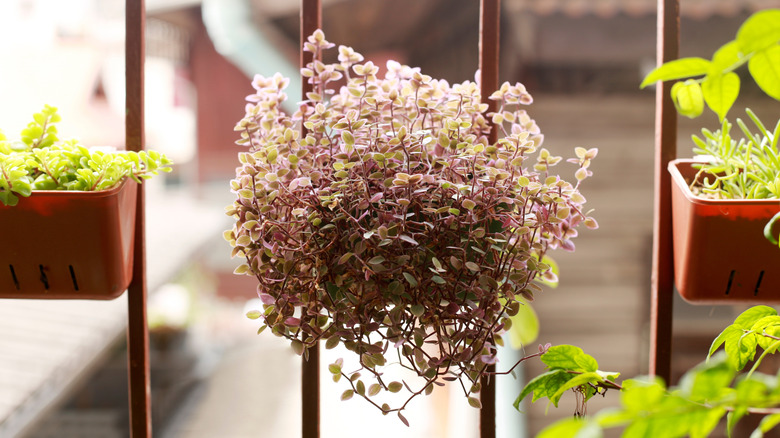
Turtle vine (Callisia repens) or creeping inch-plant is a fast-growing, trailing vine you can grow in a semi-shaded window box. Toward the end of spring, it's covered in petite pink or white blooms. For extra visual impact, choose cultivars with variegated pink, purple, or burgundy foliage, such as 'Pink Lady' or 'Pink Panther,' which contrast beautifully against the plant's lavender stems. Turtle vine is relatively non-fussy and prefers moist, well-draining media. By maturity, it can extend over 2 feet long. However, wear gloves before handling it and keep children and pets away, as some parts may be toxic.
'Silver Falls' dichondra
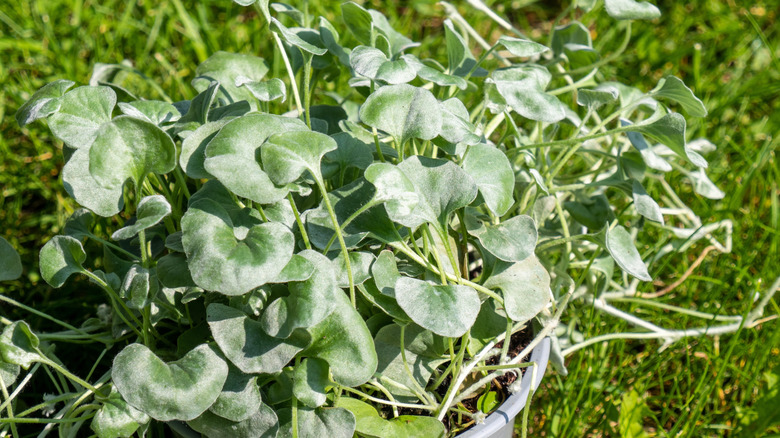
Consider brightening up sunny window boxes with the shimmering foliage of 'Silver Falls' dichondra (Dichondra argentea 'Silver Falls'). Planted around the perimeter, the silver stems, covered in waves of grayish-silver leaves, tumble down for around 2 to 4 feet. These beautiful ground cover plants are also drought-resistant and bounce back quickly in case they wilt from dehydration. Pair them with colorful flowers for a gorgeous contrast, or combine them with ornamental sweet potato vines for a foliage-heavy, cascading look. Except for zones 10 and 11, 'Silver Falls' is grown as an annual. Direct contact may irritate skin.
Creeping thyme
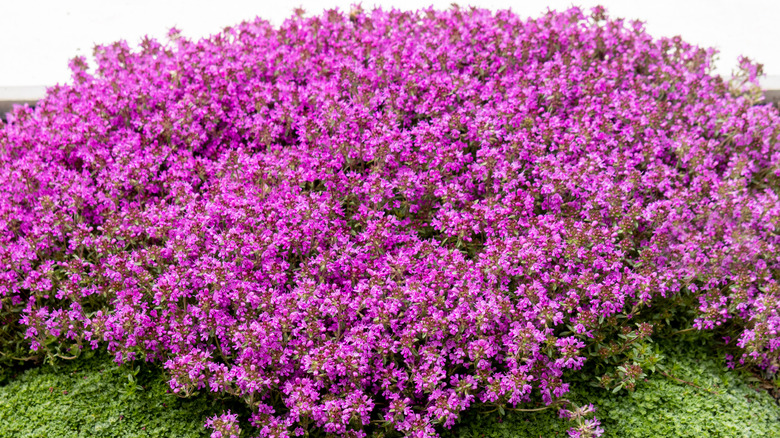
Creeping thyme (Thymus spp.) is one of the best low-maintenance ground covers you can easily grow from seed. Although it grows quickly, creeping thyme may not bloom during its first year. Once established, however, expect a month-long display of pink, white, red, or purple flowers during the spring-summer transition. Creeping thyme needs good drainage, and adding perlite to your potting mix can help with that. Many pollinators relish its presence, while pesky bugs, like mosquitoes, keep off. Creeping thyme thrives in full sun and grows as a perennial in USDA hardiness zones 4 through 9.
Basket-of-gold
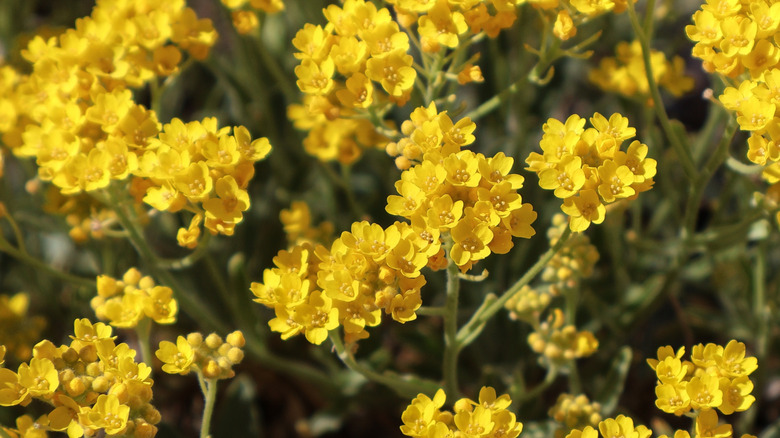
Hardy in zones 3 through 7, basket-of-gold (Aurinia saxatilis) looks stunning in spring when it's abuzz with golden-yellow blooms and butterflies. It typically stays under 1 foot tall while spreading slightly wider. While it blooms best in full sun, leaves require shade during the afternoon in hotter areas. Shearing the foliage back by about half after the last flowers fade can improve form. Because it's highly drought-tolerant, you can get away with sparse watering. To make up for their short life and not spend extra on replacements, consider dividing these perennials in the fall for more plants.
Rozanne geranium
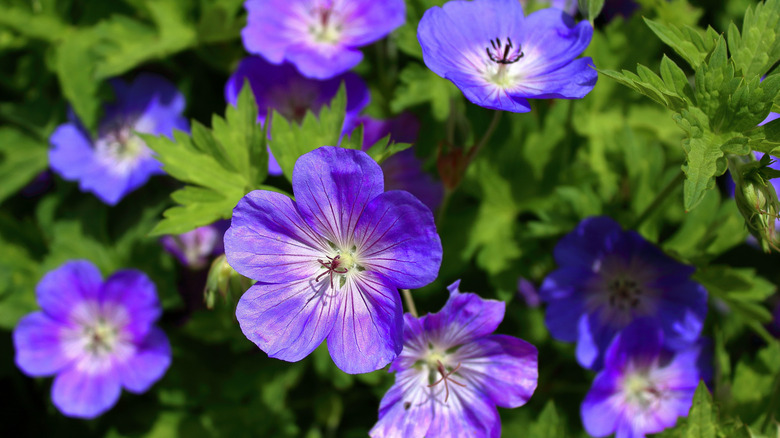
To keep your window boxes looking lush and floriferous, plant Rozanne geranium (Geranium 'Rozanne'). From the end of spring through frost, this long-blooming perennial produces a steady wave of purplish-blue flowers that attract bees and butterflies. Since the plant is self-cleaning, there's no need to deadhead spent blooms to encourage reblooming or maintain a tidy appearance. Full sun exposure brings out the best flowering quality, though they can tolerate partial shade if pushed. Don't forget to fertilize them regularly during the growing season. They're cold-hardy in zones 5 through 8.
Creeping rosemary
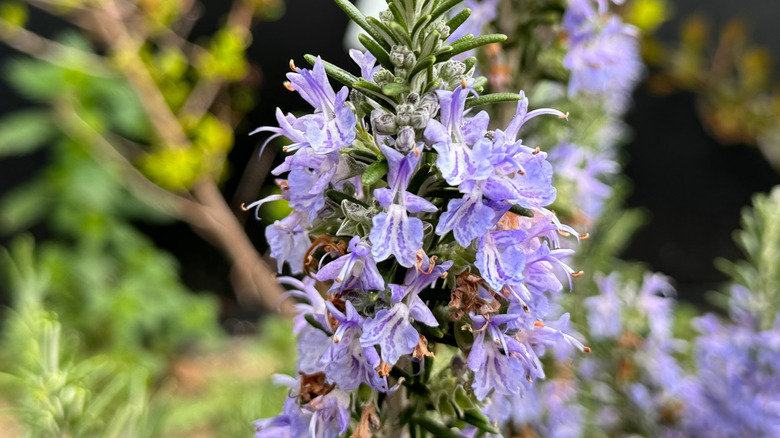
To soften your window boxes and titillate the senses with a pleasant aroma, grow creeping rosemary (Salvia rosmarinus Prostratus Group). Throughout the spring and summer months, its trailing vines are bejeweled in blue blooms that attract a variety of pollinators. If the season is long enough and you trim it, you may even spur another flower flush in fall. In zones 8 to 11, it successfully overwinters outdoors as an evergreen. If left unpruned, rosemary can grow fairly long, making it useful for storied homes. Be sure to give it excellent drainage and full sun exposure, or the herb won't thrive.
'Blue My Mind' morning glory
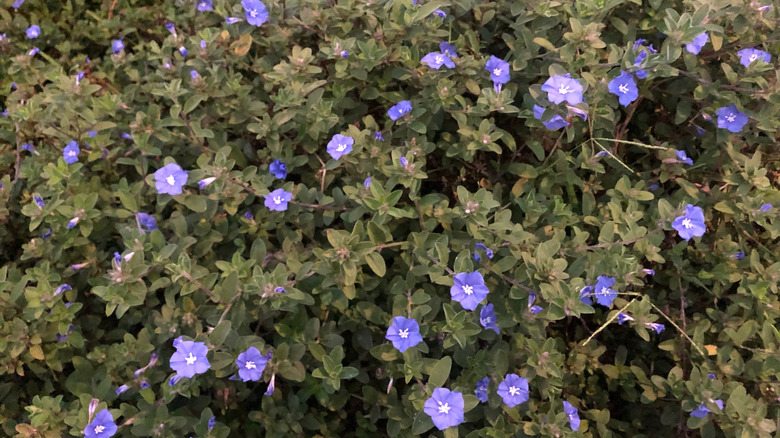
'Blue My Mind' (Evolvulus 'Blue My Mind') is a compact hybrid related to morning glory that is considered non-invasive. It's an excellent addition to window containers in hot regions, as it absolutely flourishes in the heat. You also won't need to deadhead it, since the plant continuously produces vivid blue blooms from spring through frost on its own. Fuzzy gray-green leafy branches trail about 12 inches — if you'd like something longer with similar characteristics, you can grow 'Blue My Mind XL' instead. It's hardy in USDA hardiness zones 9 through 11, but it's typically grown as an annual elsewhere.
Golden hakonechloa
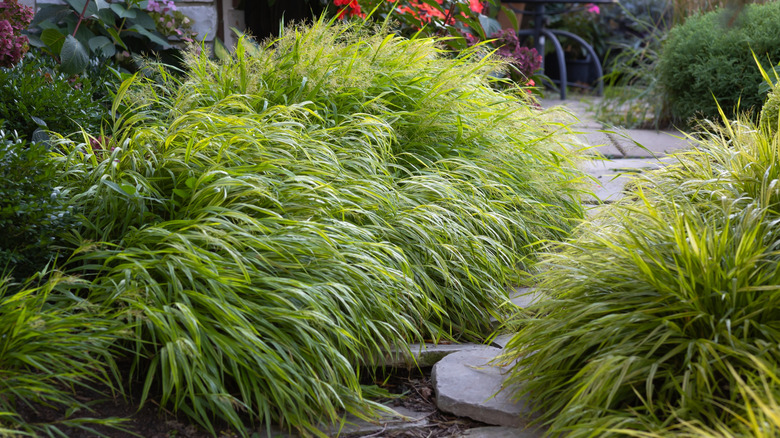
Use golden hakonechloa or 'Aureola' (Hakonechloa macra 'Aureola') to add movement and a tropical feel to your window boxes. At around 12 inches tall, it sits on the taller side for a groundcover but still cascades gracefully over edges like a waterfall. Even a slight breeze has the variegated yellow foliage rippling in waves, which turns a burnished orange in the fall before dying back in the winter. Plant it in partial shade in a moist, well-draining potting mix. In zones 5 through 9, it'll return from the roots in spring, but don't forget to spread winter mulch and cut back the dead growth.
Red Ribbons rose
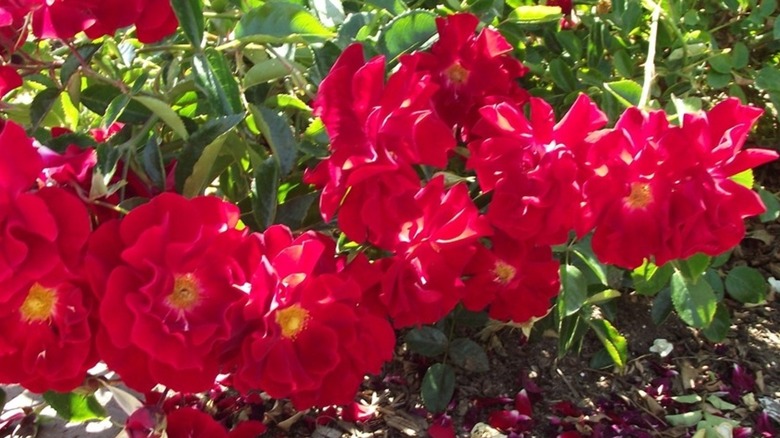
Red Ribbons rose (Rosa Red Ribbons 'KORtemma') is a disease-resistant groundcover rose that's well worth considering for deep containers in full-sun locations. From spring through fall, it nearly constantly flushes a fiery wave of scarlet red flowers, which look breathtaking as the stems drape around the container. But do watch for thorns. It also requires a fair amount of maintenance to keep it looking its best. You must fertilize in spring and summer, mulch the soil or water more frequently to keep the medium moist, and regularly remove dead and damaged wood. Hardiness range runs from zone 4 to 9.
Purple heart
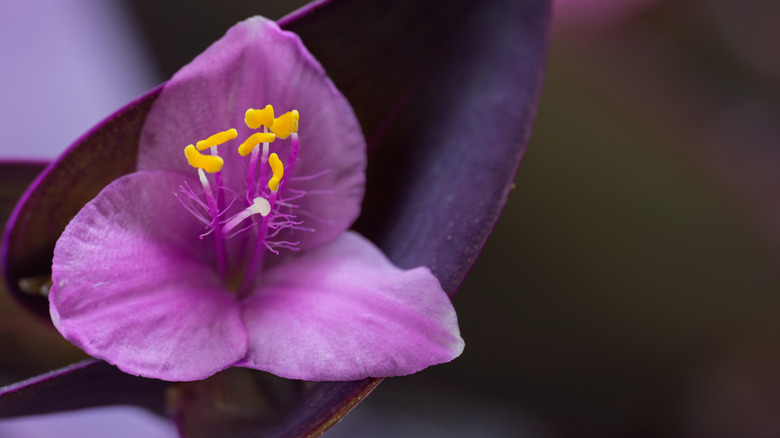
Imagine purple stems clothed in purple leaves tumbling down your window box. That's exactly the effect you can expect from purple heart (Tradescantia pallida). Around mid-summer, you may also notice small pink flowers with yellow stamens emerging among the foliage. On the downside, it is toxic to pets and children and causes skin dermatitis. Stems, being fragile, perform poorly in windy sites. Purple heart grows aggressively, which is wonderful for creating an immediate impact, but proves troublesome if other plants aren't as vigorous. Grow it as an annual, unless you live in zones 10 and 11, in a full-to-part sun location.
Black-eyed Susan vine
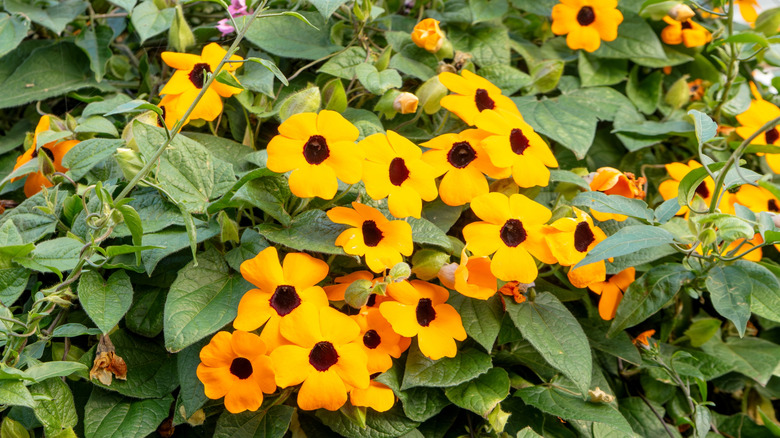
Much favored by hummingbirds and butterflies for its orange or yellow blooms that appear perpetually in summer and fall, black-eyed Susan vine (Thunbergia alata) can appear stunning as it spills over window boxes. However, be prepared for some maintenance. If spent flowers aren't deadheaded, the vine can quickly take over a container due to its prolific seed production. Moreover, you may have to trim and prune it regularly to keep it at the desired size, to offset its rapid growth. Also, it can turn invasive in frost-free areas and should be avoided to prevent any damage to natural areas.
Baby's tears
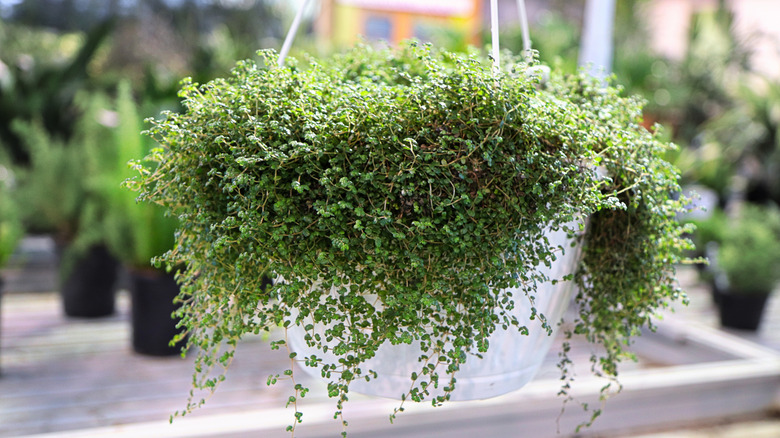
If you're looking for a cascading ground cover to mask the soil in a window box located in heavy shade, you may have luck with baby's tears (Soleirolia soleirolii). It features a mass of rounded green leaves that readily spill over – indefinitely – unless trimmed. You may, alternatively, choose the yellow-leaved cultivar 'Aurea' to break the monotony of green. Baby's tears is evergreen in zones 10 and 11. In zone 9, it may lose foliage after frost exposure, while in colder climates, it's typically grown as an annual.
AngelMist 'Spreading Berry Sparkler' summer snapdragon
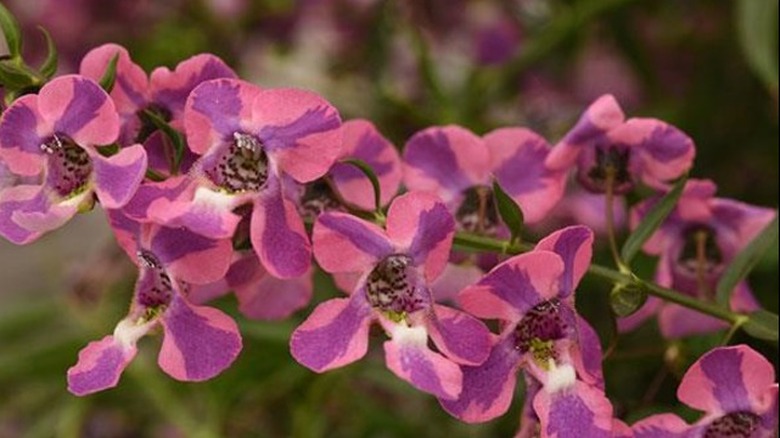
Hardy down to 32 degrees Fahrenheit, AngelMist 'Spreading Berry Sparkler' summer snapdragon (Angelonia angustifolia x) is an excellent choice for gardeners who want something easy to grow. It can handle extreme heat and humidity, and survive in the driest or wettest soils, making it highly adaptable. Stems can trail about 20 inches, and during spring and summer, are clothed in striped, pink blooms that resemble orchids. Foliage emits a pleasant fragrance year-round and doesn't require pruning. Within the AngelMist series, you may also find purple- and white-flowering hybrids that look great in window boxes.
Angelface 'Cascade Snow' angelonia
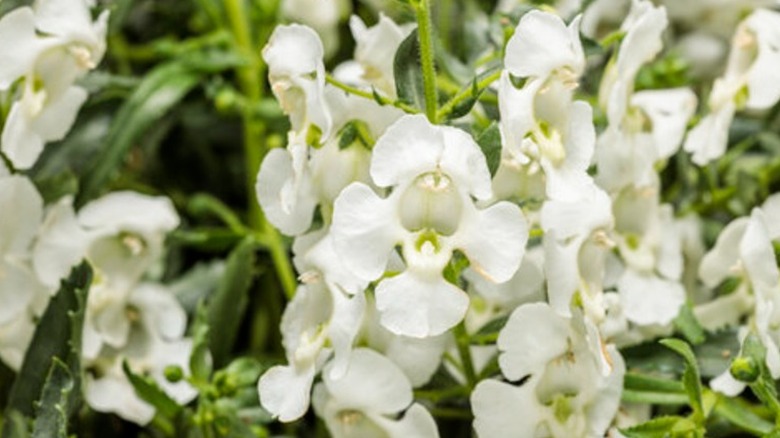
Another heat-loving beauty for window boxes is Angelface 'Cascade Snow' angelonia, whose aromatic foliage spills gracefully over the edges of containers. Planting onward, until the fall frost, it produces snow white flowers non-stop, without deadheading. It's also unusually adaptable, tolerating both overly wet conditions and short periods of drought. Ideally, you should plant it in mid-spring, though the window remains open through mid-summer, as it requires copious heat to get going. Angelface 'Cascade Snow' grows as a perennial in USDA hardiness zones 10 and 11, but it's typically treated as an annual elsewhere.
'Gold Dust' mecardonia
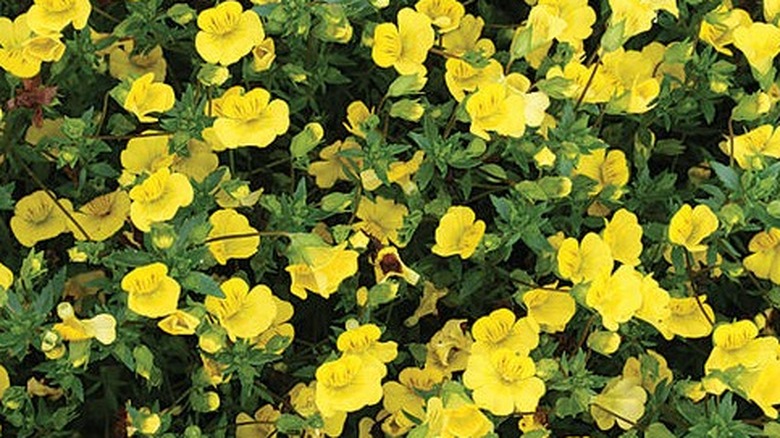
Proven Winner's 'Gold Dust' mecardonia is a freely branching plant that adds height to window boxes while still cascading over the edges. It's typically grown as an annual, though it can survive as a perennial in USDA hardiness zones 10 and 11. Highly heat-tolerant, it creates a bright contrast when its bell-like yellow blooms, available from May until October, pair with the green leaves. Give it at least six hours of direct sunlight, but if the afternoon heat becomes too intense, add shade protection to minimize scorching. Since it drops dead petals on its own, you don't have to bother with deadheading or pruning.
'Snow Princess' sweet alyssum
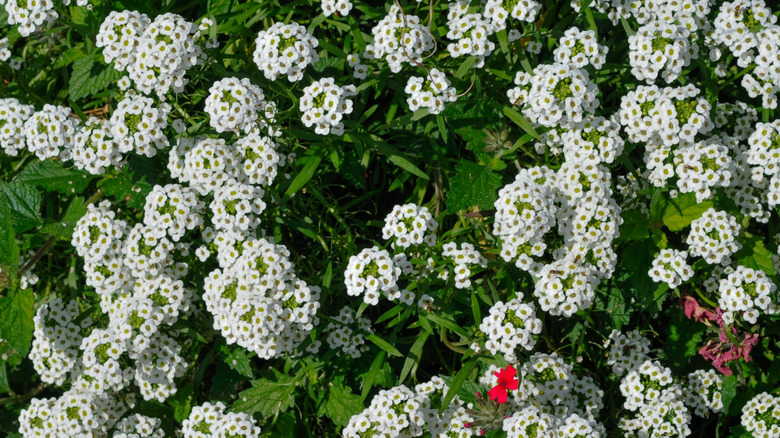
Many southern gardeners tap into sweet alyssum as a flowering groundcover, only to become disappointed with its performance later in the season. 'Snow Princess' (Lobularia 'Snow Princess'), however, breaks from that pattern thanks to its greater heat tolerance. Better yet, it doesn't produce seeds, allowing the plant to devote more energy to continuous flowering until hard frost arrives. You may plant in a semi-shaded or sunny window box where its stems may cascade down for 2 feet. Ensure good drainage to avoid root rot.
Wave 'Carmine Velour' petunia
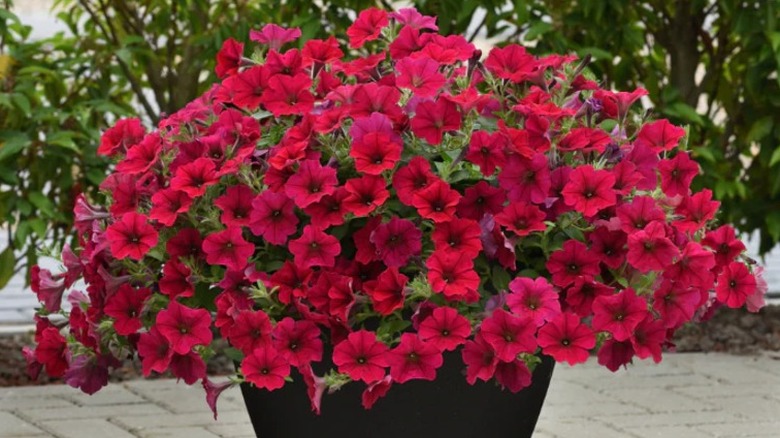
A National Winner at the 2018 All-America Selections trials, Wave 'Carmine Velour' petunia (Petunia x hybrida) will enthrall you with its vibrant, cherry-red blooms that don't fade, come rain or intense heat. From summer through frost, they produce new blooms incessantly, which cover up spent blooms, doing away with the need for deadheading. They max out at 8 inches but can spread nearly 4 feet across. To maintain interest, you may have to fertilize them weekly. They also tend to show better resistance to botrytis fungal issues than many traditional petunias.
Superbena 'Stormburst' verbena
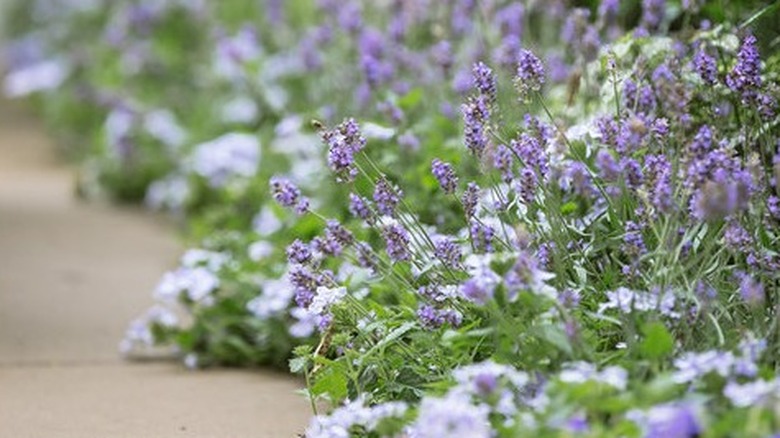
The Superbena verbena series is filled with vigorous trailing plants, many of which can spread about 24 inches long, but 'Stormburst' stands out because of its bi-colored flowers, which appear continuously until frost. Silver-white stripes punctuate purple petals, and while a flower umbel or more may occasionally revert to a solid color, it only adds to their charm. Still, if it's a bother, you can simply trim away the errant stem without setting your plant back. 'Stormburst' prefers part to full sun exposure and grows perennially in zones 8 to 11. It also offers strong resistance to both heat and powdery mildew.
Ivyleaf geranium
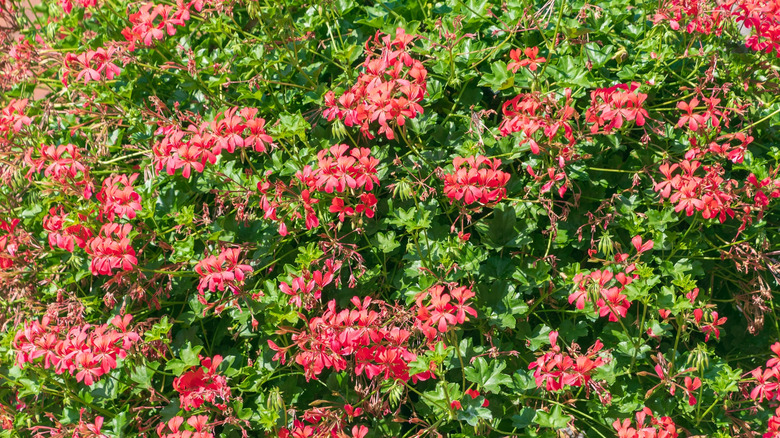
Ivyleaf geraniums (Pelargonium peltatum) develop nearly 3 feet long, trailing stems, which readily flow over edges when placed in window baskets. Throughout summer, they freely produce perfumed pink, lilac, white, or red flowers, which you must immediately remove after they start disintegrating for a tidy look. Since they can go dormant from the heat, consider growing them in partial shade instead, or providing shade during afternoons in peak summer. Avoid growing them alongside water-thirsty plants, as they're prone to oedema and rot. Outside of zones 10 and 11, they're grown as annuals.
Sweet potato vine
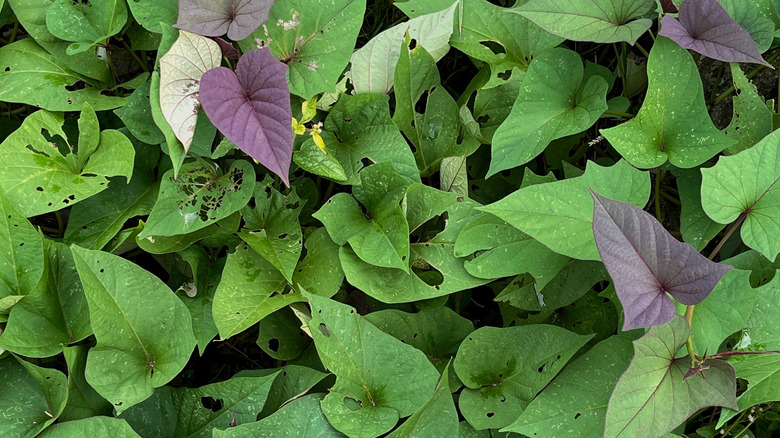
Available in a range of colors, including chartreuse, burgundy, and deep purple, sweet potato vine (Ipomoea batatas) is a low-maintenance groundcover you can use to fill out window boxes. They're highly vigorous, sometimes trailing over 30 inches. However, if you've got any slow-growing plants alongside them, it's best to trim out stems occasionally to prevent their takeover. The trimmed cuttings can also be rooted to grow new vines. Outside of frost-free areas, they are treated as annuals with a preference for full sun or light shade.
Fairytrail Fresco Cascade hydrangea
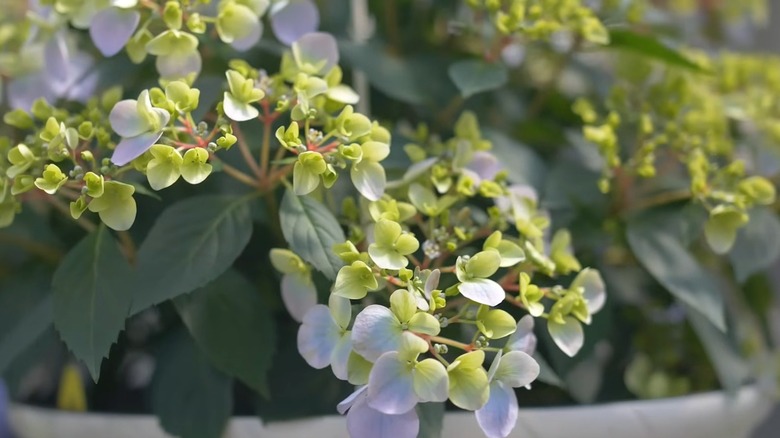
If you thought hydrangeas only belonged in your hedge or borders, think again. Proven Winner's Fairytrail Fresco cascade hydrangea can be potted in containers, where its arching stems create a dramatic trailing effect. They feature classic blue or pink mopheads (so you can play around with soil acidity) in partially-shaded areas in zones 5 to 9. After flowering, foliage carries the baton for ornamental interest as it turns a fiery red during autumn. They can grow about 4 feet, and pruning for size can limit blooms, so make sure to grow them in large boxes that can accommodate their full size.
Moss rose
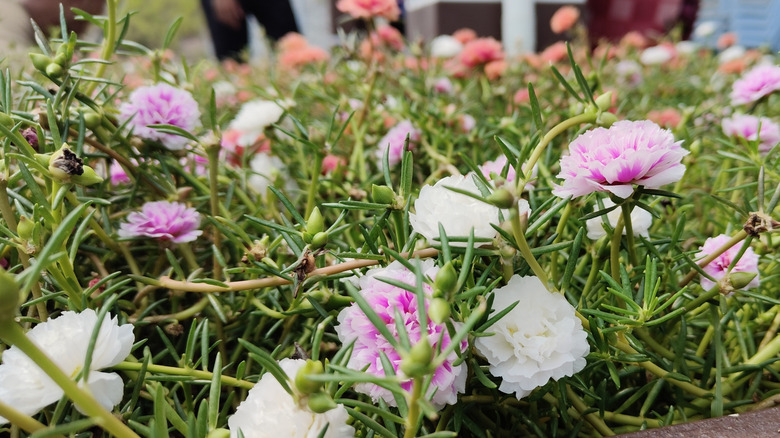
A semi-succulent, moss rose (Portulaca grandiflora) or purslane has fleshy green leaves, which enable it to better endure dry, sunny conditions. When planted along the edges of a window box, its trailing stems spill downward beneath a wave of brightly colored blooms. Although standard varieties only stay open on sunlit days, hybrid cultivars play no such shenanigans. Moss rose is an annual but self-seeds copiously, which enables its comeback next year. Consider pinching their tops, deadheading, and shearing the foliage mid-season to optimize appearance and performance. Being shallow-rooted, it is easily overwatered, so best team it with drought-tolerant plants.
Whirlwind Pink fan flower
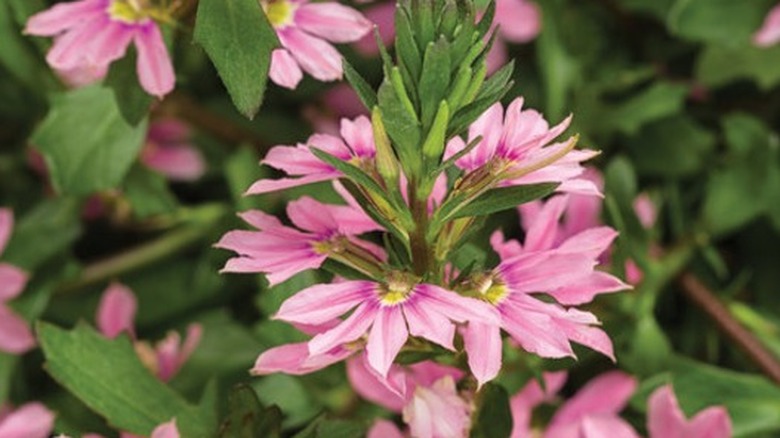
If you don't mind the bees buzzing around for sweet nectar near your windows, consider growing Whirlwind Pink fan flower (Scaevola aemula 'DSCAVPIBLS'). From planting time until frost, this low-growing groundcover produces a nonstop wave of pink blooms that hold up well against heat, drought, and humidity. Since the plant is self-cleaning, there's no need to deadhead spent blooms. Give fan flowers full sun exposure and a dose of fertilizer mid-season to keep them blooming. They team well with other trailers like Petunia and Superbena.
Nasturtium
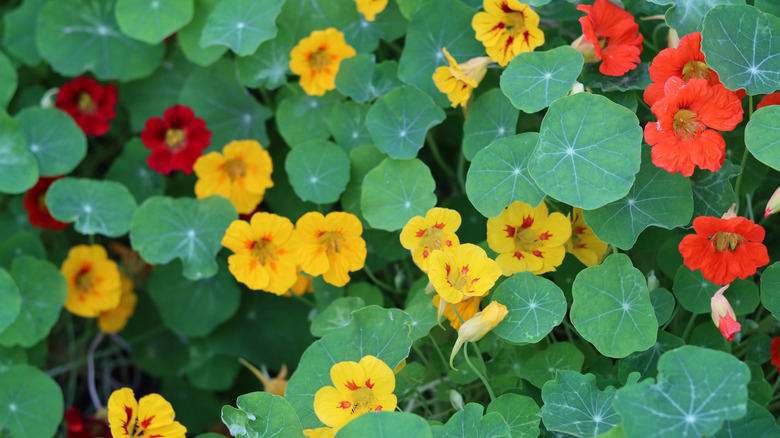
Apart from their bushy forms, many nasturtium (Tropaeolum majus) plants are also available as vines that can cascade down nearly 3 feet. Since they're available in a wide range of colors, it's easy to find one that fits your window box color palette. They perform best in full sun, but will tolerate some shade. Despite their drought tolerance, it's best to keep them watered, or they won't bloom well. Give them a light trim, and deadhead faded flowers to ensure they don't overwhelm other plantings. As a bonus, the leaves from trimmed stems are edible and add a peppery bite to salads.