

How To Repel Carpenter Bees Using A Fragrant Plant They Can't Stand
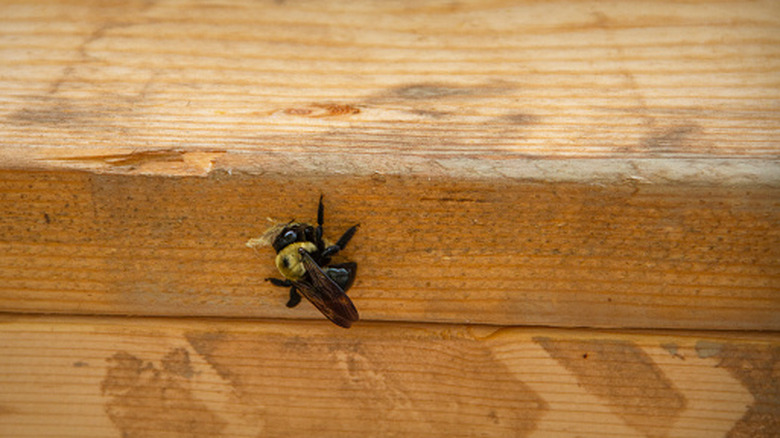
The weather is warming up, meaning it's time to get outside and enjoy hanging out on your patio or deck. Unfortunately, this warmer weather is also the time when destructive pests like carpenter bees start showing up to do the same. And if you happen to have a wooden deck, fence, shed, or patio eaves, carpenter bees might eye your property as a good nesting ground. While they might look chunky like harmless bumblebees, carpenter bees can cause serious structural damage; they drill ½-inch round holes into untreated wood for their eggs. However, if you're not trying to get rid of carpenter bees completely and are simply trying to repel them, skip the harsh bug spray and use this more natural alternative: planting peppermint (Mentha x piperita).
Keeping some lovely peppermint plants around your yard's wooden structures creates an aromatic barrier that'll help keep your backyard safe from carpenter bees. But what exactly makes this leafy herb so effective here? Like many insects, carpenter bees rely heavily on their sense of smell for things like finding food. The intense, menthol-rich scent of the oils in a peppermint plant is unpleasant to bees and both overwhelms and disrupts their olfactory receptors. Since they rely so heavily on smell, this may encourage them to move on to a less fragrant area. As a bonus, keeping fresh peppermint around adds a little lush foliage to your patio and makes it easy to have the perfect garnish for some iced tea.
How to protect your wood structures with potted peppermint
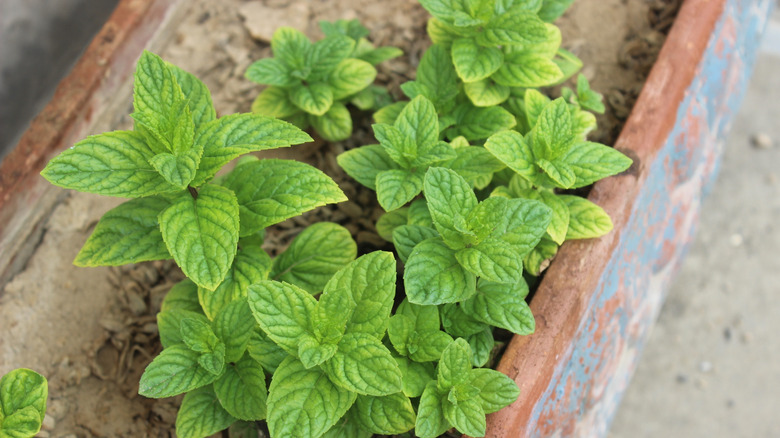
Adding this aromatic herb to your outdoor space is straightforward, but you must follow one important rule: always use containers. Peppermint is a known aggressive spreader and will take over your yard quickly if you plant it directly in the dirt. So, confining it to pots helps stop it from spreading and also allows you to be more strategic with your pest control. Simply place your potted mint plants near exposed wood; this could be on your deck, along your fence line, or hung in baskets from your patio overhang.
Other than that, peppermint is easy to grow and take care of; it thrives in USDA hardiness zones 5 to 9, so it works for many climates. It prefers partial to full sun and wants consistently moist soil that drains well in order to flourish. As long as you keep these containers watered, your peppermint plants will continue producing the intense minty oils that help keep carpenter bees at bay.
It's worth mentioning that while peppermint is a good deterrent for wandering carpenter bees (and other annoying insects), it's not a magic fix for an existing infestation. If you're already seeing those telltale sawdust piles beneath holes in the wood in your yard, those bees have already moved in. While there are steps you can take if you find carpenter bees in your shed, on your deck, and around other exposed wood, it's never a bad idea to call in a professional exterminator to take care of things, either. Still, though, peppermint oils work great as an everyday preventative measure and can help you protect your woodwork.