

Every House Had Them In The '40s — Now Homeowners Are Restoring Them
Architecture from the 1940s was influenced by an interesting amalgamation of factors. Homes built earlier in the decade were intentionally minimalistic, due to stylistic preferences of the time as well as wartime material shortages. After WWII, modernist visionaries like Frank Lloyd Wright came to the forefront of the Postwar Modernism movement, bringing with them a mindset of simplicity, functionality, and closeness with nature. At the forefront of this functional sensibility were paneled windows.
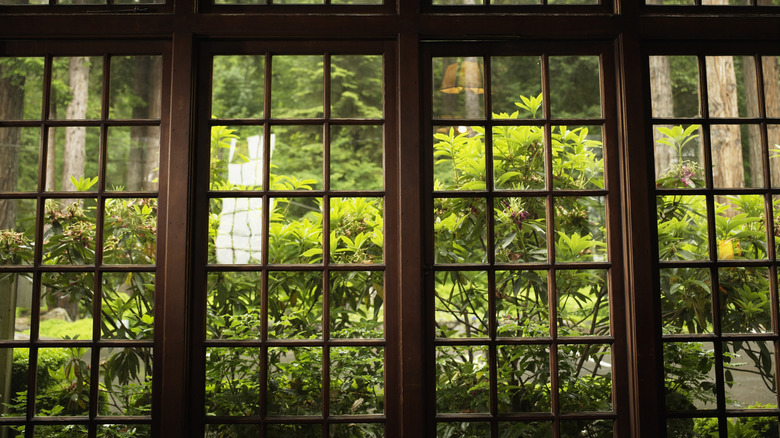
Paneled windows, which are divided into panes of glass and joined together with wood framing, can inform varying architectural styles depending on the size and arrangement of the panes. Before modern technology allowed for larger glass sizes, all homes had paneled windows. The Craftsman homes of the early 1940s favored smaller panes, transom windows, and cottage-style windows. Varying configurations (like six panes on the upper window and one large pane on the lower) added visual interest and gave the home style and symmetry. By the end of the decade, Modernist architects experimented even more with asymmetrical designs and sweeping horizontal lines.
These historic wood windows were crafted to last for generations, thanks to the use of old-growth lumber (which is more rot-resistant than today's counterpart) and their simple, straightforward design. In the 1990s, however, vinyl became the leading choice for replacement windows, but the tide is turning. Now, homeowners are realizing the value of restoring their paneled windows rather than replacing them.
Restoring and maintaining original paneled windows
If you've bought into the misconception that modern windows are the greener choice, you should know that, if properly updated, old windows can be just as energy efficient– and you aren't introducing new glass and vinyl that will end up in a landfill in a few decades. Properly maintained paneled windows can last up to 200 years, and the cost of restoring them is comparable to new installations. If you're lucky enough to have your home's original paneled windows, take the first step to efficiently seal them by installing metal weatherstripping, such as spring bronze, which can be installed using nails to hold it in place. Paint build-up can be removed from windows that stick, and broken sash cords and locks can be replaced to ensure windows function properly. Keep in mind that homes built before 1960 are more likely to contain deteriorating lead-based paint than newer homes, and care should be taken to properly remove or seal it to prevent exposure.
Finally, if energy efficiency is your priority, install storm windows to fully seal your house (just don't try installing your own windows without first knowing these expert tips). This is an expensive add-on that can run you $100 to $400 per window (and up to $2,000 for custom architectural styles), but experts say it is worth it for the energy cost savings, noise reduction, and, as their name suggests, protection from storms. Despite being a bit of an investment, storm windows are often less expensive than installing new windows entirely. And all the while, you are preserving your home's authenticity and character, and setting it up to be enjoyed for generations in your lifetime and beyond.