

Not Hostas: The Striking Plant That's Great For Shaded Flower Beds
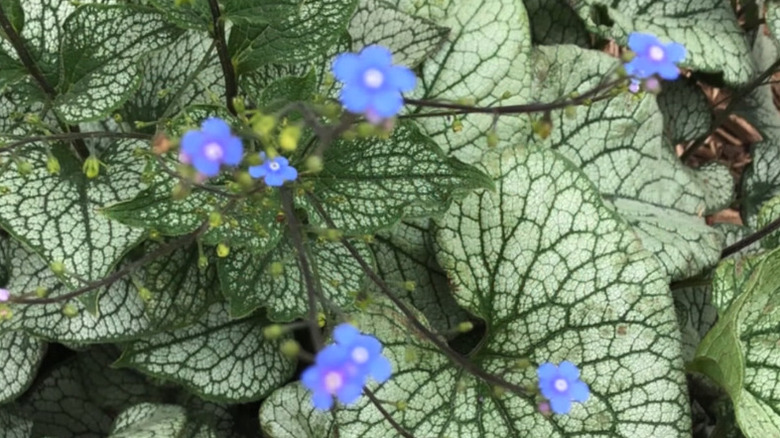
Bored with hostas or struggling to keep their foliage pest-free? Take heart — there's more than one way to add loads of interesting foliage and pops of spring color to shaded flower beds. If you're looking for good alternatives to temperamental hostas in the garden, consider a cultivar of the Siberian bugloss (Brunnera macrophylla). One of its showiest cultivars, 'Queen of Hearts' is especially charming, with large, silver, heart-shaped leaves and blue flowers reminiscent of forget-me-nots.
'Queen of Hearts' is bigger than many other brunneras, including the similarly silver-leaved 'Jack Frost.' It grows to about 18 inches tall and 36 inches wide. This cultivar's leaves are frosty, and their surface contrasts strikingly with the deep green veins. In the spring, drifts of bright blue flowers seem to hover over those shimmering leaves. Even after the striking flowers have gone by, the leaves remain to add their frosted, curving brilliance to shaded flower beds and bare spots under trees.
'Queen of Hearts' are hardy in USDA zones 3 to 8. Use this brunnera cultivar as a natural landscaping feature in woodland margins or along shady water features. Consider dotting individual 'Queen of Hearts' plants among other perennials of similar height in a shady garden bed. Alternatively, you can use them as companions for hostas, where the similar leaf size but difference in color and texture will contrast with the emerald greens or variegated cream-and-greens of many hosta varieties. These brunneras also make lovely companion plants for spring bulbs.
Give the Queen of Hearts ample shade and moisture
Brunnera plants thrive in a variety of lower-light conditions, from deep shade to dappled sunlight. That said, don't plant the 'Queen of Hearts' where the plant will be exposed to direct sunlight. The leaves can scorch when not given at least dappled shade, such as as from a tree's canopy. These plants are not picky about soil, although they tend to prefer a rich, moist growing medium. If you've struggled to grow brunneras in humid conditions, 'Queen of Hearts' may succeed where other cultivars have failed.
When planting these brunneras in your garden, space them about 3 feet apart to accommodate their eventual spread. These low-maintenance plants will slowly grow to provide ample groundcover. That said, they doesn't self-seed or let their runners go amok, so you don't have to worry about aggressive spread. Brunneras also don't necessitate worrying about pests and disease. Their texture seems to discourage mammal browsers such as deer and rabbit, and they're not overly bothered by other plant issues.
Once the flower season has gone by in late spring, you can snip off the spent blooms without hurting the plant. This will give 'Queen of Hearts' a tidier look and let the leaves take over the wow factor once again. Mulch can help retain the soil moisture the plants need, but don't worry about weeds once they reach their full size. Since its leaves are so large, this shade-loving cover plant will keep weeds away on its own.