

The Pretty Perennial Ground Cover That Boosts Soil & Attracts Hummingbirds
We may receive a commission on purchases made from links.
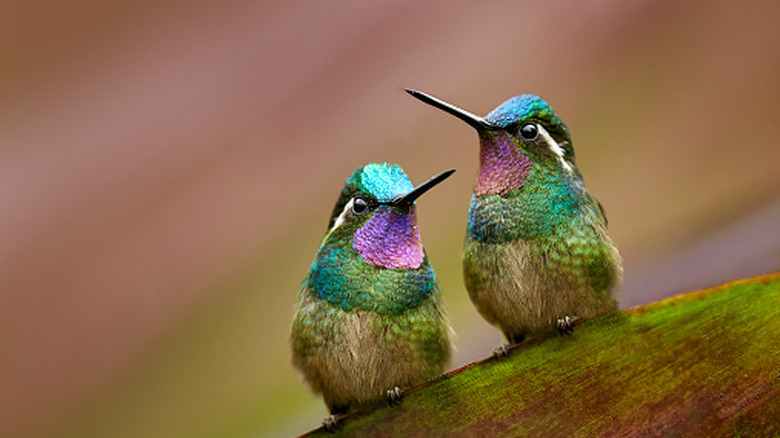
Got a bare patch in your garden where not much grows? Maybe the soil is too waterlogged, too acidic, or too low in nutrients for healthy growth. You should definitely check out red clover (Trifolium pratense). It is a short-lived perennial that is often grown as a groundcover or cover crop because, as a legume, it fixes nitrogen in the soil. Not only will it cover bare spots in your yard, but it will also improve soil fertility. Even better, it produces showy pink flowers in abundance that attract pollinators like hummingbirds. Hummers, after all, love the color pink. Just keep in mind, however, that there are two varieties of red clover: early-flowering and late-flowering. You need to choose the right one for your yard.
Early flowering varieties, also known as broad red or June clover, finish their first bloom around the end of June. However, if you cut them right after the first flowering, they may bloom a second time. In contrast, late flowering varieties, also called single-cut or mammoth clover, start flowering a little later than their early-flowering counterparts and only flower once during the growing season. No matter which variety of red clover you choose, it will be an excellent source of nectar for wildlife. Bees, butterflies, and, of course, hummingbirds won't be able to stay away. Plus, did you know red clover is the state flower of Vermont? It symbolizes the importance of agriculture in the region.
Red clover is perennial but can also be grown as an annual
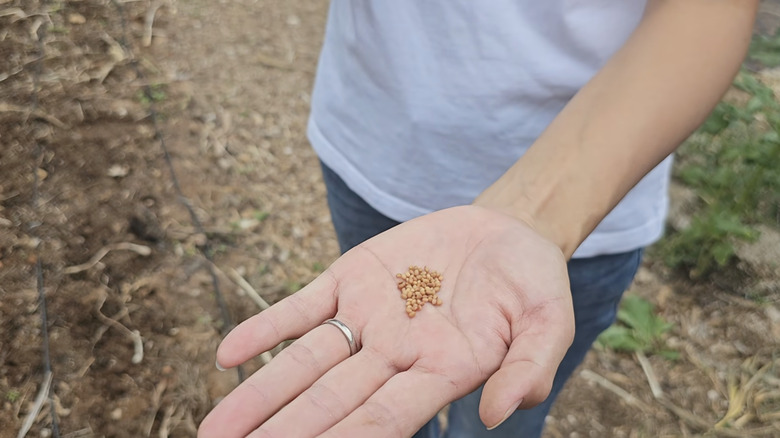
Red clover is grown as an annual, biennial, and short-lived perennial. If you plan to grow it as a perennial or biennial, keep in mind that it will only survive outdoors in USDA Plant Hardiness Zones 3 to 9. Outside these zones, you will need to grow it as an annual or choose another flowering ground cover for healthy soil. It is a winter annual, so plan to plant it in fall. Otherwise, you can grow annual red clover anywhere in the U.S. in early spring and summer from seed. There are many great companies to buy garden seeds from, like Dollar Seed, Renee's Garden, and Park Seed, or you can shop on online marketplaces. A pack of Survival Garden Seeds Red Clover Seeds costs less than $5.
Soak your new seeds in fresh water for at least 12 hours. Then evenly scatter the seeds over your garden bed or patch of bare ground and cover them lightly with soil. Don't bury the seeds more than ¼ inch deep. While red clover grows in both full sun and part shade, it won't grow as strongly or produce as many flowers in low light conditions. Aside from careful site selection, keep the soil moist once you've planted the seeds. You can even automate your plant watering by installing an individual drip irrigation system — you'll save time and your clover will never go thirsty.
Red clover can get weedy so keep a close eye on it
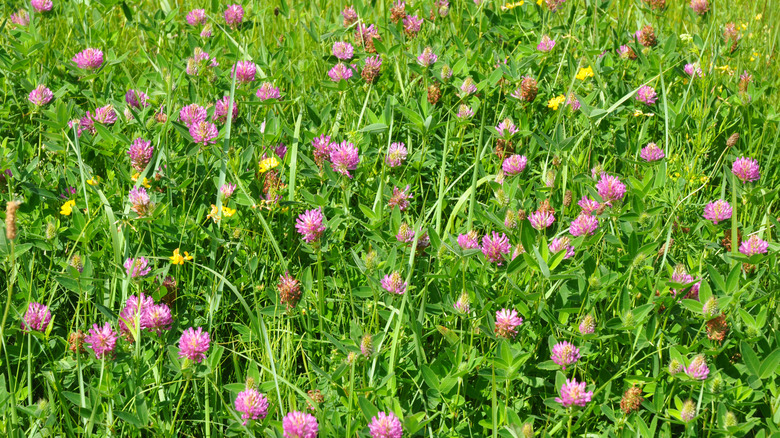
Red clover is a low-maintenance groundcover; it requires very little watering or fertilizer. There are pink lawn weeds you should pull immediately and ones you can keep. Red clover generally falls into the latter category. Still, you can't treat it as a sow-and-forget plant. Red clover has a tendency to spread. Over time, it will naturalize and compete with nearby plants for space and nutrients. It's even classified as invasive in some states, including Kentucky and West Virginia. It spreads mostly by seed — each hummingbird-attracting, self-fertile floret can produce one to two seeds — and minimally by rhizomes.
The cold-hardy seeds typically germinate where they fall or are spread by birds and livestock. If you don't want your crop to spread, cut off the blooms as they start to fade. This will stop the flowers from developing seeds without depriving visiting hummingbirds of much-needed nectar. You can also cut and drop the entire crop, working it into the bed to improve soil fertility. To stop root spread, contain red clover within a physical barrier, like a Gardzen Landscape Edging Kit. Check your borders regularly and cut off escaping rhizomes immediately. You'll preserve a good-sized patch of this flowering crop for hummingbirds without having it take over your entire backyard.