

The Humidity-Loving, Deer-Resistant Perennial That Can Grow In Standing Water
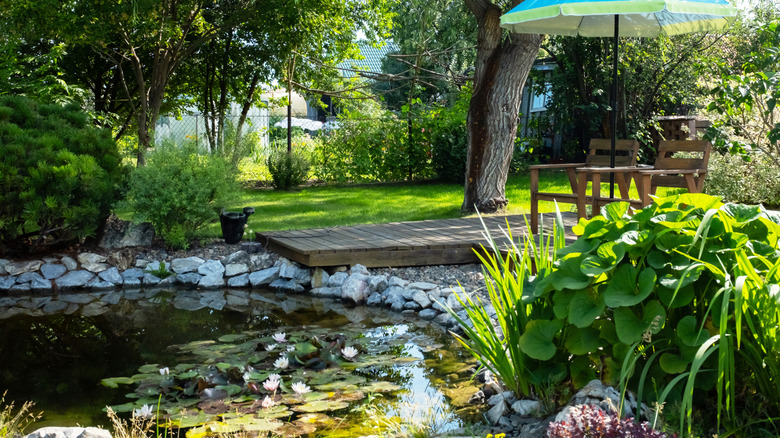
If you have a lovely pond in your yard or even a stream running through the bottom of your property, you'll understand the challenges of finding attractive plants that can thrive under boggy and humid conditions. While you can find a range of perennials that thrive in damp, soggy soil, finding a gorgeous flowering one that will happily grow permanently in standing water might have you doing a bit of research. Lucky for you, there's a stunning native species, known as southern blue flag iris (Iris virginica), that will absolutely thrive under these conditions. It's even deer-resistant, so you don't have to worry about it disappearing if you often have these garden visitors.
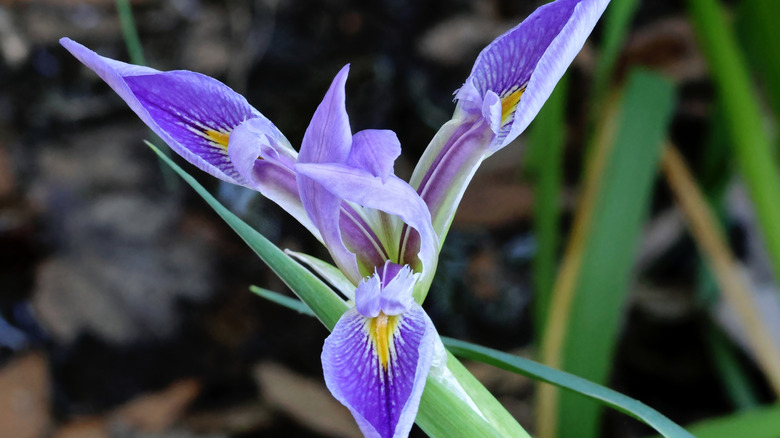
As a herbaceous perennial, southern blue flag iris grows well in USDA hardiness zones 5 through 9, and is happiest when growing in water, which can be up to 6 inches deep. This means it's ideal for planting around the edges of your pond or in other low-lying areas that stay consistently damp. It has bright green strappy leaves that have a droopy habit and stunning iris flowers on bare stems. The blooms are normally purple or pale blue and have typical white and yellow markings. These normally appear in late spring, making them the perfect addition to your natural water features. Just be aware that the roots, seeds, and sap are toxic to humans and pets.
Adding southern blue flag iris to your soggy spaces
The most important thing to remember when planting the southern blue flag iris in your garden is that the soil must never be allowed to dry out. So, choose a nice, damp or waterlogged spot in your yard for this beauty. Full sun is ideal, but a little light shade is fine in hotter regions. Of course, with plenty of sunshine and standing water, humidity is going to be relatively high, and that is perfectly fine too, as this species won't mind at all. In fact, a mass planting of this iris variety around your pond is going to look quite spectacular, as long as the soil is fairly sandy and a little acidic.
This water-loving plant generally forms a clump and grows to a height of around 2 to 2 ½ feet. It will spread through the growth of underground rhizomes. This means that you can eventually dig up larger clumps and divide them up to rejuvenate the plants and procure additional ones to plant elsewhere. You'll find the blooms also make good cut flowers, while they'll attract butterflies, bees, hummingbirds, and other beneficial insects when left to grow in the garden. And if you're currently doing a bit of landscaping around your pond or are just establishing a rain garden, don't forget that there are other flowering plants that thrive in soggy soil to add to your collection.