

What's The Average Lifespan Of An Electric Lawn Mower?
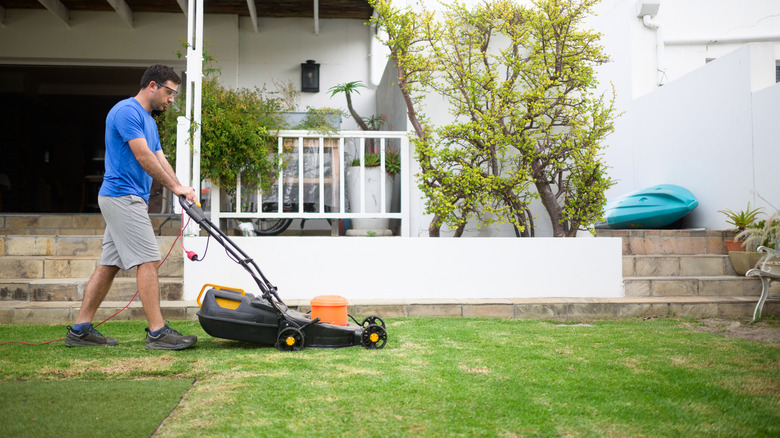
If you're wondering what type of lawnmower is worth buying for your yard for the long haul, you've got some options. Electric lawn mowers are growing in popularity as they are quieter, easier to start, and more environmentally friendly than their gas counterparts, with virtually no maintenance other than sharpening the blades. It doesn't require gas storage or messy oil changes like gas models, and benefits from the simple push-button start convenience. But how does the electric lawn mower compare to the competition in terms of lifespan?
Typically, electric lawn mowers last between eight and 10 years depending on your model and maintenance. The lifespan is best viewed in two parts — the machine itself and the battery. The battery is, unsurprisingly, the most critical part of this mower, and is often the first to go. Lithium-ion batteries, like the ones found in Ryobi mowers, generally last three to five years or more, or roughly 500 to 1,000 charge cycles. Some older models of electric mowers have lead-acid batteries, lasting between two and four years. Since a new battery can cost 30% to 50% of the mower's original price, many people choose to upgrade the entire mower once the battery fails.
The actual motor and deck are remarkably durable because they have fewer moving parts than gas engines — no spark plugs, oil filters, or fuel lines. Electric motors are easily good for 10 years or more if they are not overworked or left in damp conditions, but if they are not well maintained, the battery can fail early, and moisture can corrode the electronic parts and shorten their life. Dull blades can also place unnecessary strain on the motor, leading to overheating and a significantly shorter operational lifespan.
How to get the most out of your electric lawn mower
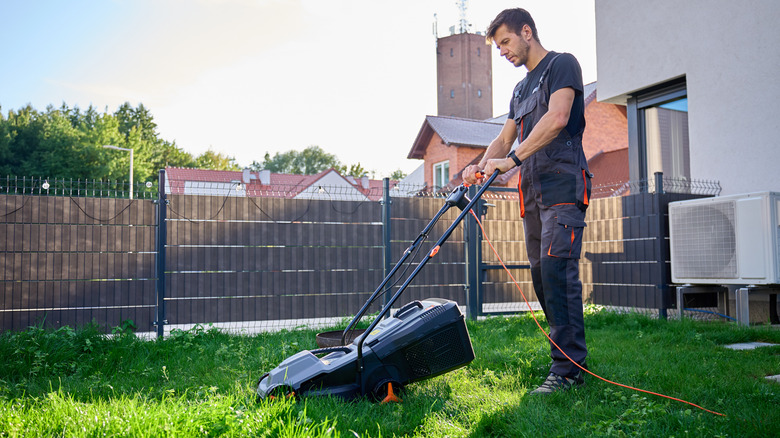
Another thing you need to know before buying an electric lawn mower is how to maximize its lifespan. This, again, is a two-part process — battery maintenance and caring for the machine. When the mowing season ends, store your batteries in a temperature-controlled environment. Extreme heat or freezing winter temperatures are the fastest ways to degrade a lithium-ion battery's capacity. You'll also want to avoid letting your battery sit at 0% for long periods. Lithium-ion batteries stay healthiest when they aren't pushed to extremes. If you're storing it for months, keep it at about a 50% to 70% charge rather than fully depleted or fully topped off. And, after a long mow, the battery will be hot. Give it about 30 minutes to cool down before plugging it into the charger to avoid heat-related cell degradation.
When it comes to the machine itself, there are some lawnmower maintenance tasks you should be doing after every mow, including taking a moment to clear out grass clippings and debris. This prevents moisture from sitting against the motor housing and ensures the blades can spin without unnecessary resistance, which saves the motor from overheating. At a minimum, you'll need to sharpen your blades once a season. You'll notice the mower runs quieter and your battery lasts for more square footage per charge. Finally, if your grass has gotten very tall, don't try to cut it all at once. Set the deck to the highest height for the first pass, then lower it for a second pass. This prevents the motor from drawing a "surge" of current that can blow internal fuses or overheat the wiring.