

How To Deadhead Goldenrod If You Don't Want It To Take Over Your Garden
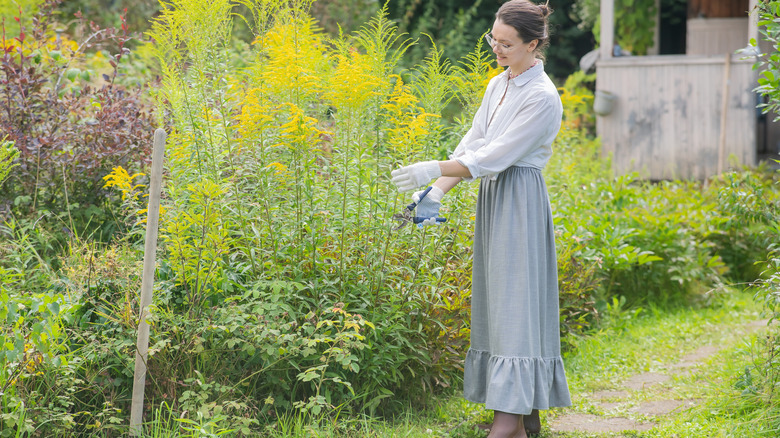
Nothing is quite as cheerful as pretty yellow blooms shining in the sunshine in your garden. Think of happy flowers such as sunflowers, daisies, and, of course, goldenrod (Solidago spp.). The latter is one of the more stunning collections of species that will absolutely delight you with massive sprays of gorgeous golden blooms (which you can also add to your floral arrangements for a spot of vibrant color). That said, if you grow goldenrod in your yard, you must deadhead it diligently and at the right time — if you wait too long or aren't careful, it will reseed and spread through your entire garden the next season.
This plant thrives in USDA hardiness zones 2 through 8, but there's one slight problem with growing this stunner. All those flowers mean that the plant will produce numerous seeds, and because these seeds tend to germinate fairly readily, you may find that over time, goldenrod will take over your garden. And you won't be aware of this until it happens, because the plant dies down once the first frost hits and then springs back into growth once the soil warms up after winter. At the same time, the seeds that were previously deposited in the soil or blown by the wind to other parts of your yard will sprout, and before you know it, your whole garden will be filled with goldenrod. While this pollinator-favorite flower might add a gorgeous autumn glow and look amazing, a complete takeover of your garden is probably not what you're trying to achieve.
How to prevent goldenrod from taking over your garden
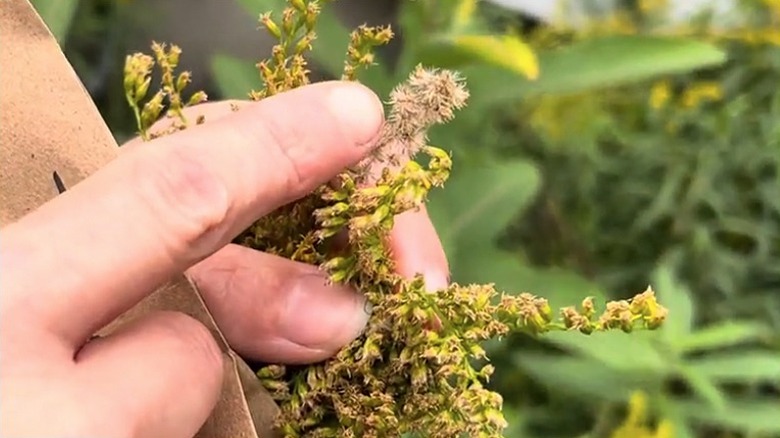
One of the most important tasks you can undertake to stop your pretty goldenrod from totally taking over your garden is deadheading and disposing of the spent flowers responsibly. This takes a bit of diligence and observation. Essentially, you want to cut off those spent blooms as soon as they start to fade — not once they're fully spent — so that they don't have a chance to produce seeds.
If you happen to miss a few and spot some seeds, still cut these off carefully and dispose of them in the trash. You can try to contain those seeds by covering the spent flowers with a plastic or paper bag that you tie at the base before cutting off the stem. This is the same method that you would use to gather seeds from your late summer annuals. Just make sure that you don't put these into the compost bin. In many cases, backyard composts don't get hot enough to kill seeds, so if you then add that lovely, rich compost to your garden beds, you might find new goldenrod seedlings sprouting where you don't want them.
While deadheading spent flowers is one of the best ways to prevent goldenrod from spreading around your yard, be aware that this plant will also spread through underground rhizomes. Therefore, you want to keep an eye on this aspect as well and cut back the spread of the clump as needed. This also means that when you're hand-pulling any new unwanted seedlings, you want to make sure you get all the roots, including the rhizomes.