

The Vinyl Tile Solution To Keep Moisture From Seeping Into Wood Cabinets
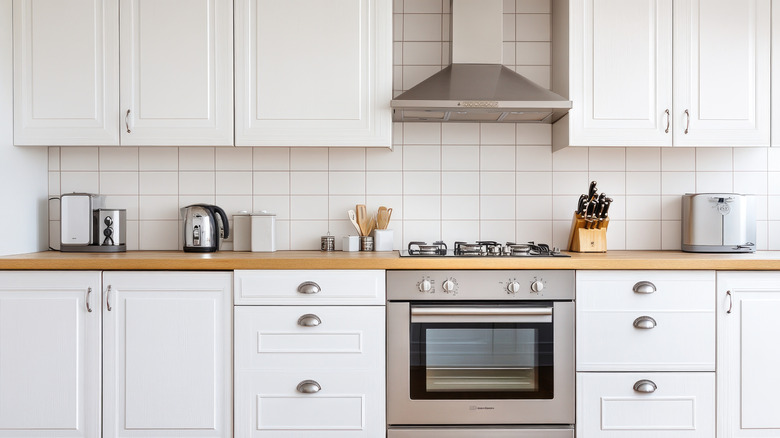
Your kitchen cabinets have probably been through more than you actually realize. While they look clean at first glance, all those little crumbs, hardly visible spills, and bigger leaks that happen silently under the sink can slowly eat away at wooden cabinets and can make them warp, stain, or smell musty. So, having a solution that goes beyond just a thin shelf-liner paper is never a bad idea, and that's exactly where peel-and-stick vinyl floor tiles come in to save the day.
At first it sounds a little strange to put something designed for the floor in your cabinets, but that's actually where the ingenuity lies. Those vinyl tiles were created to put up with foot traffic, dirty shoes, big spills, and general daily wear, so they are more than suitable to deal with the moisture inside a cabinet, especially an under sink cabinet. DIY liners for drawers and cabinets can tear or wrinkle, but vinyl is much more sturdy and creates a strong barrier, especially in areas where things like damp sponges, cleaning products, and pipes live. They are also really easy to clean — because they are made of vinyl, crumbs, drips, and sticky messes can be wiped away easily. And if you have any leftover peel-and-stick tiles from your last floor-change project, then this becomes is a hack that is both clever and budget friendly, making it appealing for home owners and renters alike.
Choosing the right kind of vinyl tile
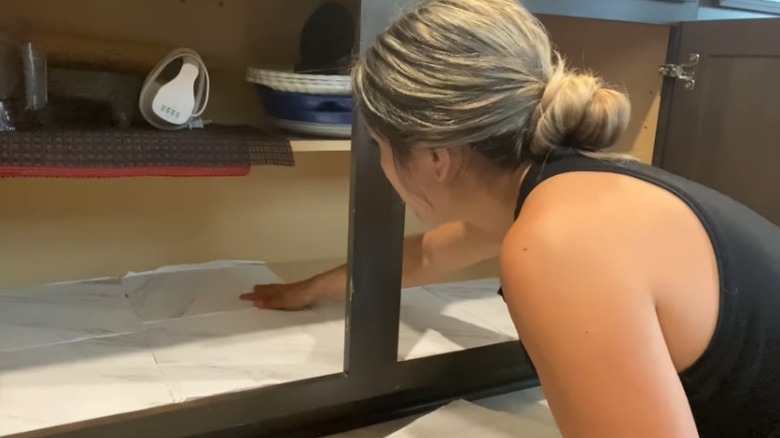
While this is a clever trick, with so many types of vinyl flooring, not every tile will work well inside a cabinet, so you should be mindful of your choices. Thicker tiles, like ones made to to look like stone or cushioned vinyl, may not be a great choice, especially when it comes to cutting them down to size or if you have an older kitchen with slightly crooked interiors. You need the tiles to be quite easy to trim down — this is essential move prevent them collecting grime along the edges. For this task, you'll need to use a utility knife or a strong pair of scissors, and thinner tiles will be easier to cut overall.
If you don't want to actually stick the tiles onto the surface, you can also skip the adhesive altogether and simply place them down inside the cupboard, although this is better for a cabinet you aren't in and out of too much, as the tiles may move around. Aesthetically, vinyl tiles basically come in every style imaginable, from fake marble and checkerboard patterns to tiles that look like they're made of wood, so you can use them to match your exteriors and allow the inside of cabinets to look more styled (something not many people can say). It's a small upgrade, but you'll have peace of mind knowing your cabinets are protected from water damage and dirt, and even your random under-sink cabinet can look a little more intentionally polished.