

What To Do With Marigolds In May For A More Successful Summer Garden
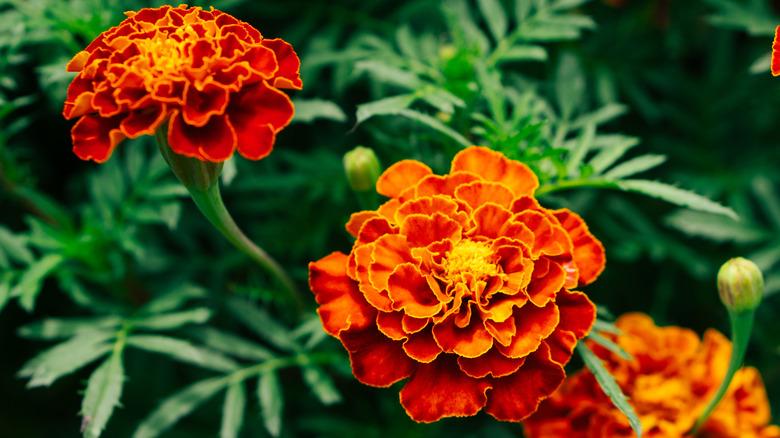
Marigolds are something of a wonder plant. Belonging to the genus Tagetes and the same family as sunflowers and asters, the orange- and yellow-blooming annuals help keep pests away from other plants with their strong scent. Their usefulness as a garden companion for crops like tomatoes is just one of the many benefits of planting marigolds in your garden. They attract beneficial, pollinating insects, such as butterflies, while shooing the pesky ones away. May is an ideal time to transfer potted marigolds into the soil, where they can use their powers for the good of your garden.
Another benefit of these cheery plants is how easily they take root. If you have well-draining soil, you're on the right track to a thriving marigold patch, but there are some garden spots where they can thrive and benefit other plants best. Marigolds love sun and tolerate drought, so they're great choices for a garden border, where they also may crowd out weeds and keep deer away from other ornamental or edible plants. If you have tomatoes, peppers, or other fruiting vegetables, it may help to plant them in the same garden bed so their smell can have a chance to ward off common pests. Some crop-growers also plant French (Tagetes patula) or African marigolds (Tagetes erecta) densely as a ground cover before planting vegetables because they release chemicals that may deter nematodes.
How to transplant marigolds into the garden
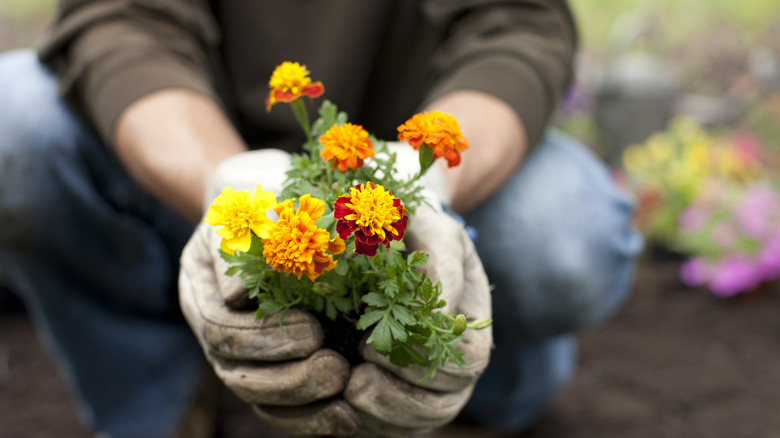
As you plan to transfer potted marigolds into their very own space in the garden in May, take the pots outside a few days before so they can get used to the outdoor temperatures. Settle them first under some shade and gradually move them into brighter areas. You should also be reasonably sure there's no more risk of frost before getting them into the soil. As long as local conditions cooperate, this is the best time of the year to plant marigolds. Pick a sunny spot in the garden so they will flower profusely throughout the season, and avoid making their home a shady or very moist area, which could put them at risk for powdery mildew.
The marigolds can be transferred to garden soil when they're between 2 and 3 inches tall, with two or more sets of leaves. They should be spaced around 8 to 12 inches apart, with a mulch layer around the base of their stems. Give your marigolds a dose of a balanced fertilizer right after you transplant them, but there's no need to reapply it. In fact, one of the things you should know about planting marigolds is that too much fertilizer can discourage them from blooming.
Once your marigolds are in their garden beds, there are some tasks to keep on top of if you want them to bloom consistently. Continually deadheading the plants — removing flowers once they've withered on the stems — encourages them to produce more flowers instead of seeds. You should increase the watering frequency as summer temperatures soar, but make sure to let the soil get dry before you water them again.