

The Low-Maintenance Tree That Attracts Cardinal Birds To Your Yard
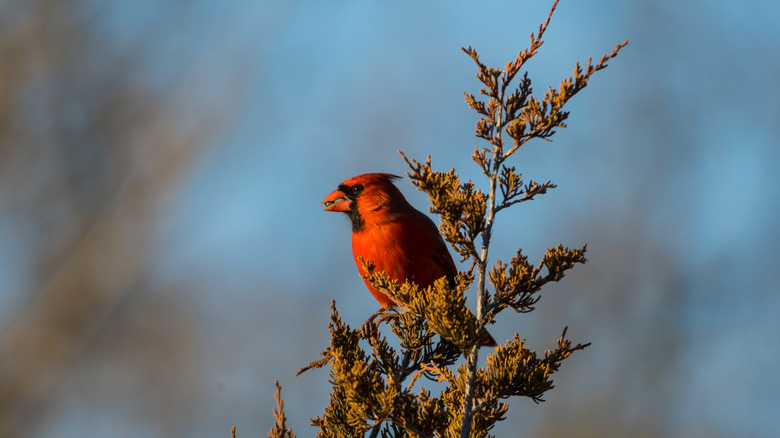
When you think about creating a wildlife-friendly yard designed to attract more birds, you may think about large time commitments. Time spent sowing, and watering, and otherwise tending to an abundant garden. However, this isn't always the case. While there are some more finicky plants that require large amounts of TLC to draw in a large variety of birds, there are also more low-maintenance approaches — especially if your goal is to create an inviting space to attract cardinals to your garden.
Eastern red cedar trees (Juniperus virginiana) are one of the best trees to attract more cardinals to your yard. These trees provide your local neighborhood cardinals with two day-to-day essentials: shelter and food. Their large, sturdy canopies are perfect for providing shade in your yard, all while giving cardinals a place to perch and rest, whether they're waiting for their turn at the bird bath in your yard or seed-sharing with their mate. However, these trees also produce a source of seeds, which cardinals eat. This gives you the potential to attract more cardinals with bird feeders. The best part of this, however, is that eastern red cedar trees are considered to be low-maintenance options. They won't require large amounts of work to maintain, which means more time spent enjoying the cardinals they attract and less time tending to a garden, which is helpful if you're short of free scheduling space.
How to grow and care for eastern red cedars to attract cardinals
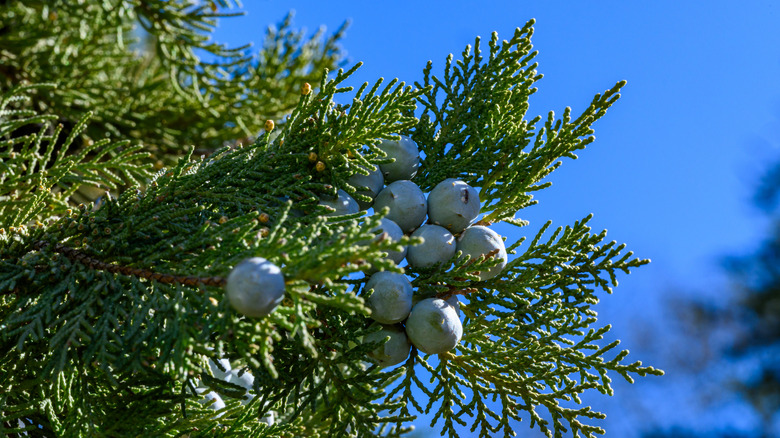
Eastern red cedar trees are perennial evergreens native throughout much of the United States, with USDA growing zones ranging from 2 to 9. Part of their appeal to cardinals comes from their year-round foliage that provides protection, while the other hinges on food. As a result, if you're growing an eastern red cedar to create a safe space that cardinals want to visit, you'll likely want to focus on these areas.
On the bright side, eastern red cedars are overall hardy. They aren't too worried about poor soil, and they can handle both droughts and winds without much problem. However, there are certain conditions that they grow best in. For example, they need moderate amounts of sunlight each day. This includes both full sun and partial shade, with several hours of direct sunlight needed for the most optimal growth. While they can handle those days where the soil is either a bit too dry (or wet), they overall prefer a soil medium that is well-draining too.
When growing any tree in your yard, one important thing to keep in mind is pruning. After all, while it may seem tedious, you don't want to skip pruning and risk structure damage if a limb falls. Pay attention to the health of your tree throughout the year, paying attention to any branches that may look diseased or damaged. An arborist or similar professional may be able to help you know when and what to prune for the best results.