

How To Get Your Grill Cleaned & Prepped For A Summer Of Cooking
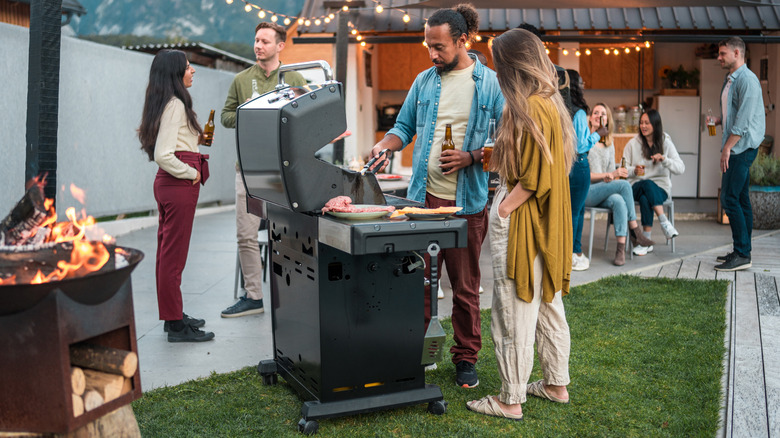
As the days get longer and warmer, you might be starting to think about the joys of cooking outdoors. So now's a good time to get your grill cleaned and prepped for summer. Before you dive in, it's important to know the right way to start.
Even if you know the best way to store your grill over winter and you cleaned it before you put it away, you'll need to do it again before summer grilling season. After spending the winter in storage or under a grill cover, there's a good chance your grates will be dusty, and if they catch fire, you'll get unpleasant smoke that could cause a safety hazard and affect the flavor of your food. There might also be patches of mold, and spiders or other insects might have taken up residence (not the kind of protein you want on your grill).
Regardless of the type of grill, do not use products that contain bleach, multi-surface cleaners (unless explicitly labelled as for grills), or oven cleaners. Wire brushes are best avoided. They will damage porcelain enamel coatings, and small bristles could break off and stick to the grill. Again, not something you want in your food. You can buy grill cleaning blocks or use either coil scrubbers without bristles or nylon brushes.
Important final prep and grill safety checks
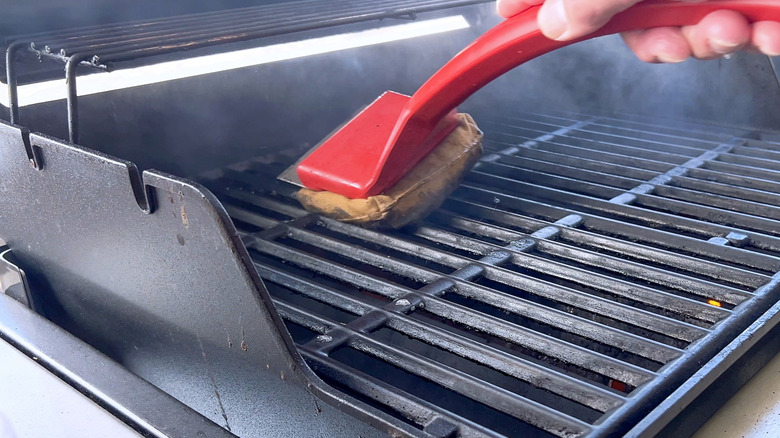
Before you start cleaning, make sure the grill is unplugged or the gas is disconnected. If you still have the manual that came with your grill, that should have all the cleaning instructions you need, but these things do get lost. Remove all the parts you can and vacuum inside the grill. Add some dish soap to a bowl of warm water and clean grill parts inside and out, being careful to avoid electrical connections or switches. Rinse with clean water.
Although there are many commercial grill cleaners available, there are also a number of chemical-free cleaning hacks for grill grates – like using vinegar – that are worth checking out. Cast iron grills are prone to rust, so don't leave parts to soak and reseason as necessary. Stainless steel can scratch easily, so don't use anything abrasive (either cleaners or brushes). If you have a ceramic or porcelain grill, it's best to stick to soap and water. Again, once your grates are clean, rinse with fresh water afterward so there's no residue that might flavor your cooking.
Once it's clean and dry, reassemble your grill. The last important stage of prep is to check cables and hoses. Even if your grill has been stored in a garage, rodents could have gotten in and chewed through parts. Replace anything that's damaged. If you're concerned about grill safety, always talk to a professional. Okay, that should be the job done. Enjoy your cookouts.