

Ditch Pesticides: A Better Way To Keep Carpenter Bees From Drilling Into Your Deck
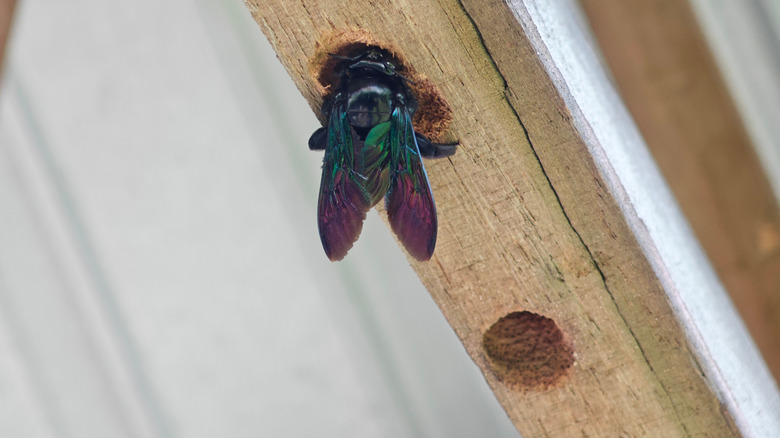
Springtime comes with a host of backyard pests to reckon with. One of the most troublesome is the carpenter bee. These insects are known to carve out their homes in wood. In nature, they burrow these tunnel systems in fallen logs, dead tree limbs, or tree stumps. But when they find themselves in a residential area, these bees will also opt to bore into timber and siding. It's not uncommon to find these pesky creatures working holes into your wood deck. Not only can this create unsightly holes and surface stains, but it can also threaten the structural integrity of your deck over time.
If you find carpenter bee holes in your deck, don't immediately reach for the pesticides. Rest assured, these bees don't sting unless provoked, so you have time to come up with a more sustainable strategy. You can dissuade carpenter bees from taking up residency in your deck by simply painting or sealing it. The shiny finish can confuse the bees, preventing them from recognizing your deck as wood.
These bumblebee-like creatures can be anywhere from ⅝ of an inch to 1 inch long with shiny bluish-black wings and a fuzzy body. Females will bore 6 to 10 inch holes into structurally sound wood. These nests often feature a few different chambers to separate eggs from their food supplies. Several bees may build upon a single entry hole, boring interconnected tunnels as far as 10 feet into the wood. The carpenter bees will raise their larva in this nest for about 3 months. Once their young mature, the new generation of bees will leave the tunnels around late summer. At this point, they will stock their old tunnels with pollen, hide away in the winter, and come back out in the spring to mate.
How to keep carpenter bees from destroying your deck

If you notice carpenter bee holes in your deck or you're aware that these insects are an issue in your area, consider applying a shiny coat of paint on your deck. Carpenter bees tend to favor worn, unpainted wood. Stain alone won't trick these bees but a shiny paint or a clear, shiny sealant over stain can do the trick. For the best results, use a priming sealant and two layers of paint. Close any nest openings or wood cracks from the previous season before you paint or seal your deck. Caulking and wood filler work well for this task.
For the best results, make sure there aren't any insects in the holes before filling them. Carpenter bees are important native pollinators, and if you block them in, they'll likely burrow themselves out again. The best strategy is to aim to get this done in early fall, before the carpenter bees hide away for the winter.
Another way to safely prevent carpenter bees from nesting is to put citrus oil or bitter almond oil in their nest entrances. This pungent aroma deters the bees without killing them. Be sure to apply these oils regularly for the best results. If you're building a new deck and you know you live in an area with a large carpenter bee population, avoid soft woods such as cypress, white pine, or redwood. These materials are carpenter bee magnets. Opt for a hardwood like oak, cherry, or ash to deter these pests. Alternatively, you can get rid of carpenter bees for good by switching out your wood deck for a material they definitely won't bore into, such as vinyl.