

Everyone Owned One In The 80s — Now It's The Striking Houseplant That Fills An Empty Corner
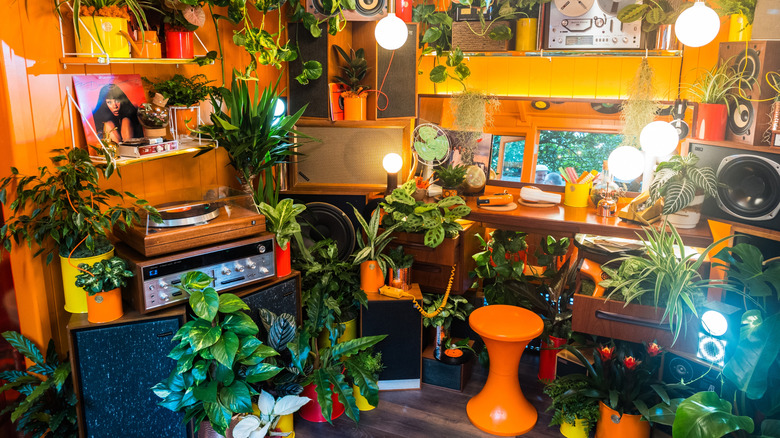
As you probably know, trends come and go, and if there's one thing that you can count on, it's that something that was popular a few decades ago is likely to come to the forefront again at some stage. What you may not know is that even houseplants have moved in and out of popularity through the ages. Take the 80s, for example. It was the era of excesses, flashiness (think disco balls), and explosions of color. Houseplants that were popular then included Anthuriums, spider plants, and peace lilies. While many of these never really went out of fashion, there's one plant that almost everyone owned back in the 80s that's absolutely striking and perfect for filling that empty corner in your home – the rubber plant (Ficus elastica).
What makes this tropical plant so outstanding is its large stature and huge, glossy leaves. When grown as an indoor specimen, it can get to heights of up to 10 feet, but in its native habitat of Southeast Asia, it can reach lofty heights of up to 100 feet. The leathery leaves can be around 12 inches long and up to 6 inches wide. Depending on the variety, the leaves can either be deep green or variegated with hues of cream, red, and pink. Not only would this lovely tree make a statement in any room of your home by filling a boring corner with life, but it will also assist in improving the indoor air quality, meaning this is definitely a low-maintenance tree you want in your home for all its benefits.
How to keep your own rubber tree comfortable in your home
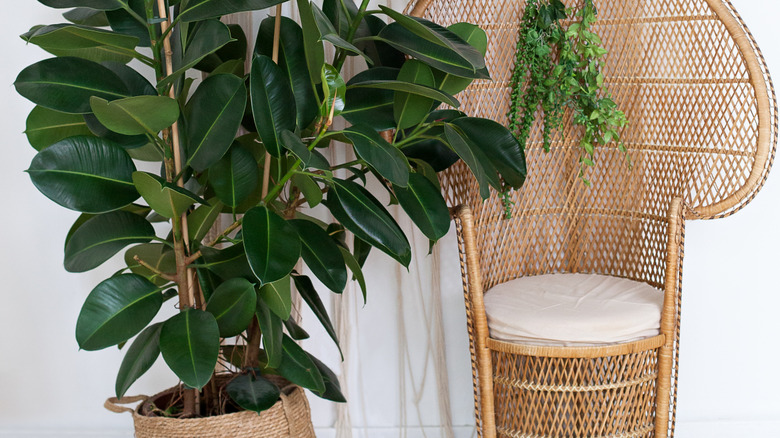
If you have a large empty space in your home that could easily accommodate one of these gorgeous plants, you want to ensure that you provide it with the conditions that it loves. Obviously, you're going to need a large pot because imposing plants have big root systems. A good quality potting mix that drains well is also important.
Next, you want to ensure that the spot you intend to house your rubber plant gets at least a little bright light each day. If there's an east-facing window nearby, that would be perfect. Most important is the temperature. Rubber plants are tropical species and can't handle temperatures colder than 55 degrees Fahrenheit. Ideally, you don't want the temperature to drop below 60 degrees Fahrenheit at night and sit at around 75 to 80 degrees Fahrenheit during the day. You also want to make sure that your houseplant is not exposed to any drafts or sudden changes in temperature. These are all important tips to keep your rubber plant happy.
Water deeply when needed, but let the soil become dry to the touch in between. For this, you might want to explore how much water is enough for a rubber plant. If the pot is resting on a saucer, make sure you empty it after the liquid has fully drained through the soil. As with most indoor plants, provide your rubber tree with the recommended dose of liquid fertilizer during its active growth period from spring to summer. Finally, remember to wipe or wash the leaves periodically to remove dust so the stomata can open and close, and the plant can breathe.